
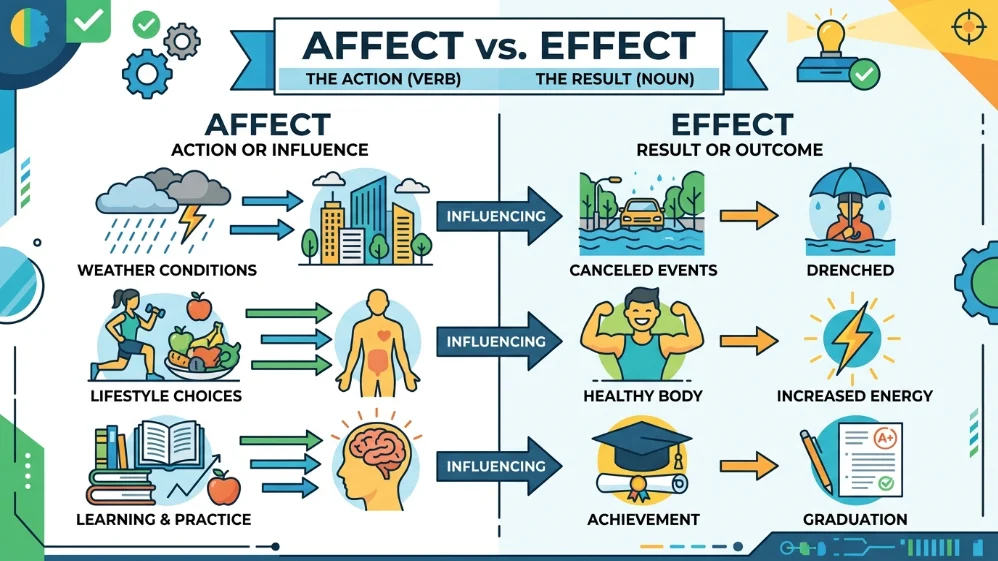

Affect is usually a verb meaning to influence something. Effect is usually a noun meaning a result or outcome. Example: The weather affected traffic. The effect was heavy delays.
I used to confuse affect and effect constantly, especially while writing emails and articles. Sometimes I would write “this will effect sales” and later realize it should have been affect. The problem was that both words sound similar and often appear in similar situations.
After making this mistake repeatedly, I started focusing on one simple rule: affect is usually an action and effect is usually a result. Once I practiced this rule in daily writing, the confusion became much easier to manage.
If you also pause every time you see these words, this guide will help you understand the difference clearly and use both confidently.
Quick Answer
Affect usually works as a verb and means to influence or change something.
Effect usually works as a noun and means the result or consequence of something.
Examples
The rain affected our travel plans.
The effect of the rain was heavy traffic.
Affect vs Effect Meaning
Although these words sound similar, they have different meanings and grammar roles.
What Does Affect Mean
Affect means to influence, change, impact, or modify something.
Examples:
The weather affected our picnic.
Stress can affect sleep quality.
The decision affected everyone.
What Does Effect Mean
Effect means a result, consequence, outcome, or change produced by something.
Examples:
The new law had a positive effect.
The medicine had little effect.
The advertising campaign created a strong effect.
Affect vs Effect Difference
| Word | Meaning | Part of Speech | Example |
|---|---|---|---|
| Affect | To influence | Usually Verb | Prices affect customers |
| Effect | Result or outcome | Usually Noun | The effect was noticeable |
Easy Rule
A = Action = Affect
E = End Result = Effect
Grammar Rule Depth
Understanding grammar makes this topic much easier.
Affect Is Usually a Verb
A verb describes an action.
Examples:
Poor sleep affects concentration.
Rain affected the football match.
Social media affects communication.
Effect Is Usually a Noun
A noun names something.
Examples:
The effect was immediate.
The new policy had a positive effect.
Its effects lasted for months.
The Rare Exceptions
English always creates extra confusion.
Effect as a Verb
Sometimes effect can be a verb.
In this situation, it means to bring about or cause something to happen.
Examples:
The company effected major changes.
The agreement effected improvements.
This use is less common and appears mostly in formal writing.
Affect as a Noun
Sometimes affect works as a noun in psychology.
It refers to emotional expression.
Example:
The patient displayed flat affect.
This usage is uncommon outside psychology.
The Origin of Affect and Effect
Both words come from Latin roots.
Affect Origin
Affect comes from a Latin word meaning:
to influence or act upon
Effect Origin
Effect comes from a Latin word meaning:
result or accomplishment
Because both words share similar roots, their spellings stayed similar and created confusion.
Why People Confuse Affect and Effect
Several reasons create confusion.
Similar Pronunciation
Both words sound similar.
Similar Context
Both often appear in discussions about change.
Similar Spelling
Only one letter changes.
Grammar Confusion
People struggle remembering noun versus verb usage.
Real World Usage of Affect and Effect
Business Examples
High prices affect customer decisions.
The effect was reduced sales.
Education Examples
Sleep affects academic performance.
The effect appears in exam results.
Health Examples
Stress affects mental health.
The effect may continue for years.
Technology Examples
Software updates affect performance.
The effect can improve speed.
Affect vs Effect in Everyday Examples
Emails
This delay may affect the schedule.
The effect of the delay may be costly.
Social Media
Rain affected my weekend plans.
The effect was staying home.
News Writing
Economic changes affected markets.
The effect was increased prices.
Formal Writing
Policy changes affect operations.
Their effects remain uncertain.
Common Mistakes With Affect and Effect
Mistake 1 Using Effect as a Verb Incorrectly
Incorrect:
This will effect prices.
Correct:
This will affect prices.
Mistake 2 Using Affect as a Noun
Incorrect:
The affect was significant.
Correct:
The effect was significant.
Mistake 3 Mixing Both Words
Incorrect:
The weather effect traffic.
Correct:
The weather affects traffic.
Memory Tricks for Affect vs Effect
Trick One
Affect starts with A.
A stands for Action.
Trick Two
Effect starts with E.
E stands for End Result.
Trick Three
Remember:
Action affects Result
This simple sentence helps many writers.
Affect and Effect in Different Contexts
Academic Writing
Research affects conclusions.
The effects appear in data.
Professional Writing
Budget cuts affect projects.
Their effects impact teams.
Casual Conversation
Coffee affects my sleep.
The effect is staying awake.
Related Words You Should Know
Affect Related Words
affecting
affected
affects
affection
Effect Related Words
effective
effectiveness
effects
effectively
Understanding related words helps reduce mistakes.
Affect vs Effect Usage Trends
Many English learners search this topic because it remains one of the most confusing word pairs.
Most mistakes happen because:
People remember pronunciation instead of grammar.
People focus on spelling instead of sentence structure.
People forget noun and verb roles.
Exercise 1 Choose Affect or Effect
The weather may ______ travel plans.
Answer: affect
The medicine had little ______.
Answer: effect
Stress can ______ concentration.
Answer: affect
The new policy created a positive ______.
Answer: effect
Exercise 2 Correct the Sentence
This change will effect customers.
Answer:
This change will affect customers.
The affect was immediate.
Answer:
The effect was immediate.
Weather effect transportation.
Answer:
Weather affects transportation.
FAQs
What is the difference between affect and effect?
Affect usually means to influence and works as a verb. Effect usually means a result and works as a noun.
Is affect always a verb?
Usually yes, but in psychology it can be a noun describing emotional expression.
Is effect always a noun?
Usually yes, but sometimes effect can be a verb meaning to cause something.
How can I remember affect vs effect?
Remember A equals Action equals Affect. E equals End Result equals Effect.
Why are affect and effect confusing?
They sound similar, look similar, and often appear in similar contexts.
Can affect and effect be used interchangeably?
Usually no. Most sentences require one specific word.
Which word is more common?
Both are common because they serve different grammar roles.
Conclusion
Understanding affect or effect becomes easier when you stop focusing only on spelling and start focusing on grammar. Affect usually describes an action or influence, while effect usually describes a result or consequence. This small difference creates confusion for many writers, students, and professionals because both words sound similar and appear in related situations.
The easiest way to remember the difference is using simple memory rules. Think of affect as action and effect as end result. When you apply this rule repeatedly in writing and speaking, choosing the correct word becomes much faster.
Practice is important. Reading examples, correcting mistakes, and using both words in daily communication will build confidence over time. Once you understand the grammar behind these words, the confusion becomes much easier to solve.