
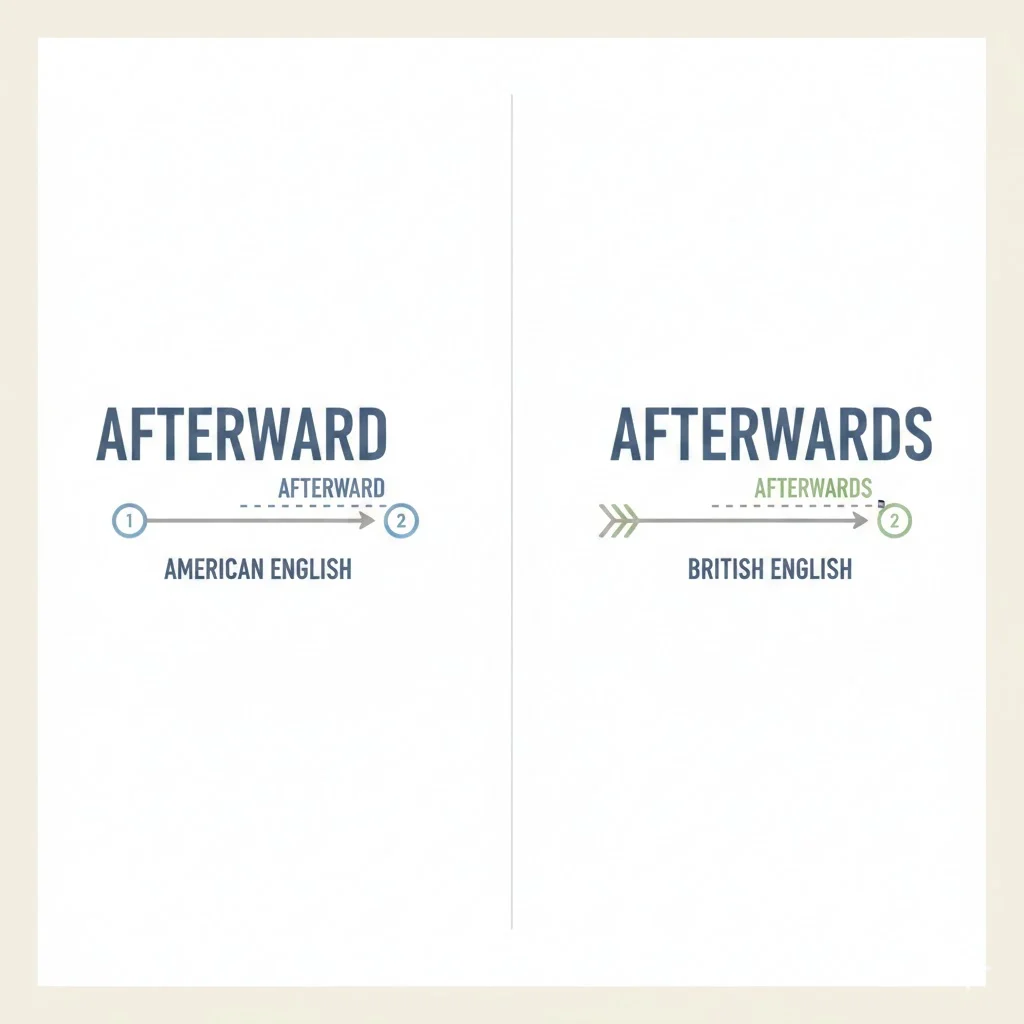
Afterward and afterwards both mean later or following an event. Afterward is more common in American English, while afterwards is more common in British English. Both are grammatically correct and interchangeable in meaning.
Many English learners and even native speakers feel confused when choosing between afterward or afterwards. Both words look similar, sound almost identical, and mean the same thing. This makes people wonder if one is wrong or if there is a real difference between them.
The confusion usually happens when writing emails, essays, stories, or professional documents. Writers often stop and question which spelling looks more correct. Some worry about grammar rules, while others are unsure if the difference depends on region.
This article explains the difference between afterward and afterwards in a simple and clear way. You will learn grammar rules, regional usage, real-world examples, common mistakes, sentence practice, and helpful tips to remember which one to use. By the end, you will confidently choose the correct word every time without hesitation.
Quick Answer
Afterward and afterwards both mean at a later time or following an event.
The difference is mainly regional.
- Afterward is commonly used in American English.
- Afterwards is commonly used in British English.
Simple Examples
- We went home afterward.
- We went home afterwards.
Both sentences are correct.
Grammar Rules Explained Clearly
Meaning of Afterward
Afterward is an adverb.
It means later or following an event.
It is formed from:
- after
- ward meaning direction or time
Examples
- She apologized afterward.
- We talked afterward.
- He felt better afterward.
Meaning of Afterwards
Afterwards is also an adverb.
It has the same meaning as afterward.
The extra s does not change the meaning.
Examples
- She apologized afterwards.
- We talked afterwards.
- He felt better afterwards.
Grammar Rule Summary
There is no difference in meaning.
The only difference is regional preference.
Why People Get Confused With Afterward or Afterwards
Same Meaning
Both words mean the same thing, which makes people unsure which is correct.
Similar Spelling
The only difference is the letter s, which feels unnecessary or confusing.
Regional Writing Differences
Writers often read content from different countries, which mixes both forms.
Overthinking Grammar
Many people believe one must be more correct, even though both are accepted.
American English vs British English Usage
This is the most important distinction.
American English Preference
American English prefers afterward without the s.
Examples
- We met afterward.
- He called afterward.
- The meeting ended and we left afterward.
British English Preference
British English prefers afterwards with the s.
Examples
- We met afterwards.
- He called afterwards.
- The meeting ended and we left afterwards.
Global English Usage
In international writing, both forms are acceptable. The key is consistency.
Which One Should You Use
Ask yourself one simple question.
Who is your audience?
- If your audience is American, use afterward.
- If your audience is British or Commonwealth, use afterwards.
- If writing globally, choose one and stay consistent.
Both are grammatically correct.
Afterward or Afterwards in Real Life Usage
Daily Conversation
- Let’s eat dinner and talk afterward.
- Let’s eat dinner and talk afterwards.
Emails
- Please review the file and respond afterward.
- We will discuss the issue afterwards.
Story Writing
- He smiled and walked away afterward.
- She cried and felt relieved afterwards.
Professional Writing
- The report was submitted and reviewed afterward.
- The process was explained and approved afterwards.
Common Mistakes and Corrections
Wrong: We will meet after word.
Correct: We will meet afterward.
Wrong: She called after words.
Correct: She called afterwards.
Wrong: Afterward s he left the room.
Correct: Afterwards, he left the room.
Spacing or breaking the word is incorrect.
Afterward or Afterwards in Sentences
Simple Sentences
- He left afterward.
- She left afterwards.
Medium Sentences
- We finished the work and relaxed afterward.
- They argued and apologized afterwards.
Formal Sentences
- The policy was revised and implemented afterward.
- The agreement was signed and reviewed afterwards.
Historical Background of Afterward and Afterwards
The word afterward comes from Old English, combining after with weard, meaning direction or position. Over time, English added optional s endings to some adverbs.
British English kept many adverbs ending with s, while American English simplified spellings. This is why we see pairs like:
- toward and towards
- backward and backwards
- afterward and afterwards
Both forms survived and remain correct today.
Related Word Pairs With Similar Patterns
Understanding similar word pairs makes this rule easier.
- toward and towards
- backward and backwards
- forward and forwards
- inward and inwards
American English prefers the shorter form.
British English prefers the form with s.
Style and Consistency Tips
Choose One Style
Do not mix afterward and afterwards in the same article or document.
Match Your Audience
Use the form your readers expect.
Keep Writing Natural
Do not force one form if the other feels more natural for your style.
Practice Exercises
Fill in the Blanks
- We had dinner and left ______.
Answer: afterward or afterwards - He apologized and felt relieved ______.
Answer: afterward or afterwards - She finished her work and rested ______.
Answer: afterward or afterwards - They argued and made peace ______.
Answer: afterward or afterwards
Choose the Correct Word
- The meeting ended and we talked (afterward / afterwards).
Answer: both are correct - He smiled and walked away (afterward / afterwards).
Answer: both are correct - She completed the task and relaxed (afterward / afterwards).
Answer: both are correct
FAQs
What is the difference between afterward and afterwards?
There is no difference in meaning. The difference is regional preference.
Is afterward American English?
Yes, afterward is more common in American English.
Is afterwards British English?
Yes, afterwards is more common in British English.
Can I use both in the same sentence?
No, choose one form and stay consistent.
Is one more correct than the other?
No, both are grammatically correct.
Do afterward and afterwards mean the same as later?
Yes, they both mean later or following an event.
Should I worry about exams or formal writing?
Use the form preferred in your region or follow consistency rules.
Conclusion
The confusion between afterward and afterwards is understandable because both words mean the same thing and are both correct. The only real difference lies in regional usage. American English prefers afterward, while British English prefers afterwards.
There is no grammar mistake in using either form. What matters most is consistency and understanding your audience. Once you choose one style, stick with it throughout your writing.
By learning this distinction, you avoid unnecessary hesitation and write more confidently. Whether you choose afterward or afterwards, your sentence will remain clear, natural, and grammatically correct.