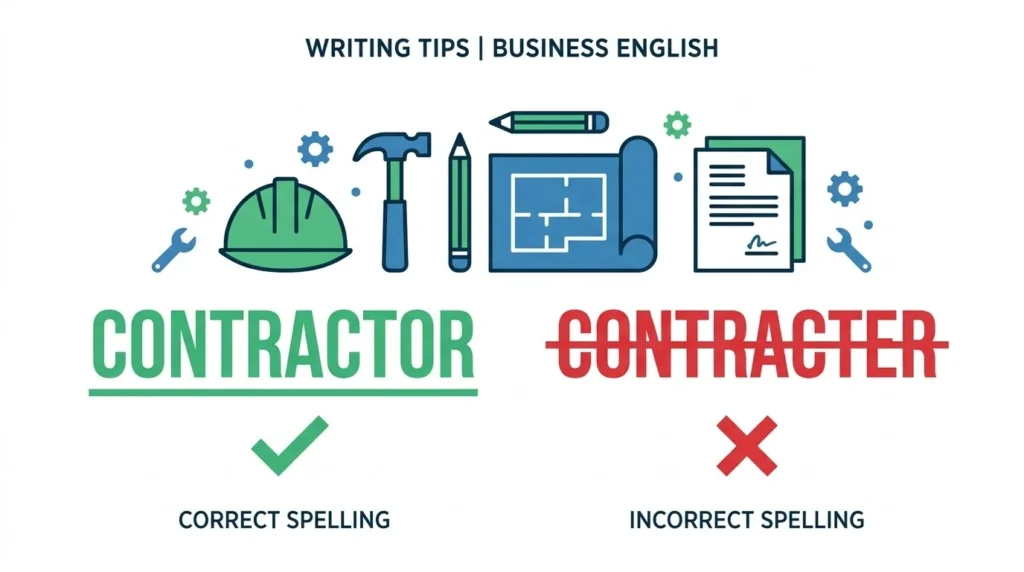
The correct spelling is contractor. The word contracter is a common misspelling and is not considered standard English. A contractor is a person or company hired to perform work or provide services under a contract. The correct form is widely used in construction, business, freelancing, and government agreements.
Many people become confused when writing the word contractor and often wonder whether contractor or contracter is correct. The confusion usually happens because both words sound similar when spoken. However, only one spelling is accepted in standard English.
Understanding the difference is important for professional communication, business documents, resumes, job postings, and online content. Using the correct spelling helps maintain credibility and ensures your writing looks professional.
In this detailed guide, you will learn the correct spelling, the meaning of contractor, why contracter is incorrect, the origin of the word, examples of usage, and common mistakes people make when writing it.
What Is the Correct Spelling
The correct spelling is contractor.
Contractor is a noun used to describe a person or company that performs work according to a contract. The spelling follows the typical English rule where the suffix or is added to a verb to describe a person who performs that action.
The word contract is the base word. When someone performs work under a contract, they become a contractor.
The spelling contracter does not exist in standard dictionaries and is considered a spelling error.
The contractor completed the building project on time.
The company hired a contractor to repair the office roof.
She works as an independent contractor in digital marketing.
The contracter finished the project.
We hired a contracter for home renovation.
Meaning of Contractor
A contractor is a person, business, or organization hired to perform a specific job under agreed terms written in a contract.
Contractors usually work temporarily and are paid for completing a particular task or project.
Contractors can work in many industries including
Construction
Software development
Marketing
Engineering
Government projects
Freelancing
Consulting services
The contractor agrees to perform work within certain conditions such as deadlines, budget limits, and project specifications.
Why Contracter Is Incorrect
The spelling contracter appears logical to many writers because English often uses the suffix er for people who perform actions. Words such as teacher, writer, and driver follow this pattern.
However, the word contractor follows a different pattern derived from Latin influenced English vocabulary. In such words the ending or is used instead of er.
Examples include
Actor
Creator
Editor
Investor
Director
Contractor
Because of this linguistic pattern, the correct form became contractor rather than contracter.
Origin of the Word Contractor
The word contractor comes from the word contract. The term contract itself has Latin origins from the word contractus which means an agreement.
When English adopted the word, the suffix or was added to indicate a person who performs the action related to the base word.
Therefore a contractor literally means someone who works under a contract.
The word became common in business and construction industries during the industrial expansion of the nineteenth century.
Today it is widely used across industries worldwide.
Contractor in Different Industries
The term contractor is used in many professional fields. The meaning remains similar but the nature of work changes depending on the industry.
Construction Contractors
Construction contractors manage building projects such as houses, roads, bridges, and commercial structures.
Their responsibilities often include
Hiring workers
Managing materials
Supervising construction work
Ensuring safety regulations
Completing projects on schedule
There are several types of construction contractors such as general contractors, subcontractors, and specialty contractors.
Independent Contractors
An independent contractor works for clients but is not a permanent employee.
Freelancers, consultants, designers, writers, and developers often fall into this category.
They usually
Work on specific projects
Invoice clients for their services
Manage their own taxes
Work with multiple clients
Government Contractors
Government contractors are companies or individuals hired by government agencies to perform services or deliver products.
Examples include
Defense contractors
Infrastructure contractors
Technology contractors
Security contractors
These contracts often involve strict legal and compliance requirements.
IT Contractors
In the technology industry contractors are hired for specialized projects such as
Software development
System administration
Cybersecurity
Database management
Companies prefer IT contractors when they need expertise for a limited period.
Examples of Contractor in Sentences
Here are examples showing the correct usage of contractor in different contexts.
The contractor submitted the construction proposal to the city council.
Our company hired a contractor to redesign the website.
The government approved the contractor for the highway project.
He works as an independent contractor for several international companies.
The contractor completed the renovation ahead of schedule.
Each example uses the correct spelling contractor.
Common Spelling Mistakes Similar to Contracter
Contracter is not the only word people commonly misspell. Many English words follow similar patterns that create confusion.
Examples include
Advisor instead of adviser in some professional contexts
Editor instead of editer
Actor instead of acter
Investor instead of invester
These mistakes usually happen when people assume the er suffix should be used.
Understanding common suffix patterns helps avoid these errors.
Why Correct Spelling Matters in Professional Writing
Using the correct spelling contractor instead of contracter is important for several reasons.
Professional credibility
Correct spelling improves the professionalism of documents such as resumes, contracts, proposals, and websites.
Clear communication
Accurate spelling prevents confusion and ensures readers clearly understand the intended meaning.
Business reputation
Companies that publish content with spelling mistakes may appear less reliable or less professional.
Search visibility
Correct terminology ensures content aligns with what people actually search for online.
Contractor vs Employee
Many people also confuse contractors with employees. While both perform work for a company, there are important differences.
Contractors
Contractors work independently.
Usually control how and when work is completed.
They handle their own taxes.
They are hired for specific projects or time periods.
Employees
Employees work directly for an organization.
They receive regular salaries.
The company manages taxes and benefits.
They work under company supervision.
Understanding this distinction is important for businesses and professionals.
Types of Contractors
There are several categories of contractors depending on the work arrangement.
General Contractors
General contractors oversee entire projects and coordinate subcontractors, materials, and schedules.
Subcontractors
Subcontractors specialize in specific tasks such as electrical work, plumbing, roofing, or flooring.
Independent Contractors
Independent contractors operate as self employed professionals providing services to clients.
Freelance Contractors
Freelancers are independent contractors who usually work in creative or digital industries.
Examples include writers, designers, developers, and marketers.
Contractor Responsibilities
Contractors typically handle several important responsibilities depending on their field.
These responsibilities may include
Planning project tasks
Managing budgets
Supervising workers
Communicating with clients
Meeting deadlines
Ensuring quality standards
Following safety regulations
Successful contractors combine technical skills with strong project management abilities.
Advantages of Hiring Contractors
Many companies choose contractors instead of full time employees for certain projects.
Key advantages include
Flexibility
Businesses can hire contractors only when needed.
Specialized expertise
Contractors often have specialized knowledge that companies may not need permanently.
Cost efficiency
Organizations avoid long term salary commitments and employee benefits.
Faster project completion
Experienced contractors can often complete tasks more quickly.
Challenges of Working as a Contractor
Although contracting offers many opportunities, it also comes with challenges.
Some common challenges include
Irregular income
Managing multiple clients
Handling taxes independently
Finding new projects
Maintaining consistent workload
However many professionals prefer contracting because it offers greater independence and flexibility.
How to Become a Contractor
Becoming a contractor usually involves several steps depending on the industry.
Typical steps include
Developing professional skills in a specific field
Gaining industry experience
Building a professional portfolio
Registering a business if necessary
Obtaining licenses or certifications
Networking with potential clients
Many contractors start as employees before transitioning into independent work.
Contractor in Legal Agreements
Contracts define the relationship between contractors and clients.
These agreements usually include
Scope of work
Payment terms
Deadlines
Responsibilities
Confidentiality clauses
Termination conditions
A clear contract protects both the contractor and the client.
Contractor in Modern Digital Work
The digital economy has significantly increased the demand for contractors.
Online platforms allow businesses to hire professionals globally for tasks such as
Content writing
Graphic design
Programming
Video editing
Marketing strategy
This shift has created millions of opportunities for independent contractors worldwide.
Common Situations Where People Write Contracter
People usually write contracter by mistake in situations such as
Typing quickly without proofreading
Writing based on pronunciation
Following the er pattern used in other English words
Autocorrect errors
Recognizing these situations helps writers avoid repeating the mistake.
Tips to Remember the Correct Spelling
Here are simple techniques to remember the correct spelling contractor.
Think of the word actor because both end with or.
Remember that business related professions often end with or.
Practice writing the word correctly in professional documents.
Use spell checking tools when writing important content.
Over time the correct spelling becomes automatic.
FAQs
Is contractor the correct spelling?
Yes, contractor is the correct spelling in standard English. Contracter is considered a misspelling and should not be used in professional writing.
Why do people write contracter instead of contractor?
People often write contracter because they assume the word should follow the common er suffix pattern used in words like teacher and driver.
What does contractor mean?
A contractor is a person or company hired to perform work under a contract. Contractors usually work on specific projects for clients.
Is contracter listed in dictionaries?
No, most major dictionaries do not recognize contracter as a valid English word. It is considered an incorrect spelling.
Can contractor refer to freelancers?
Yes, many freelancers are classified as independent contractors because they provide services to clients without being full time employees.
Do contractors work in industries other than construction?
Yes, contractors work in many industries including technology, marketing, consulting, engineering, government services, and creative fields.
Conclusion
The difference between contractor and contracter is simple but important. Contractor is the correct spelling used in standard English while contracter is a spelling mistake.
A contractor refers to a person or company hired to perform work under a contract. The term is widely used in construction, business, freelancing, technology, and government services.
Understanding the correct spelling helps improve professional writing, business communication, and credibility. Whether you are writing a resume, preparing a contract, or publishing online content, always use the correct form contractor.