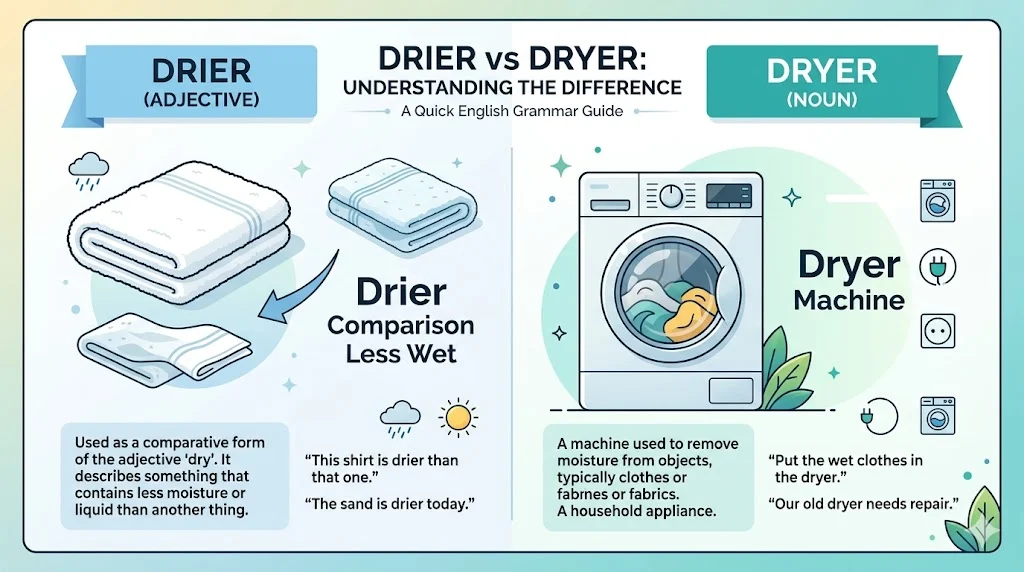
Drier is the comparative form of dry, meaning less wet. Dryer is a noun for a machine or device that removes moisture. Use drier for comparison and dryer for equipment or tools.
I once made a mistake while writing a product description where I used drier instead of dryer for a machine. It looked small, but it changed the meaning completely. That moment made me realize how important it is to understand the difference between these two words.
After researching and practicing, I learned that drier relates to comparison, while dryer refers to a device. Since then, I’ve used both correctly in writing, whether it’s emails, content, or technical descriptions.
If you’ve faced similar confusion, this guide will help you clearly understand drier vs dryer with rules, examples, and real-world usage.
Quick Answer
Drier is used when comparing levels of dryness.
Dryer is a noun used for machines or tools that remove moisture.
Examples
This towel is drier than the other one.
The clothes are in the dryer.
Meaning
Drier
Drier is the comparative form of the adjective dry. It means something has less moisture than something else.
Examples:
- The weather today is drier than yesterday.
- This cloth feels drier now.
- The desert air is much drier than coastal air.
Dryer
Dryer is a noun. It refers to a device or tool used to remove moisture.
Examples:
- Put the clothes in the dryer.
- She used a hair dryer.
- The machine works as a grain dryer.
Drier vs Dryer Difference
| Word | Type | Meaning | Usage | Example |
|---|---|---|---|---|
| Drier | Adjective | More dry | Comparison | This shirt is drier |
| Dryer | Noun | Device that dries | Object | Use the dryer |
Key Rule:
- Drier = comparison
- Dryer = machine or tool
Grammar Rule Depth
1. Drier as Comparative Adjective
Drier follows the rule of comparative adjectives.
Dry → Drier → Driest
Examples:
- This room is drier than the basement.
- The climate here is drier in winter.
2. Dryer as a Noun
Dryer names a thing, not a description.
Examples:
- The dryer stopped working.
- The hair dryer is in the drawer.
3. Alternative Form “More Dry”
Sometimes “more dry” is used instead of drier, especially in formal or technical writing.
Examples:
- The soil becomes more dry in summer.
- The air is more dry at higher altitudes.
However, drier is more common in everyday English.
Verb Forms and Related Words
Dry as a Verb
- Present: dry
- Past: dried
- Past participle: dried
Examples:
- I dried my clothes in the sun.
- She dried her hair quickly.
Related Words
- Dryness → state of being dry
- Drying → process of removing moisture
The Origin of Drier and Dryer
Both words come from Old English dryge, meaning without moisture.
Over time, English developed:
- Drier as a comparative adjective
- Dryer as a noun using the “-er” suffix for tools
This is similar to:
- Bake → baker
- Mix → mixer
- Print → printer
So, dryer follows the pattern of naming machines or tools.
Why People Confuse Drier and Dryer
1. Same Pronunciation
Both words sound exactly the same.
2. Similar Spelling
Only one letter difference makes them easy to mix up.
3. Lack of Grammar Awareness
Many people don’t recognize the difference between adjectives and nouns.
4. Auto-Correct Errors
Typing tools sometimes suggest the wrong spelling.
Real World Usage of Drier and Dryer
At Home
- The towel is much drier now.
- Put your clothes in the dryer.
Weather
- The climate becomes drier in winter.
- Desert regions are drier than forests.
Beauty and Personal Care
- My skin feels drier in cold weather.
- Use a hair dryer after washing your hair.
Agriculture
- Farmers prefer drier soil for harvesting.
- A grain dryer helps preserve crops.
Drier vs Dryer in Everyday Examples
Emails
Please ensure the clothes are completely drier before packing.
Put the laundry in the dryer after washing.
News
This year’s climate is drier than usual.
Factories are producing more energy efficient dryers.
Social Media
My hair feels so drier today.
Just bought a new hair dryer.
Formal Writing
The region experienced drier conditions this season.
The equipment includes an industrial dryer.
Common Mistakes with Drier vs Dryer
Mistake 1 Using Dryer for Comparison
Incorrect
This towel is dryer than the other.
Correct
This towel is drier than the other.
Mistake 2 Using Drier for Machine
Incorrect
Put the clothes in the drier.
Correct
Put the clothes in the dryer.
Mistake 3 Confusing Grammar Roles
Drier describes
Dryer names
Drier vs Dryer in Different Contexts
Weather
The air becomes drier in summer.
Technology
The dryer uses heat to remove moisture.
Health
My skin gets drier in winter.
Household
The clothes are in the dryer.
Related Words and Expressions
Drier Related
- driest
- more dry
- dry conditions
Dryer Related
- hair dryer
- clothes dryer
- industrial dryer
Usage Trends
Modern English shows clear patterns:
- Drier is used in comparison
- Dryer is used for machines
Search trends show that people often search this keyword to understand grammar differences and avoid mistakes.
Exercise 1 Choose the Correct Word
- This towel is ______ than the other.
Answer: drier - Put the clothes in the ______.
Answer: dryer - The air feels ______ today.
Answer: drier - She used a hair ______.
Answer: dryer
Exercise 2 Correct the Sentence
- The clothes are in the drier.
Answer: The clothes are in the dryer. - This weather is dryer than yesterday.
Answer: This weather is drier than yesterday.
FAQs
What is the difference between drier and dryer?
Drier is a comparative adjective meaning less wet, while dryer is a noun referring to a machine that removes moisture.
When should I use drier?
Use drier when comparing dryness. Example: This cloth is drier.
When should I use dryer?
Use dryer when talking about a machine. Example: Put clothes in the dryer.
Is dryer ever used as an adjective?
No, dryer is a noun. For comparison, use drier.
Can I use more dry instead of drier?
Yes, but drier is more common in everyday English.
Why do people confuse drier and dryer?
Because they sound the same and have very similar spelling.
Is drier correct spelling?
Yes, drier is the correct comparative form of dry.
Conclusion
Understanding the difference between drier vs dryer is simple once you know their roles. Drier is used when comparing levels of dryness, while dryer refers to a device that removes moisture. Although both words sound the same, their meanings and grammar functions are completely different.
This confusion is common because of pronunciation and spelling similarity. However, by remembering one key rule drier describes, dryer is a thing you can easily avoid mistakes.
With practice, examples, and real-world usage, you can confidently use both words in writing and speaking. Whether you are describing weather conditions or using household appliances, choosing the correct word improves clarity and professionalism.