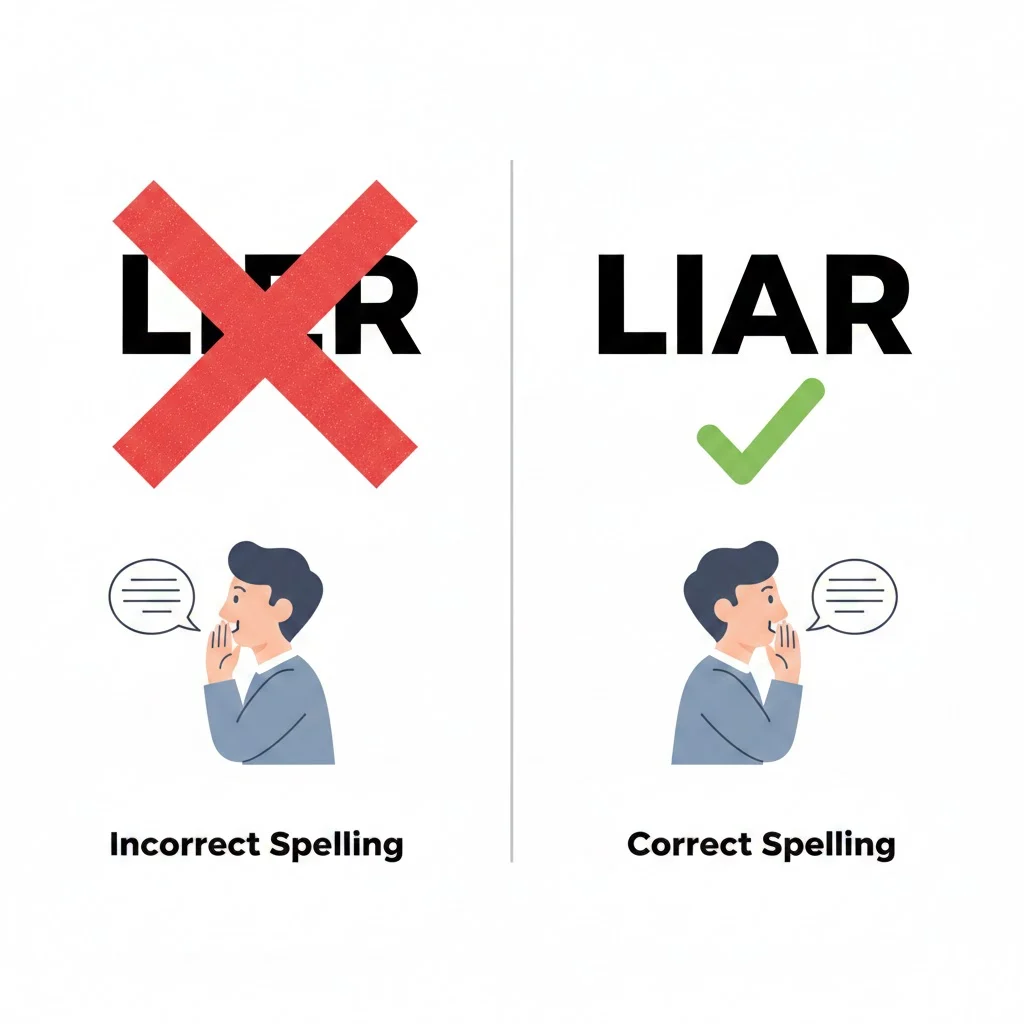
Liar is a noun that means a person who tells lies. Lier is not the correct spelling for someone who lies. In standard English, the correct word for a person who tells lies is liar, not lier.
Many people get confused when writing lier or liar because both words look similar and sound almost the same. A single letter changes the spelling, but it also changes whether the word is correct or incorrect. This small mistake can make your writing look weak or unprofessional.
People often search for “lier or liar” to understand which spelling is correct. The confusion usually happens when forming nouns from verbs. Since the verb is lie, many assume the correct noun should be lier. However, English spelling rules do not always follow simple patterns.
Understanding the difference between lier and liar helps improve grammar accuracy and confidence in writing. In this complete guide, you will learn the correct spelling, grammar rules, word formation patterns, why people make this mistake, real world usage, related confusing words, exercises with answers, and clear examples that remove all confusion.
Lier or Liar Quick Answer
The correct word is liar.
Lier is not the correct spelling for a person who tells lies.
Simple Examples
- He is a liar.
- Nobody trusts a liar.
- She called him a liar.
Wrong example:
- He is a lier.
Correct version:
- He is a liar.
Grammar Rule Depth
To understand why liar is correct and lier is wrong, we must look at English word formation rules.
From Verb to Noun
The verb is lie, which means to say something false.
When forming a noun for a person who performs an action, English often adds er or or.
Examples:
- Teach becomes teacher
- Act becomes actor
- Drive becomes driver
So why not lier?
Spelling Change Rule
When a verb ends in silent e, and we add a suffix, English sometimes changes the spelling to maintain pronunciation.
The word lie ends in silent e. Instead of simply adding er to create lier, English changes the spelling to liar.
This pattern is irregular and must be memorized.
Compare Similar Words
- Lie becomes liar
- Die becomes diyer? No, it becomes dyer
- Tie becomes tier? No, tier is different
English contains many irregular forms. Liar is one of them.
Why People Make Mistakes With Lier or Liar
The confusion between lier and liar is very common. Here are the main reasons.
Logical Guessing
People think:
Lie plus er equals lier
This seems logical because many words follow that pattern. But English spelling does not always follow logic.
Phonetic Similarity
Lier and liar sound almost the same when spoken quickly. This makes it hard to catch the mistake while writing.
Weak Word Formation Knowledge
Many learners are not familiar with irregular noun forms. Without understanding spelling change rules, mistakes happen easily.
Influence of Other Words
Writers compare lie to words like:
- Player
- Buyer
- Cryer
Since these words add er, people assume lier should be correct.
Liar Meaning Explained Clearly
Liar is a noun.
It refers to a person who tells lies or false statements intentionally.
Example Sentences
- He is a liar because he never tells the truth.
- Nobody believes a liar.
- She accused him of being a liar.
- A liar loses trust quickly.
What About Lier
The word lier does exist in rare cases, but it does not mean someone who tells lies.
Lier can refer to someone who lies down.
It comes from the verb lie, meaning to rest or recline.
Example:
- The dog is a lier in the sun.
However, this usage is extremely rare in modern English. Most dictionaries and modern writing prefer alternative phrasing such as:
- The dog is lying in the sun.
Because of this, in practical everyday writing, you should almost always use liar.
Real World Usage of Liar
In Daily Conversation
- He is such a liar.
- Stop being a liar.
In News and Media
- The politician denied being called a liar.
- The witness was labeled a liar.
Literature
Writers often use the word liar to describe characters who deceive others.
- The story reveals him as a liar.
In Social Media
- Don’t be a liar.
- Nobody likes a liar.
British and American English Usage
There is no difference between British and American English in this case.
Both use:
- Liar for a person who lies
- Lier is rarely used and not for someone who tells lies
Examples:
UK: He is a liar.
US: He is a liar.
The spelling remains the same worldwide.
Which Spelling Should You Use
If you are referring to a person who tells lies, always use liar.
Do not use lier for that meaning.
If you ever feel confused, remember:
Lie plus person equals liar.
Common Mistakes and Corrections
Wrong: He is a lier.
Correct: He is a liar.
Wrong: She called him a lier.
Correct: She called him a liar.
Wrong: Nobody trusts a lier.
Correct: Nobody trusts a liar.
Lier or Liar in Sentences
Simple Sentences
- He is a liar.
- She is not a liar.
Medium Sentences
- Nobody believes a liar for long.
- Being a liar damages relationships.
Formal Sentences
- The report described him as a habitual liar.
- Courts consider proven dishonesty when judging a liar.
Related Confusing Words
Understanding related words helps prevent mistakes.
Lie vs Lay
Lie means to rest.
Lay means to put something down.
Lie vs Lye
Lye is a chemical substance.
Liar vs Layer
Layer refers to a level or thickness.
Liar vs Lawyer
Lawyer is a legal professional.
These words sound similar but have completely different meanings.
Word Formation Deep Explanation
English sometimes changes vowel patterns when forming nouns.
Examples:
- Speak becomes speaker
- Bake becomes baker
- Ride becomes rider
But some words are irregular:
- Lie becomes liar
- Die becomes dyer
- Tie becomes tier
These irregular forms developed over time and must be memorized.
Usage in Academic Writing
In academic contexts, liar is used carefully.
Example:
- The study examined whether labeling someone a liar affects credibility.
Formal writing avoids casual accusations and uses structured language.
Usage in Professional Settings
In professional communication, calling someone a liar is serious and often avoided.
Instead, professionals may say:
- The statement was inaccurate.
- The information was misleading.
Using the word liar directly can be confrontational.
Psychological and Social Context
The term liar carries strong emotional meaning.
Calling someone a liar suggests intentional deception.
Trust is central to relationships, and labeling someone a liar affects credibility and reputation.
Practice Exercises
Fill in the Blanks
- He is not a ______.
Answer: liar - Nobody trusts a habitual ______.
Answer: liar - She accused him of being a ______.
Answer: liar - The witness was proven to be a ______.
Answer: liar - Do not become a ______.
Answer: liar
Choose the Correct Word
- He is a (lier / liar).
Answer: liar - She called him a (lier / liar).
Answer: liar - Nobody likes a (lier / liar).
Answer: liar - He admitted he was a (lier / liar).
Answer: liar
Advanced Sentence Practice
Rewrite using the correct word.
- He is a lier who never tells truth.
Answer: He is a liar who never tells the truth. - Nobody trusts a lier in court.
Answer: Nobody trusts a liar in court.
FAQs
What is the correct spelling, lier or liar?
The correct spelling for a person who tells lies is liar.
Is lier ever correct?
Lier can technically refer to someone who lies down, but it is rare and not used for someone who tells lies.
Why is liar spelled with ar instead of er?
English changed the spelling to maintain pronunciation. It is an irregular word formation.
Is liar used in both UK and US English?
Yes, both British and American English use liar.
Can lier mean someone who tells lies?
No, lier is not used for that meaning in standard English.
What part of speech is liar?
Liar is a noun.
Is calling someone a liar offensive?
Yes, it can be strong and confrontational depending on context.
Conclusion
The confusion between lier or liar is common but easy to fix once you understand the rule. The correct spelling for someone who tells lies is liar. The spelling lier is not used for that meaning in standard English. Although lier can technically refer to someone who lies down, this usage is rare and outdated.
English contains many irregular word forms, and liar is one of them. Memorizing this spelling ensures clear and correct writing. Using the correct form builds credibility and prevents misunderstandings.
Whenever you write about someone who tells lies, remember that the correct word is liar. This simple knowledge improves grammar accuracy and strengthens your writing confidence.