
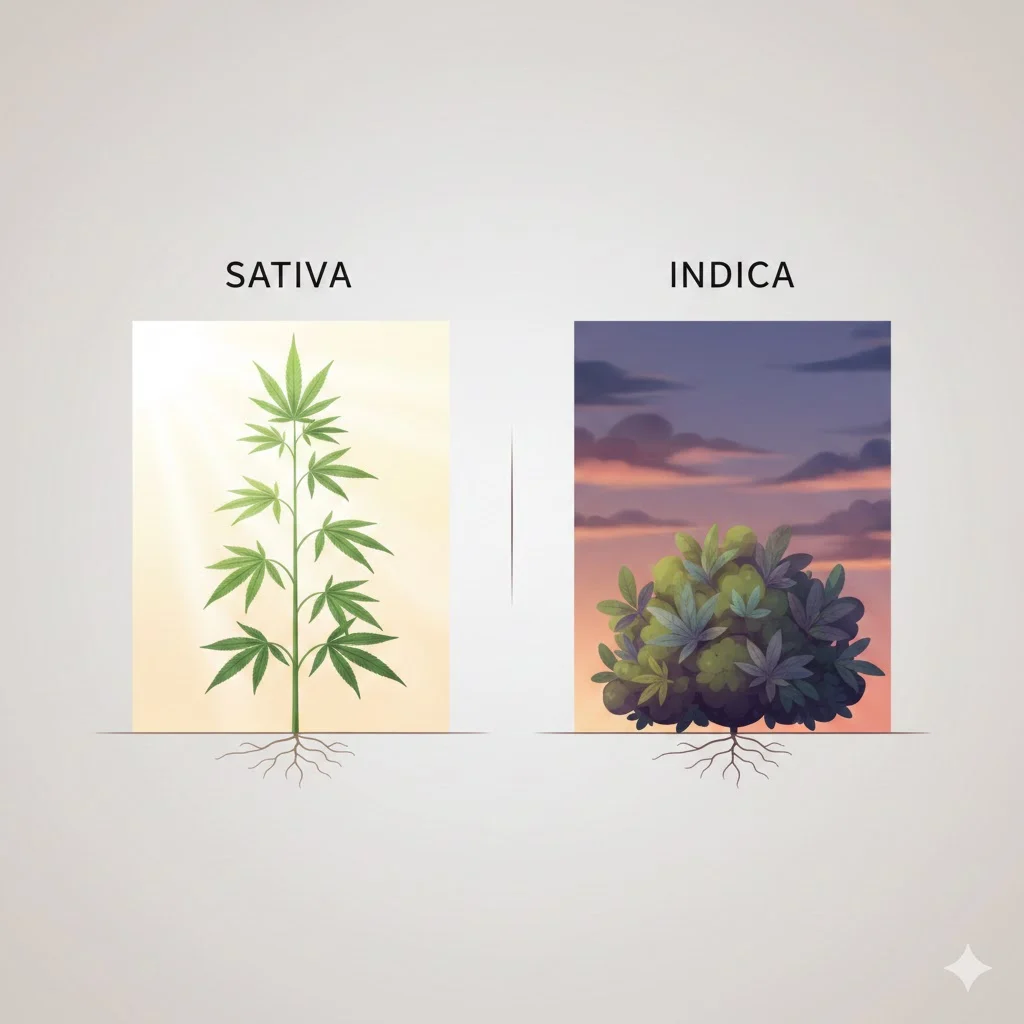
Sativa and indica are two main types of cannabis plants. Sativa is often linked with uplifting and energizing effects, while indica is commonly associated with relaxation and calming effects. The choice between sativa or indica depends on desired effects, body response, and personal preference rather than plant type alone.
Many people search for sativa or indica because they want to understand the difference between these two cannabis types. The confusion is very common, especially for beginners. Both terms are used widely in conversations, dispensaries, online articles, and product descriptions, yet many people do not fully understand what they actually mean.
Sativa and indica are often described as opposites, one energizing and the other relaxing. While this idea is popular, the reality is more complex. Effects can vary based on the chemical makeup of the plant, the way it is used, and the individual consuming it.
This article explains sativa or indica in a clear and neutral way. You will learn about their origins, physical traits, effects on the body and mind, real world usage, common misunderstandings, and how to choose between them. This guide is educational and designed to help readers understand the topic accurately and responsibly.
Sativa or Indica Quick Answer
Sativa is commonly associated with mental stimulation, focus, and energy.
Indica is commonly associated with physical relaxation, calmness, and rest.
Simple Explanation
- Sativa is often chosen for daytime use
- Indica is often chosen for evening use
Simple Examples
- People may choose sativa for creativity or focus
- People may choose indica for rest or relaxation
Understanding the Basics of Sativa and Indica
To understand sativa or indica, it helps to start with the basics.
What Is Cannabis
Cannabis is a plant genus that contains multiple varieties. Sativa and indica are two main classifications that were originally used to describe plant structure and growth patterns.
Why These Terms Exist
The terms sativa and indica were first used by botanists to classify plants based on physical traits and geographic origin. Over time, these labels became associated with expected effects.
Origins of Sativa and Indica
Sativa Origins
Sativa plants are believed to have originated in warmer regions near the equator. These areas include parts of Africa, Central America, Southeast Asia, and South America.
Because of the warm climate, sativa plants developed to grow tall with long flowering cycles.
Indica Origins
Indica plants are believed to have originated in cooler mountainous regions such as Central Asia and parts of the Indian subcontinent.
These plants adapted to harsher climates by growing shorter and flowering faster.
Physical Differences Between Sativa and Indica
Sativa Plant Characteristics
- Tall plants
- Thin leaves
- Longer flowering time
- Lighter green color
Sativa plants can grow very tall and require more space.
Indica Plant Characteristics
- Shorter plants
- Broader leaves
- Shorter flowering time
- Darker green color
Indica plants are compact and bushy, making them easier to grow in limited space.
Chemical Composition Explained Simply
The effects of sativa or indica are influenced by chemical compounds inside the plant.
Cannabinoids
Cannabinoids are natural compounds found in cannabis. The most known are THC and CBD.
- THC is linked to psychoactive effects
- CBD is linked to calming and balancing effects
Different strains contain different ratios.
Terpenes
Terpenes are aromatic compounds that affect smell, taste, and experience.
Common terpenes include:
- Limonene linked to uplifting feelings
- Myrcene linked to relaxation
- Pinene linked to alertness
Terpenes play a major role in how sativa or indica feels.
Effects Commonly Associated With Sativa
Sativa is often described as mentally stimulating.
Mental Effects
- Increased focus
- Creative thinking
- Alertness
- Elevated mood
Some people report feeling more talkative or motivated.
Physical Effects
- Light body sensation
- Less physical heaviness
- Increased activity
Sativa is often associated with staying active rather than resting.
Effects Commonly Associated With Indica
Indica is often described as physically calming.
Mental Effects
- Calm thoughts
- Reduced mental tension
- Slower pace
Some people report feeling more introspective.
Physical Effects
- Muscle relaxation
- Heaviness in the body
- Desire to rest
Indica is often associated with sitting or lying down.
Sativa or Indica in Real World Usage
Daytime Use
Many people associate sativa with daytime activities such as:
- Creative tasks
- Social settings
- Outdoor activities
Evening Use
Many people associate indica with evening activities such as:
- Relaxing at home
- Preparing for sleep
- Unwinding after work
These patterns are based on general experiences, not fixed rules.
Medical Context and General Understanding
This section is informational and not medical advice.
Sativa in Medical Discussions
Sativa is sometimes discussed in relation to:
- Fatigue
- Low mood
- Difficulty focusing
Indica in Medical Discussions
Indica is sometimes discussed in relation to:
- Stress
- Physical discomfort
- Sleep issues
Responses vary greatly by individual.
Sativa or Indica for Beginners
Why Beginners Get Confused
- Effects vary widely
- Product labels can be misleading
- Personal tolerance differs
General Guidance
Beginners are often encouraged to:
- Start with low amounts
- Pay attention to personal response
- Avoid assumptions based only on labels
Hybrids and Why the Line Is Blurred
Most modern cannabis products are hybrids.
What Is a Hybrid
A hybrid combines genetics from both sativa and indica plants.
Why Hybrids Exist
- To balance effects
- To control growth traits
- To create specific experiences
This is why sativa or indica labels are not always accurate predictors.
Common Myths About Sativa or Indica
Myth That Sativa Is Always Energizing
Some sativa strains can feel calming depending on terpene profile.
Myth That Indica Always Causes Sleep
Not all indica strains cause drowsiness.
Myth That Labels Guarantee Effects
Individual biology plays a major role in experience.
Sativa or Indica and Individual Differences
Body Chemistry
Everyone processes compounds differently.
Environment
Mood, setting, and activity influence experience.
Expectations
Beliefs about effects can influence perception.
Choosing Between Sativa or Indica
Questions to Ask Yourself
- Do I want to feel alert or relaxed
- Is it daytime or evening
- How does my body usually respond
Practical Advice
Pay attention to terpene profile and personal response rather than labels alone.
Sativa or Indica in Popular Culture
Movies, music, and social media often simplify these terms.
This has created strong stereotypes that do not always reflect reality.
Sativa or Indica and Responsible Awareness
Understanding these terms helps avoid unrealistic expectations.
Education leads to safer and more informed decisions.
Practice Comparison Examples
Scenario One
Someone wants focus and creativity
They might explore sativa leaning options
Scenario Two
Someone wants calm and rest
They might explore indica leaning options
These are general patterns, not guarantees.
FAQs
What is the main difference between sativa or indica?
Sativa is commonly linked with uplifting mental effects, while indica is commonly linked with physical relaxation.
Is sativa better than indica?
Neither is better. The choice depends on personal preference and desired effects.
Can sativa make you feel calm?
Yes, some sativa strains can feel calming depending on their chemical profile.
Can indica be used during the day?
Yes, some people use indica during the day without feeling tired.
Are most products sativa or indica?
Most modern products are hybrids with traits from both.
Do labels always predict effects?
No, effects depend on terpenes, cannabinoids, and individual response.
Is sativa or indica stronger?
Strength depends on chemical content, not the category name.
Conclusion
The question of sativa or indica is more complex than it appears. While sativa is often associated with energy and indica with relaxation, these labels are general guides rather than strict rules. Plant chemistry, personal biology, and context all play important roles in how effects are experienced.
Understanding the origins, physical traits, chemical composition, and common myths helps create a more accurate picture. Rather than relying only on labels, informed choices come from awareness and personal observation.
This guide provides a clear educational overview so readers can understand sativa or indica without confusion, exaggeration, or misinformation.