
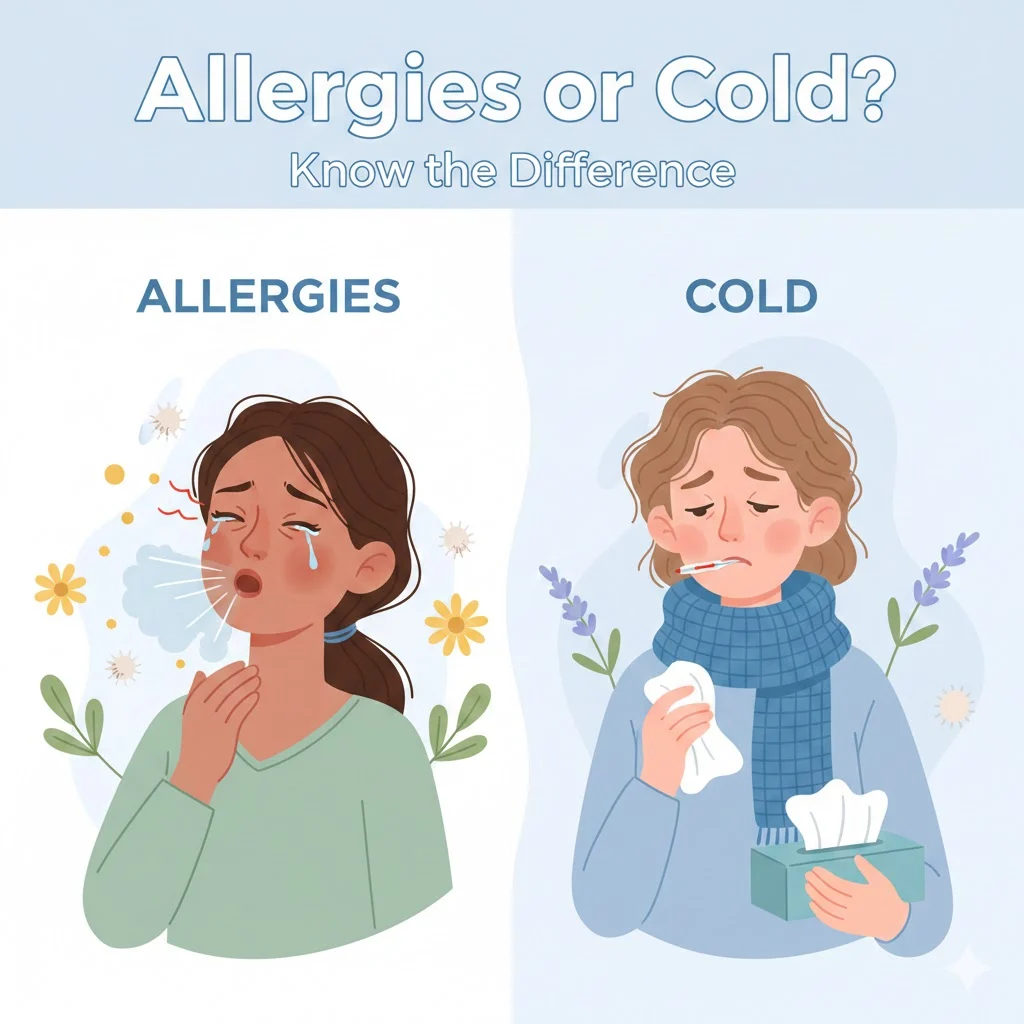
Allergies are caused by an immune reaction to allergens like pollen or dust and usually cause sneezing, itchy eyes, and a runny nose without fever. A cold is a viral infection that causes sore throat, fever, body aches, and lasts a short time. Allergies last longer and are not contagious, while colds are contagious and temporary.
Many people feel confused when they experience sneezing, a runny nose, or congestion and wonder if they have allergies or a cold. Both conditions share similar symptoms, which makes it hard to tell the difference, especially in early stages. This confusion often leads to wrong treatment and unnecessary worry.
People search for “allergies or cold” because the symptoms feel almost the same. However, the causes, duration, and treatment of allergies and colds are very different. Knowing the difference helps you take better care of your health and avoid spreading illness to others.
This article explains the difference between allergies and a cold in simple language. You will learn symptoms, causes, real life examples, common mistakes, practical exercises, and helpful tips to identify what your body is experiencing.
Quick Answer
Allergies happen when your immune system reacts to harmless substances like pollen, dust, or pet hair.
A cold is caused by a virus that infects your nose and throat.
Simple Examples
- Sneezing with itchy eyes for weeks suggests allergies.
- Fever and sore throat for a few days suggests a cold.
Easy Rule
- Long lasting symptoms with itching point to allergies
- Short term symptoms with fever point to a cold
Understanding Allergies Clearly
What Are Allergies
Allergies happen when the immune system reacts strongly to things that are usually harmless. These are called allergens. The body releases chemicals that cause symptoms.
Common Allergy Triggers
- Pollen from trees and grass
- Dust mites
- Pet hair
- Mold
- Certain foods
Common Allergy Symptoms
- Sneezing
- Runny or blocked nose
- Itchy nose and throat
- Watery or itchy eyes
- Post nasal drip
- No fever
How Long Allergies Last
Allergies can last for weeks or months as long as you are exposed to the allergen. Seasonal allergies return every year at the same time.
Understanding a Cold Clearly
What Is a Cold
A cold is a viral infection of the upper respiratory system. It spreads easily from person to person through droplets or contact.
Common Cold Causes
- Rhinoviruses
- Close contact with infected people
- Weak immune system
- Cold weather and stress
Common Cold Symptoms
- Sore throat
- Fever
- Body aches
- Cough
- Fatigue
- Thick mucus
How Long a Cold Lasts
A cold usually lasts between five to ten days. Symptoms improve gradually and then disappear.
Key Differences Between Allergies or Cold
Fever
- Allergies do not cause fever
- Colds often cause mild fever
Body Aches
- Allergies do not cause body pain
- Colds often cause muscle aches
Itchy Eyes
- Allergies commonly cause itchy eyes
- Colds rarely cause itchiness
Mucus Color
- Allergies cause clear mucus
- Colds may cause thick yellow or green mucus
Contagious Nature
- Allergies are not contagious
- Colds spread easily
Why People Confuse Allergies or Cold
Similar Early Symptoms
Both conditions start with sneezing and a runny nose.
Seasonal Overlap
Colds are common in winter and allergies are common in spring and fall. Sometimes seasons overlap.
Self Diagnosis
People often diagnose themselves without understanding symptoms deeply.
Delayed Symptoms
Allergy symptoms can worsen slowly, while cold symptoms appear suddenly.
Allergies or Cold in Real Life Situations
At Work
- Sneezing daily for weeks may be allergies
- Sudden illness with fever may be a cold
At School
- Child with itchy eyes for days likely has allergies
- Child with fatigue and sore throat likely has a cold
During Travel
- Symptoms triggered in dusty places suggest allergies
- Symptoms after contact with sick people suggest a cold
Which One Should You Treat
When to Treat Allergies
- Symptoms last longer than two weeks
- No fever is present
- Symptoms return yearly
When to Treat a Cold
- Fever or body aches present
- Symptoms improve within a week
- Recent exposure to sick people
Common Mistakes and Corrections
- Mistake: Treating allergies with antibiotics
Correction: Allergies do not need antibiotics - Mistake: Ignoring a cold thinking it is allergies
Correction: Rest is important for viral recovery - Mistake: Mixing medications without guidance
Correction: Read labels carefully
Allergies or Cold in Daily Sentences
Simple Sentences
- My allergies are acting up today.
- I caught a cold last week.
Medium Sentences
- Seasonal allergies make my eyes itchy.
- A cold forced me to stay home from work.
Formal Writing
- Allergies affect respiratory comfort.
- The common cold is a viral infection.
Prevention Tips for Allergies
- Avoid known allergens
- Keep windows closed during pollen season
- Use air filters
- Wash bedding regularly
Prevention Tips for a Cold
- Wash hands often
- Avoid close contact with sick people
- Get enough sleep
- Stay hydrated
Home Care Tips for Allergies
- Use saline sprays
- Shower after outdoor exposure
- Keep pets clean
Home Care Tips for a Cold
- Rest properly
- Drink warm fluids
- Use a humidifier
Practice Exercises
Identify the Condition
- Sneezing with itchy eyes for weeks
Answer: Allergies - Fever and sore throat for five days
Answer: Cold - Clear runny nose without body pain
Answer: Allergies - Fatigue and cough after contact with sick person
Answer: Cold
Choose the Correct Word
- I think I have (allergies / cold). It has lasted three weeks.
Answer: allergies - She caught a (cold / allergies) after traveling.
Answer: cold - My (allergies / cold) cause itchy eyes every spring.
Answer: allergies
FAQs
How can I tell if I have allergies or a cold?
Allergies last longer and cause itching without fever, while a cold causes fever and lasts a shorter time.
Can allergies turn into a cold?
No, allergies do not turn into a cold, but weak immunity can increase risk of infection.
Do allergies cause fever?
No, fever is usually a sign of a cold or infection.
Are allergies contagious?
No, allergies do not spread from person to person.
Can a cold last longer than a week?
Yes, some colds can last up to ten days.
Do allergy medicines help with a cold?
They may reduce symptoms but do not cure a cold.
Should I see a doctor for allergies or cold?
See a doctor if symptoms are severe or last unusually long.
Conclusion
Understanding the difference between allergies or a cold helps you manage your health better. Allergies are caused by immune reactions and last longer without fever, while a cold is a viral infection that resolves within days and often includes fever and body aches.
By paying attention to symptoms, duration, and triggers, you can identify the condition correctly and choose the right care. Avoid unnecessary medication and focus on prevention and proper treatment. Clear awareness leads to better health decisions and peace of mind.


