
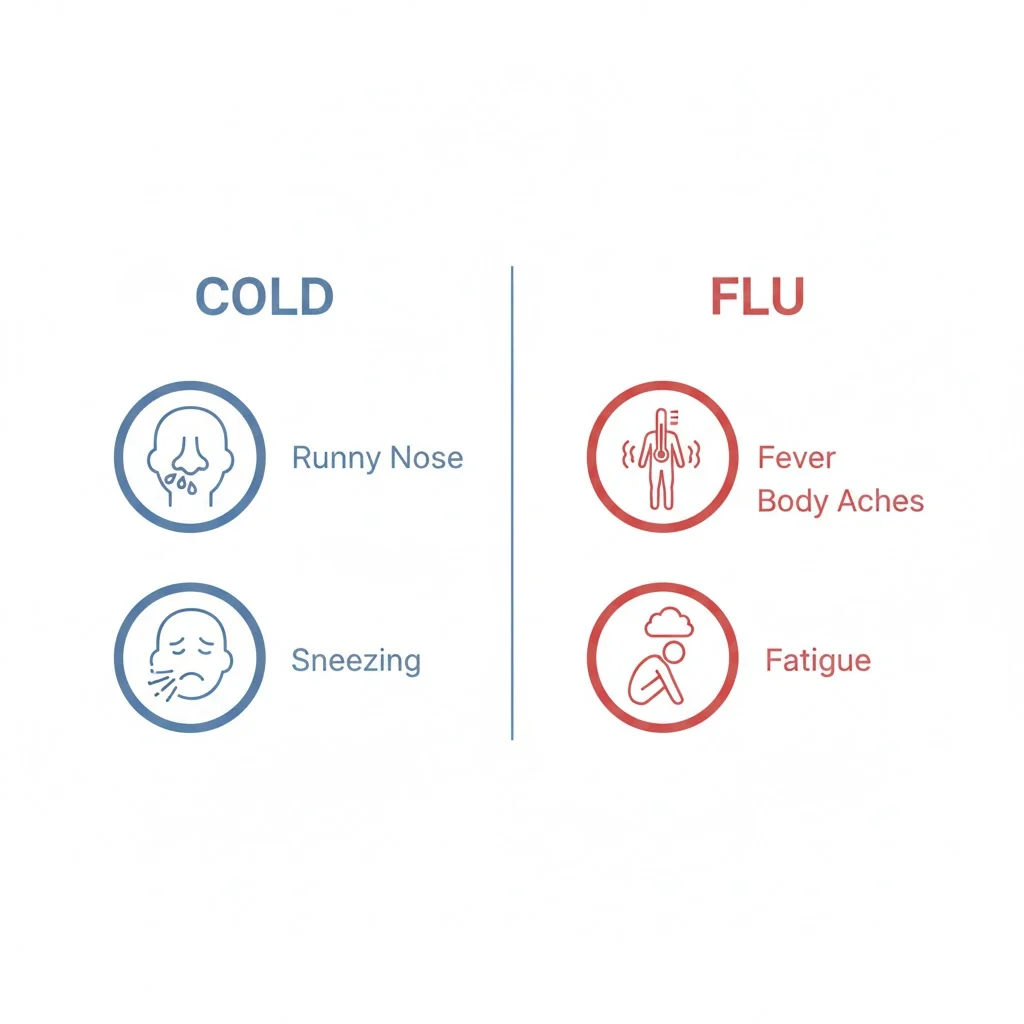
Cold and flu are both viral illnesses, but the flu is usually more severe. A cold develops slowly with mild symptoms like a runny nose and sneezing, while the flu starts suddenly and causes fever, body aches, and extreme fatigue. Knowing the difference between cold or flu helps you choose proper care and avoid complications.
Many people feel confused when they get sick and ask themselves, “Is this a cold or flu?” The symptoms often feel similar at first, such as cough, tiredness, or a sore throat. Because of this overlap, people commonly use the words cold and flu interchangeably, even though they are not the same illness.
Understanding the difference between cold or flu is important. A common cold is usually mild and goes away on its own. The flu can be much more serious and may lead to complications if ignored. Knowing what you are dealing with helps you rest properly, take the right precautions, and decide when medical attention is needed.
This article explains cold or flu in simple language. You will learn symptoms, causes, duration, treatment options, prevention tips, real life examples, common mistakes, and practical guidance to protect yourself and others.
Cold or Flu Quick Answer
A cold is a mild viral infection affecting the nose and throat.
The flu is a stronger viral infection that affects the whole body.
Simple Comparison
- Cold develops slowly
- Flu starts suddenly
- Cold causes mild discomfort
- Flu causes strong weakness and fever
Easy Tip
If you can still function normally, it is likely a cold.
If you feel exhausted and feverish suddenly, it is likely the flu.
What Is a Cold
A cold is a common viral infection of the upper respiratory system. It mainly affects the nose, throat, and sinuses. Colds are very common and usually harmless.
Causes of a Cold
Colds are caused by viruses. The most common virus is rhinovirus, but many others can also cause colds.
You can catch a cold by:
- Breathing in virus droplets from coughs or sneezes
- Touching contaminated surfaces
- Shaking hands with someone who is sick
Cold Symptoms
Cold symptoms are usually mild and develop gradually.
Common cold symptoms include:
- Runny or blocked nose
- Sneezing
- Sore throat
- Mild cough
- Slight fatigue
- Mild headache
Fever is rare in adults with a cold.
What Is the Flu
The flu is a contagious respiratory illness caused by influenza viruses. It affects the nose, throat, and lungs, but it also impacts the whole body.
Causes of the Flu
The flu is caused by influenza viruses. These viruses spread easily, especially in crowded places.
You can catch the flu by:
- Close contact with infected people
- Breathing droplets from coughing or sneezing
- Touching contaminated surfaces and then touching your face
Flu Symptoms
Flu symptoms appear suddenly and are usually intense.
Common flu symptoms include:
- High fever
- Chills
- Body aches
- Muscle pain
- Severe fatigue
- Headache
- Dry cough
- Sore throat
Flu symptoms can make daily activities very difficult.
Cold or Flu Symptoms Compared
Understanding symptom differences makes identification easier.
Cold Symptoms Tend to Be
- Mild
- Gradual onset
- Focused on nose and throat
- Short lasting
Flu Symptoms Tend to Be
- Severe
- Sudden onset
- Affect the whole body
- Long lasting
Key Symptom Differences
- Fever is common in flu, rare in cold
- Body pain is severe in flu, mild in cold
- Fatigue is extreme in flu, light in cold
Why People Confuse Cold or Flu
Cold or flu confusion happens for many reasons.
Similar Early Symptoms
Both illnesses can start with sore throat or tiredness.
Casual Language
People often say “I have the flu” even when they have a cold.
Lack of Awareness
Many people do not know the symptom differences.
Self Diagnosis
People diagnose themselves without understanding medical signs.
Cold or Flu Duration
Duration is another major difference.
How Long a Cold Lasts
A cold usually lasts:
- Five to seven days
- Sometimes up to ten days
Symptoms improve gradually.
How Long the Flu Lasts
The flu usually lasts:
- One to two weeks
- Fatigue may last longer
Recovery from flu takes more time.
Cold or Flu in Daily Life Examples
At Work
- Cold: You may still work with mild discomfort
- Flu: You may need to stay home due to weakness
At School
- Cold: Child may attend school with mild symptoms
- Flu: Child often needs rest at home
During Travel
- Cold: Slight inconvenience
- Flu: Travel becomes very difficult
Cold or Flu Treatment Options
Treatment focuses on relieving symptoms.
Cold Treatment
There is no cure for a cold, but symptoms can be managed.
Helpful steps include:
- Rest
- Drinking fluids
- Warm drinks
- Steam inhalation
- Over the counter cold medicine
Antibiotics do not work for colds.
Flu Treatment
Flu treatment depends on severity.
Helpful steps include:
- Complete rest
- Hydration
- Fever reducing medicine
- Doctor prescribed antiviral medicine in some cases
Early treatment helps reduce complications.
Cold or Flu Home Care Tips
For Cold
- Get enough sleep
- Keep warm
- Eat light healthy meals
- Avoid cold air
For Flu
- Stay in bed
- Monitor fever
- Avoid contact with others
- Seek medical advice if symptoms worsen
Cold or Flu Prevention Tips
Prevention is better than treatment.
Preventing a Cold
- Wash hands often
- Avoid touching face
- Avoid close contact with sick people
Preventing the Flu
- Annual flu vaccination
- Good hygiene
- Avoid crowded places during flu season
- Wear a mask if needed
Common Mistakes About Cold or Flu
- Mistake: Cold and flu are the same
Correction: They are different illnesses - Mistake: Antibiotics cure flu
Correction: Antibiotics do not work on viruses - Mistake: Flu is not serious
Correction: Flu can cause complications
Cold or Flu in Children
Children catch colds more often than adults.
Cold in Children
- More frequent
- Mild symptoms
- Fast recovery
Flu in Children
- Higher fever
- Greater risk of complications
- Needs close monitoring
Cold or Flu in Older Adults
Older adults are more vulnerable.
Cold in Older Adults
- Usually mild
- Recovery may be slower
Flu in Older Adults
- Higher risk of severe illness
- May cause hospitalization
Cold or Flu Complications
Cold Complications
- Sinus infection
- Ear infection
Flu Complications
- Pneumonia
- Bronchitis
- Worsening of chronic diseases
Cold or Flu Practice Scenarios
Scenario One
You have sneezing, runny nose, and no fever.
This is likely a cold.
Scenario Two
You suddenly feel feverish with body pain and exhaustion.
This is likely the flu.
FAQs
What is the main difference between cold or flu?
A cold is mild and develops slowly, while the flu is severe and starts suddenly with fever and body pain.
Can a cold turn into the flu?
No, a cold cannot turn into the flu because they are caused by different viruses.
Is fever always present in flu?
Fever is very common in flu but not always present in a cold.
Can adults get flu without fever?
Yes, some adults may have flu with mild or no fever.
How can I tell cold or flu at home?
Check symptom severity, fever presence, and suddenness of onset.
Is flu more dangerous than a cold?
Yes, flu can lead to serious complications, especially in high risk groups.
When should I see a doctor for cold or flu?
If symptoms are severe, last long, or breathing becomes difficult.
Conclusion
Understanding the difference between cold or flu helps you respond correctly when illness strikes. While both are viral infections, their impact on the body is very different. A cold is usually mild and manageable with rest and home care. The flu is stronger, begins suddenly, and can lead to serious health problems if ignored.
Knowing symptom patterns, duration, and severity allows you to take proper action. It also helps protect others by preventing the spread of infection. Good hygiene, rest, and awareness are key to staying healthy.
By learning how to recognize cold or flu, you gain confidence in managing your health and making informed decisions for yourself and your family.