
Language changes fast. Internet culture moves even faster.
One week everyone says something ironically. The next week the phrase disappears into meme history. That rapid cycle explains why Gen Z slang feels exciting, confusing, hilarious, and sometimes impossible to follow.
If you have ever wondered:
- What does rizz mean?
- Why do people say no cap?
- What exactly is skibidi?
- Why does someone type it’s giving instead of a normal sentence?
You are in the right place.
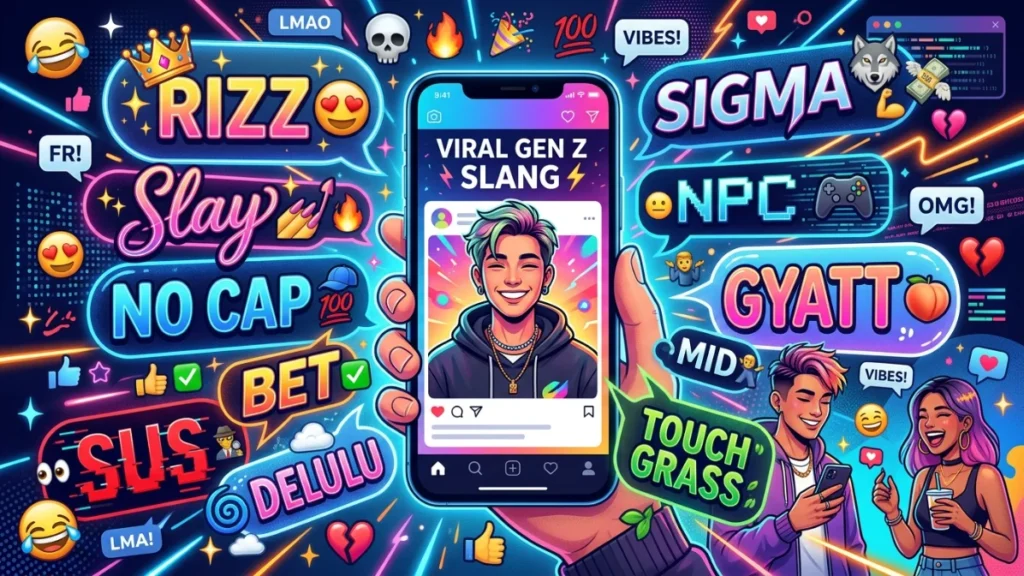
This guide breaks down the most important Gen Z words, popular Gen Z phrases, viral Gen Z terms, and trending internet expressions in plain English. You will also learn where slang comes from, how social media shapes modern language, why meme humor matters, and how to use Gen Z vocabulary naturally without sounding awkward.
Whether you want to understand younger audiences, improve your social media literacy, decode text messages, or simply stay updated on internet slang Gen Z users actually say, this guide covers it all.
What Is Gen Z Slang?
Gen Z slang refers to informal expressions, jokes, phrases, abbreviations, and vocabulary popular among people born roughly between the late 1990s and early 2010s.
Unlike traditional slang, Gen Z expressions spread almost instantly because of social platforms, memes, livestreams, gaming communities, and short videos.
A phrase can go viral overnight.
Then disappear just as quickly.
For example:
| Traditional Expression | Gen Z Version |
|---|---|
| That looks amazing | That’s bussin |
| I agree | Bet |
| Seriously | No cap |
| Suspicious | Sus |
| Stylish | Drip |
| Average | Mid |
The biggest difference between older slang and zoomer slang is speed.
Older generations spread phrases through local communities or pop culture over years. Gen Z slang spreads through videos, memes, screenshots, and reposts in hours.
Why Gen Z Vocabulary Changes So Quickly
Three things drive constant slang evolution:
- Internet humor
- Meme culture
- Social media algorithms
When millions of people repeat jokes online, language mutates fast.
- Sometimes phrases become serious vocabulary.
- Sometimes they stay ironic.
- Sometimes people intentionally overuse them until they become jokes themselves.
That layered humor matters because many popular Gen Z phrases rely on irony.
A person may say something dramatically while secretly mocking dramatic behavior.
Context matters.
Tone matters even more.
Where Gen Z Slang Comes From
Many people think slang appears randomly.
It does not.
Most viral Gen Z terms come from recognizable internet ecosystems.
Social Media Culture
Platforms shape vocabulary.
Short form content especially influences trending slang words because repetition helps phrases spread quickly.
Examples include:
- Reaction memes
- Comment sections
- Viral audio clips
- Creator catchphrases
- Caption trends
Someone hears a phrase repeatedly.
They imitate it.
Friends copy it.
Gaming Communities
Gaming culture heavily influences internet slang Gen Z users adopt daily.
Competitive games normalized terms such as:
- NPC
- Sus
- GG
- Clutch
- Sweaty
- AFK
Gamers often create shorthand language because fast communication matters.
That vocabulary later enters mainstream speech.
Meme Culture
Memes act like linguistic laboratories.
People remix words.
Change meanings.
Invent strange humor.
Then repeat phrases until they become cultural shorthand.
Consider words like:
- Skibidi
- Canon event
- Brainrot
- Sigma
These expressions often start ironically.
Eventually many people use them semi seriously.
Influencers and Online Personalities
Large creators accelerate slang adoption.
One funny phrase repeated enough times can spread globally.
Creators influence:
- Catchphrases
- Reaction language
- Visual jokes
- Internet humor styles
That explains why social media slang evolves constantly.
Why Gen Z Slang Changes So Fast
Internet language behaves differently than traditional language.
Instead of evolving slowly, it spreads through algorithms.
Viral Trends Move at High Speed
Short videos changed language forever.
When millions watch identical clips repeatedly, phrases gain momentum quickly.
Think about this cycle:
Funny phrase → meme → repost → remix → overuse → replacement
The cycle rarely stops.
That constant reinvention keeps modern teen slang fresh.
Irony Rules Everything
Many Gen Z phrases sound strange because humor often depends on exaggeration.
For example:
“Bro really thought he had rizz.”
The sentence may sound serious.
Often it is playful teasing.
Irony shapes expressions like:
- Sigma
- NPC
- Main character energy
- Touch grass
- Delulu
- Brainrot
Without context, meanings feel confusing.
Absurd Humor Became Mainstream
Older internet jokes often followed logic.
Modern meme culture sometimes celebrates nonsense.
That shift created terms such as:
- Skibidi
- Gyatt
- Fanum tax
- Goofy ahh
Sometimes the humor lies in confusion itself.
Yes, seriously.
The Most Popular Gen Z Slang Words and Meanings
Below are the most important Gen Z expressions you should understand.
Rizz Meaning Explained
Rizz means charm, flirting ability, charisma, or romantic confidence.
A person with “rizz” knows how to impress someone.
Example
“He got her number in five minutes. That dude got rizz.”
Types of Rizz
| Type | Meaning |
|---|---|
| W rizz | Successful charm |
| L rizz | Bad flirting |
| Unspoken rizz | Attraction without trying |
| Negative rizz | Accidentally ruining attraction |
Use When
- Talking casually
- Joking with friends
- Discussing dating confidence
Avoid When
- Professional conversations
- Formal writing
What Does No Cap Mean?
No cap means I am telling the truth or seriously.
It emphasizes honesty.
Example
“That burger was amazing, no cap.”
Think of it like saying:
- For real
- Honestly
- Seriously
Why People Use It
It adds emotional emphasis.
Instead of saying something plainly, people dramatize certainty.
Bet Slang Meaning
Bet means:
- Okay
- Sounds good
- Challenge accepted
- I agree
It works as verbal confirmation.
Example
Friend: “Meet at 7?”
You: “Bet.”
Simple.
Fast.
Natural.
Bussin Meaning
Bussin describes something extremely good.
Usually food.
Sometimes style, music, or experiences.
Example
“This pizza is bussin.”
Most common uses:
- Great meals
- Delicious snacks
- Strong recommendations
| Situation | Example |
|---|---|
| Food | “These fries are bussin.” |
| Outfit | “That fit is bussin.” |
| Music | “That album is bussin.” |
Slay Meaning
Slay means performing exceptionally well.
It signals confidence, approval, beauty, or success.
Example
“You slayed that outfit.”
People use it to compliment:
- Fashion
- Makeup
- Confidence
- Performance
- Humor
Related Phrase
“Ate and left no crumbs”
Meaning:
Someone performed incredibly well.
Example:
“She gave the presentation and ate.”
Delulu Meaning
Delulu comes from the word delusional.
Usually playful.
Sometimes sarcastic.
It describes unrealistic optimism or fantasy thinking.
Example
“I texted him once and now I think we’ll marry. I’m delulu.”
Usually harmless humor.
Sometimes self aware.
Simp Meaning
A simp describes someone overly devoted to another person, usually romantically.
The phrase often appears jokingly.
Example
“He bought flowers after one conversation. Bro is simping.”
Important context:
Sometimes people misuse it.
Basic kindness does not equal simping.
Sus Meaning
Sus means suspicious.
The word exploded in popularity because of gaming culture.
Especially multiplayer games.
Example
“Why are you acting sus?”
People use it for:
- Strange behavior
- Dishonesty
- Weird situations
- Jokes
Drip Slang Meaning
Drip means fashionable style.
Especially clothing.
Example
“Your drip goes hard.”
It usually refers to:
- Outfits
- Jewelry
- Sneakers
- Fashion confidence
Mid Slang Meaning
Mid means average.
Not terrible.
Not amazing.
Just disappointing or unimpressive.
Example
“That movie was mid.”
It often replaces longer criticism.
Instead of writing a paragraph, someone says:
“Mid.”
Message received.
Lowkey vs Highkey Meaning
These terms describe emotional intensity.
Lowkey Meaning
Quietly.
Secretly.
Subtly.
Example:
“Lowkey love this song.”
Meaning:
You secretly love it.
Highkey Meaning
Openly.
Strongly.
Obviously.
Example:
“Highkey excited for the weekend.”
Meaning:
Very excited.
Based Meaning
Based means confidently authentic.
Someone expresses opinions honestly without worrying about judgment.
Example
“That opinion is based.”
Sometimes ironic.
Sometimes sincere.
Tone matters.
Sigma Slang Meaning
Sigma originally referred to a fictional independent personality archetype.
Now?
Mostly meme humor.
A sigma character supposedly:
- Ignores social pressure
- Stays independent
- Focuses on goals
- Avoids drama
Example:
“Bro skipped the party and worked out. Sigma mindset.”
Often exaggerated for comedy.
NPC Slang Meaning
NPC stands for Non Playable Character from gaming.
Online slang uses it to describe robotic behavior.
Example
“He repeats the same opinions daily. NPC behavior.”
Usually teasing.
Sometimes criticism.
Stan Culture Meaning
A stan is a highly devoted fan.
The word grew from internet fandom culture.
Example
“I stan that artist.”
Stan culture dominates:
- Music fandoms
- Celebrity communities
- Online trends
Fans organize:
- Memes
- Edits
- Streaming campaigns
- Discussions
It’s Giving Meaning
It’s giving describes a vibe.
Usually playful.
Example
“It’s giving main character energy.”
Instead of full explanation, the phrase quickly communicates mood.
Examples:
- It’s giving confidence
- It’s giving chaos
- It’s giving rich energy
Main Character Energy
This phrase describes confidence or cinematic self belief.
Example:
“Walking into class like the movie hero. Main character energy.”
Positive meanings include:
- Confidence
- Self expression
- Presence
Negative use exists too.
Someone overly dramatic may receive sarcastic comments.
Side Eye Meme Meaning
Sometimes a look says more than words.
Side eye means showing silent judgment, disbelief, skepticism, or mild annoyance. Instead of directly criticizing someone, people react with an imaginary dramatic stare.
The phrase exploded through memes, reaction videos, and exaggerated audio clips.
Example
“You said pineapple belongs on every food? Side eye.”
People often use it when:
- Something sounds suspicious
- A statement feels questionable
- A person behaves strangely
- Someone says something embarrassing
| Situation | Example |
|---|---|
| Bad opinion | “You hate pizza? Side eye.” |
| Suspicious behavior | “Why are you hiding your phone? Side eye.” |
| Awkward moment | “He forgot her birthday again. Side eye.” |
Touch Grass Meaning
Few popular Gen Z phrases carry sarcasm like touch grass.
The phrase means:
Go outside and reconnect with reality.
People usually say it jokingly when someone spends too much time online, becomes overly dramatic, or argues endlessly on the internet.
Example
“You wrote ten angry paragraphs over a meme. Touch grass.”
The meaning is playful but slightly critical.
It suggests:
- Too much screen time
- Internet obsession
- Unrealistic online behavior
- Taking memes too seriously
“Touch grass” sounds harsh sometimes, yet most people use it humorously.
Canon Event Meme Meaning
Life feels strangely predictable.
That idea explains the popularity of canon event.
The phrase comes from storytelling and meme culture. It describes experiences that feel unavoidable or emotionally necessary.
Example
“Dating the wrong person in college? Canon event.”
People use it for:
- Learning experiences
- Embarrassing mistakes
- Emotional growth
- Relatable struggles
Examples include:
- Staying up too late before an exam
- Texting someone you should avoid
- Choosing a terrible haircut
The humor works because everyone recognizes the mistake.
Girl Math Meaning
Girl math became a playful internet joke about funny financial logic.
The phrase uses exaggerated reasoning to justify purchases.
Example
“The shoes were discounted, so technically I saved money. Girl math.”
- Paying cash means spending “doesn’t count”
- Returning something feels like earning money
- Buying something on sale equals saving money
It works because people recognize the irrational logic.
Important Context
Most people treat it humorously.
It is not literal financial advice.
Boy Math Meaning
Boy math followed the same meme pattern.
Instead of shopping jokes, it humorously exaggerates stereotypical male logic.
Example
“Spending thousands on gaming gear but refusing a cheap subscription. Boy math.”
Typical themes include:
- Sports spending
- Gaming expenses
- Cars and gadgets
- Funny contradictions
Like girl math, humor matters more than accuracy.
Goofy Ahh Meaning
Goofy ahh describes something ridiculous, awkward, weird, or unintentionally funny.
The word “ahh” intentionally replaces another term for comedic effect.
Example
“Look at that goofy ahh walk.”
People use it to describe:
- Silly outfits
- Weird behavior
- Funny moments
- Random memes
Tone matters.
Friends may joke affectionately.
Used harshly, it can sound insulting.
Gyatt Meaning
One of the more viral Gen Z words, gyatt expresses surprise or admiration.
The term became popular through livestream culture and reaction clips.
Example
“GYATT!”
Usually, the reaction signals shock at appearance or attractiveness.
Context matters because many people use it jokingly or ironically.
Why It Spread
Three reasons explain its popularity:
- Livestream clips repeated it constantly
- Meme culture amplified exaggeration
- Short videos turned reactions into trends
Like many viral Gen Z terms, repetition fueled growth.
Fanum Tax Meaning
Fanum tax started as a meme from livestream culture.
The joke refers to stealing food from friends.
Example
“Give me one fry. Fanum tax.”
Meaning:
Someone jokingly takes part of another person’s meal.
Common uses include:
- Friend groups
- Gaming communities
- Meme conversations
Nobody expects seriousness.
The joke matters more than the literal meaning.
Looksmaxxing Meaning
Looksmaxxing refers to improving appearance intentionally.
The term became popular through online self improvement spaces.
It can include:
- Better grooming
- Fitness habits
- Skincare
- Hairstyle changes
- Fashion improvements
Example
“He started working out and upgraded his wardrobe. Looksmaxxing arc.”
Some conversations around looksmaxxing remain lighthearted.
Others become overly obsessive.
Balance matters.
Brainrot Slang Meaning
Internet obsession creates strange behavior.
That explains brainrot.
The term describes becoming mentally consumed by memes, fandoms, jokes, creators, or repetitive internet content.
Example
“I watched cat videos for four hours. Actual brainrot.”
Signs of meme brainrot include:
- Repeating random catchphrases
- Thinking in memes
- Quoting videos constantly
- Seeing jokes everywhere
People usually say it humorously.
Example Sentence
“The skibidi memes gave everyone brainrot.”
Skibidi Meaning
Few viral TikTok phrases confuse adults more than skibidi.
Truthfully?
Its meaning depends heavily on context.
Sometimes it means nothing.
That absurdity is part of the joke.
Why Skibidi Became Popular
The phrase exploded through meme videos and chaotic internet humor.
Its success reflects modern absurd comedy.
Instead of logical jokes, random nonsense wins attention.
Example
“Bro went full skibidi.”
Possible meanings include:
- Weird behavior
- Meme humor
- Chaotic randomness
- Internet absurdity
Sometimes slang becomes popular because it sounds funny rather than meaningful.
A Quick Table of Trending Gen Z Slang Words
| Gen Z Slang | Meaning | Example |
|---|---|---|
| Rizz | Charm or flirting skill | “He got rizz.” |
| Bet | Agreement | “Bet, see you there.” |
| No Cap | Seriously | “No cap, that movie was great.” |
| Bussin | Extremely good | “This food is bussin.” |
| Mid | Average | “The show felt mid.” |
| Sus | Suspicious | “That seems sus.” |
| Slay | Doing something well | “You slayed.” |
| Delulu | Unrealistically hopeful | “I’m delulu.” |
| Sigma | Meme independence | “Sigma mindset.” |
| NPC | Robotic behavior | “NPC energy.” |
| Gyatt | Surprise reaction | “GYATT.” |
| Touch Grass | Go outside | “Touch grass.” |
A Complete Gen Z Slang Dictionary
Below is a practical online slang dictionary of modern teen phrases.
A to F Gen Z Vocabulary
| Word | Meaning | Example |
|---|---|---|
| Ate | Performed extremely well | “She ate that performance.” |
| Based | Authentic confidence | “That take is based.” |
| Bet | Agreement | “Bet, sounds good.” |
| Bussin | Very good | “This meal is bussin.” |
| Cap | Lie | “That’s cap.” |
| Delulu | Unrealistic optimism | “I’m delulu.” |
| Drip | Fashion style | “Your drip is wild.” |
| Fanum Tax | Taking food jokingly | “Fanum tax.” |
G to L Gen Z Expressions
| Word | Meaning | Example |
|---|---|---|
| Girl Math | Funny financial logic | “Girl math.” |
| Goofy Ahh | Weird or silly | “Goofy ahh behavior.” |
| Gyatt | Shock reaction | “GYATT.” |
| Highkey | Openly | “Highkey excited.” |
| It’s Giving | Describing vibes | “It’s giving confidence.” |
| Lowkey | Secretly | “Lowkey obsessed.” |
| Looksmaxxing | Improving appearance | “Looksmaxxing era.” |
M to R Popular Gen Z Phrases
| Word | Meaning | Example |
|---|---|---|
| Main Character Energy | Confident vibe | “Main character moment.” |
| Mid | Average | “Mid movie.” |
| No Cap | Serious honesty | “No cap.” |
| NPC | Robotic behavior | “NPC vibes.” |
| Rizz | Charisma | “He got rizz.” |
S to Z Viral Gen Z Terms
| Word | Meaning | Example |
|---|---|---|
| Sigma | Independent meme personality | “Sigma mindset.” |
| Simp | Overly devoted | “He’s simping.” |
| Skibidi | Meme absurdity | “Skibidi moment.” |
| Slay | Praise | “Slay queen.” |
| Stan | Loyal fan | “I stan.” |
| Sus | Suspicious | “That’s sus.” |
| Touch Grass | Go outside | “Touch grass.” |
Gen Z Slang Used on Social Media
Not all slang spreads equally.
Different platforms shape different vocabulary.
TikTok Slang Terms
Short videos dominate TikTok slang terms.
Popular patterns include:
- Fast catchphrases
- Meme captions
- Reaction language
- Exaggerated humor
Common phrases:
- It’s giving
- Delulu
- Main character energy
- Canon event
- Girl math
TikTok rewards repetition.
That repetition turns jokes into language.
Discord Slang Terms
Gaming culture shaped Discord slang terms.
Common vocabulary includes:
| Discord Slang | Meaning |
|---|---|
| AFK | Away from keyboard |
| GG | Good game |
| NPC | Robotic behavior |
| Sus | Suspicious |
| Clutch | Saving the situation |
Voice chat culture encourages shorter language.
Quick communication matters.
Instagram Slang and Aesthetic Captions
Instagram slang leans visual.
Captions often include:
- Slay
- Ate
- Serving looks
- Main character energy
Examples:
“Lowkey obsessed.”
“Serving confidence.”
“It’s giving vacation energy.”
Short.
Stylish.
Easy to repost.
Why Meme Culture Shapes Youth Slang Terms
Meme culture acts like fuel for language.
Without memes, many internet slang Gen Z phrases would disappear quickly.
Memes Create Shared Language
Imagine millions laughing at the same joke.
Eventually, the joke becomes shorthand.
One word communicates an entire feeling.
For example:
Mid instantly signals disappointment.
Side eye communicates silent judgment.
Touch grass mocks online obsession.
That efficiency explains slang success.
Why Context Matters in Gen Z Vocabulary
Context changes meaning.
Completely.
Consider:
“Bro has rizz.”
Could mean:
- Real admiration
- Sarcasm
- Friendly teasing
- Meme humor
Same phrase.
Different meaning.
Tone decides everything.
Quick Rule
If slang sounds confusing:
Look at context before definitions.
Often the emotion matters more than literal meaning.
Gen Alpha vs Gen Z Slang
People mix these up constantly.
Yet differences exist.
| Category | Gen Z Slang | Gen Alpha Slang |
|---|---|---|
| Humor | Irony | Random absurdity |
| Platform | TikTok, Discord | TikTok, livestream clips |
| Style | Sarcasm | Chaotic memes |
| Examples | Rizz, Mid, Slay | Skibidi, Gyatt |
Gen Alpha often pushes absurd humor further.
Gen Z typically blends sarcasm and irony.
Sometimes the two overlap.
That overlap causes confusion.
How to Use Gen Z Slang Naturally Without Sounding Cringe
Trying too hard backfires.
Fast.
Learn Context First
Watch how people actually use phrases.
Language works best when natural.
Bad example:
“Greetings everyone, I possess rizz.”
Nobody talks like that.
Better:
“That dude got rizz.”
Avoid Overusing Slang
Too many buzzwords feel forced.
Natural conversation wins.
Bad:
“No cap, lowkey, highkey, slay, bet, sigma.”
Good:
One or two phrases.
Simple.
Match the Audience
Friends?
Casual slang works.
Professional meeting?
Probably not.
Reading the room matters.
Gen Z Slang Already Becoming Outdated
Slang expires quickly.
Why?
Overuse kills coolness.
A phrase becomes mainstream.
Then people move on.
Terms sometimes fade because:
- Parents start saying them
- Brands overuse them
- Memes become repetitive
- Humor changes
Internet language never stops evolving.
Frequently Asked Questions About Gen Z Slang
What are the most popular Gen Z slang words?
Popular terms include:
- Rizz
- No cap
- Bet
- Slay
- Mid
- Delulu
- Sigma
- NPC
- Sus
- Bussin
What does rizz mean?
Rizz means charisma or flirting ability.
What does sigma mean in slang?
Usually meme humor around independence or self focus.
What does skibidi mean?
Often absurd meme humor with changing context.
Why does Gen Z use internet slang?
Slang builds humor, identity, community, and faster communication.
Is Gen Z slang different from Gen Alpha slang?
Yes. Gen Z slang often relies on irony while Gen Alpha slang leans more chaotic and meme driven.
Final Thoughts on Gen Z Slang
Language never stays still.
That truth feels especially obvious with Gen Z slang.
One viral joke becomes a phrase.
One meme becomes vocabulary.
One TikTok trend suddenly enters everyday conversation.
Understanding Gen Z words, viral Gen Z terms, and modern teen slang matters because language reflects culture.
If you understand the language, you understand the humor.
You understand the internet.
You understand how younger generations communicate.
Most importantly, remember this:
Slang changes constantly, yet context always matters more than memorization.
You do not need to know every phrase.
You only need to understand how people actually use them.