
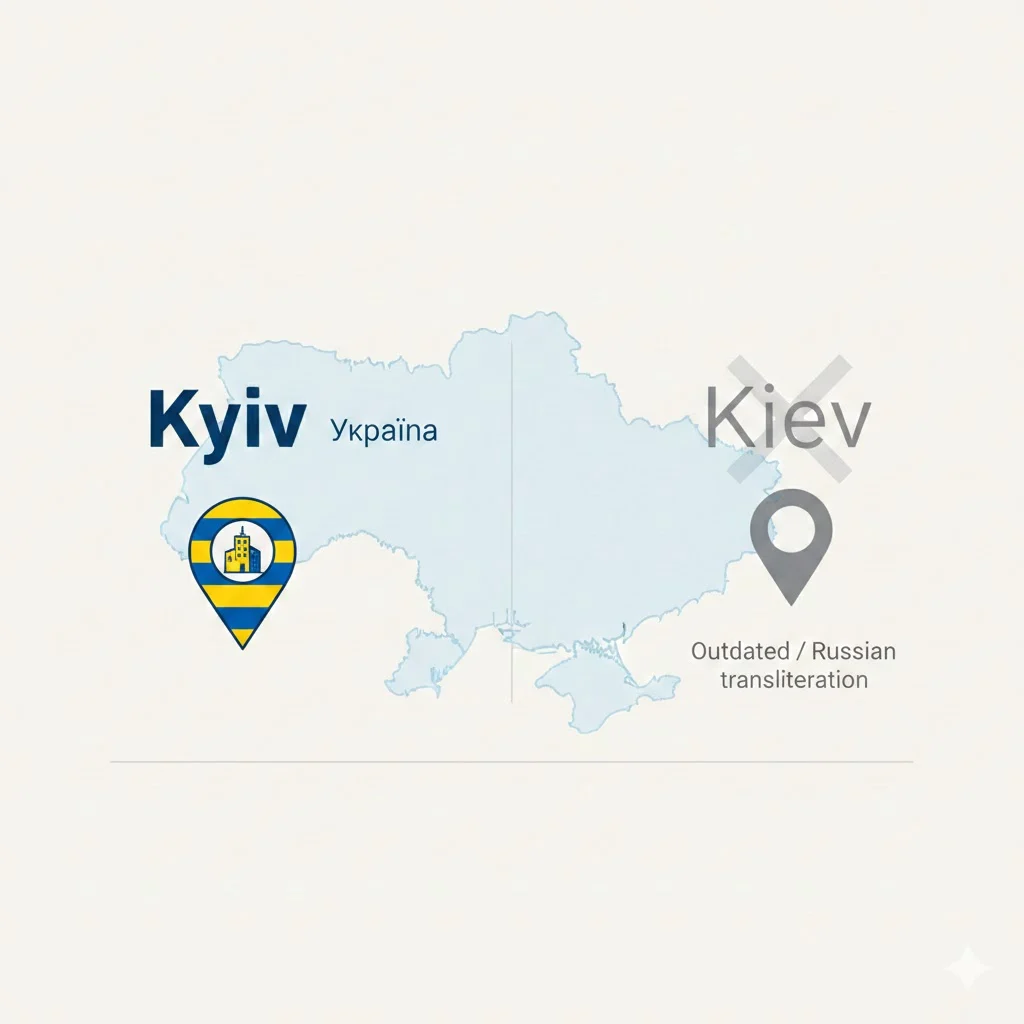
Kyiv is the correct and official name of Ukraine’s capital city. Kiev is an older English spelling based on Russian pronunciation. Today, Kyiv is used internationally, officially, and diplomatically, while Kiev is considered outdated and politically sensitive.
Many people are confused about Kyiv or Kiev because both names appear in news, maps, books, and conversations. For years, “Kiev” was widely used in English, but today “Kyiv” is the preferred and correct form. This change has caused uncertainty for students, writers, travelers, and readers.
People search for “Kyiv or Kiev” to understand which name is correct, why the spelling changed, and whether using one or the other is wrong. The confusion is not only linguistic but also historical and cultural.
This article explains everything clearly. You will learn the real difference between Kyiv and Kiev, the history behind both names, why the change happened, how each form is used today, common mistakes, real-world examples, and clear guidance on which name you should use.
Kyiv or Kiev Quick Answer
Kyiv is the correct and modern name.
Kiev is an outdated spelling based on Russian usage.
Simple Explanation
- Kyiv comes from the Ukrainian language.
- Kiev comes from the Russian language.
Today, Kyiv is used by Ukraine, governments, international organizations, and modern media.
Grammar and Language Background Explained
To understand the difference between Kyiv and Kiev, we must understand how names change across languages.
Kyiv Language Origin
Kyiv is the English transliteration of the Ukrainian word Київ.
Ukrainian is the official language of Ukraine.
The pronunciation is closer to “Keev” or “Kee-yiv.”
Kiev Language Origin
Kiev comes from the Russian spelling Киев.
This spelling entered English during periods when Ukraine was under Russian and Soviet control.
The pronunciation sounds like “Kee-ev.”
Why Transliteration Matters
Transliteration is the process of converting words from one alphabet to another. Ukrainian and Russian use the Cyrillic alphabet, but they are different languages. That difference affects how names are spelled in English.
Historical Background of Kyiv and Kiev
Early History
Kyiv is one of the oldest cities in Eastern Europe. It dates back over 1,400 years and was the center of the medieval state known as Kyivan Rus.
The name Kyiv is believed to come from Kyi, a legendary founder of the city.
Russian Empire Influence
When Ukraine became part of the Russian Empire, Russian language and spelling became dominant in administration and education. During this time, Kiev became common in international usage.
Soviet Era Usage
During the Soviet Union, Russian was promoted as the main language. English-language maps, textbooks, and media adopted Russian spellings, including Kiev.
Independence of Ukraine
In 1991, Ukraine became an independent country. Ukrainian became the official state language. As a result, Ukraine promoted Ukrainian-based spellings, including Kyiv.
Why the Name Changed in English Usage
The shift from Kiev to Kyiv did not happen overnight. It was gradual and intentional.
Ukrainian Government Request
The Ukrainian government formally requested international organizations, media, and governments to use Kyiv instead of Kiev.
Cultural Identity
Using Kyiv respects Ukrainian language, identity, and sovereignty. Many Ukrainians see Kiev as a reminder of Russian dominance.
International Adoption
Over time, major institutions adopted Kyiv, including airlines, international media, and global organizations.
Kyiv or Kiev in Modern Usage
In News Media
Most major news outlets now use Kyiv.
- Reports from Kyiv describe current events.
- Journalists stationed in Kyiv cover developments.
Older articles and archives may still contain Kiev.
In Government and Diplomacy
Governments and international bodies officially use Kyiv.
- Embassies are located in Kyiv.
- Diplomatic statements refer to Kyiv.
In Travel and Maps
Modern maps, airlines, and travel guides use Kyiv.
- Flights land in Kyiv.
- Tourists visit Kyiv landmarks.
In Education and Academia
Updated textbooks and academic writing use Kyiv.
Older materials may still show Kiev.
Why People Still Use Kiev
Despite the change, many people still use Kiev for understandable reasons.
Habit and Familiarity
Kiev was used for decades in English. Many people learned it that way and continue to use it out of habit.
Older Media and Books
Books, films, and documents published before the change often use Kiev.
Language Transition Takes Time
Language changes slowly. Some speakers are unaware of the updated form.
Lack of Context Awareness
Some people do not realize that the spelling has political and cultural significance.
Which One Should You Use Today
The answer is clear.
- Use Kyiv in all modern writing and speech.
- Avoid Kiev unless discussing historical usage or quoting old sources.
General Rule
If you are writing today, choose Kyiv.
This applies to:
- Articles
- Essays
- Travel content
- News writing
- Educational material
British and American English Usage
There is no difference between British and American English on this issue.
Both now prefer Kyiv.
Examples
- UK media reports from Kyiv.
- US officials speak about Kyiv.
The spelling Kyiv is standard across English varieties.
Political and Cultural Sensitivity
The choice between Kyiv and Kiev is not only linguistic.
Why Kyiv Matters
Using Kyiv acknowledges Ukrainian independence and identity.
Why Kiev Can Be Sensitive
Kiev reflects Russian language influence and is often seen as outdated or dismissive of Ukrainian sovereignty.
Respectful Language Choice
Using Kyiv shows awareness, respect, and accuracy in modern communication.
Common Mistakes and Corrections
Wrong: Kiev is the capital of Ukraine.
Correct: Kyiv is the capital of Ukraine.
Wrong: I traveled to Kiev last year.
Correct: I traveled to Kyiv last year.
Wrong: Kiev has many historic churches.
Correct: Kyiv has many historic churches.
Kyiv or Kiev in Sentences
Simple Sentences
- Kyiv is a beautiful city.
- Kyiv lies along the Dnipro River.
Medium Sentences
- The conference was held in Kyiv.
- Journalists reported live from Kyiv.
Formal Writing
- Kyiv plays a central role in Ukrainian history.
- Diplomatic talks took place in Kyiv.
Related Place Name Changes
Kyiv is not the only city whose English name changed.
- Bombay to Mumbai
- Peking to Beijing
- Calcutta to Kolkata
- Burma to Myanmar
These changes reflect local language and identity.
Kyiv or Kiev in Maps and Technology
Digital Maps
Modern navigation apps use Kyiv by default.
Airlines and Airports
Flight tickets and airport listings show Kyiv.
Software and Databases
Updated systems follow international naming standards and use Kyiv.
Practice Exercises
Fill in the Blanks
- The capital of Ukraine is ______.
Answer: Kyiv - International media now use ______ instead of Kiev.
Answer: Kyiv - Many old books still mention ______.
Answer: Kiev - The Ukrainian spelling of the city is ______.
Answer: Kyiv
Choose the Correct Word
- (Kyiv / Kiev) is the official capital of Ukraine.
Answer: Kyiv - Older maps often show (Kyiv / Kiev).
Answer: Kiev - Modern news reports come from (Kyiv / Kiev).
Answer: Kyiv - The Ukrainian government prefers (Kyiv / Kiev).
Answer: Kyiv
FAQs
Which is correct Kyiv or Kiev?
Kyiv is the correct and official name used today.
Why was Kiev used in the past?
Kiev came from Russian transliteration during imperial and Soviet periods.
Is Kiev wrong to use now?
It is outdated and generally discouraged in modern usage.
Do Ukrainians prefer Kyiv?
Yes, Kyiv reflects the Ukrainian language and identity.
Is there a pronunciation difference?
Yes, Kyiv follows Ukrainian pronunciation, while Kiev follows Russian.
Do British and American English differ on this?
No, both use Kyiv today.
Can I use Kiev in historical writing?
Yes, when discussing older texts or historical context.
Conclusion
The difference between Kyiv and Kiev goes far beyond spelling. Kyiv is the correct, modern, and respectful name of Ukraine’s capital city. It reflects Ukrainian language, culture, and independence. Kiev, while once common in English, is now outdated and linked to Russian influence.
Understanding this difference helps writers, students, travelers, and readers use accurate language. Choosing Kyiv shows awareness of history, respect for identity, and alignment with current global standards. If you remember one rule, remember this: in modern usage, always choose Kyiv.