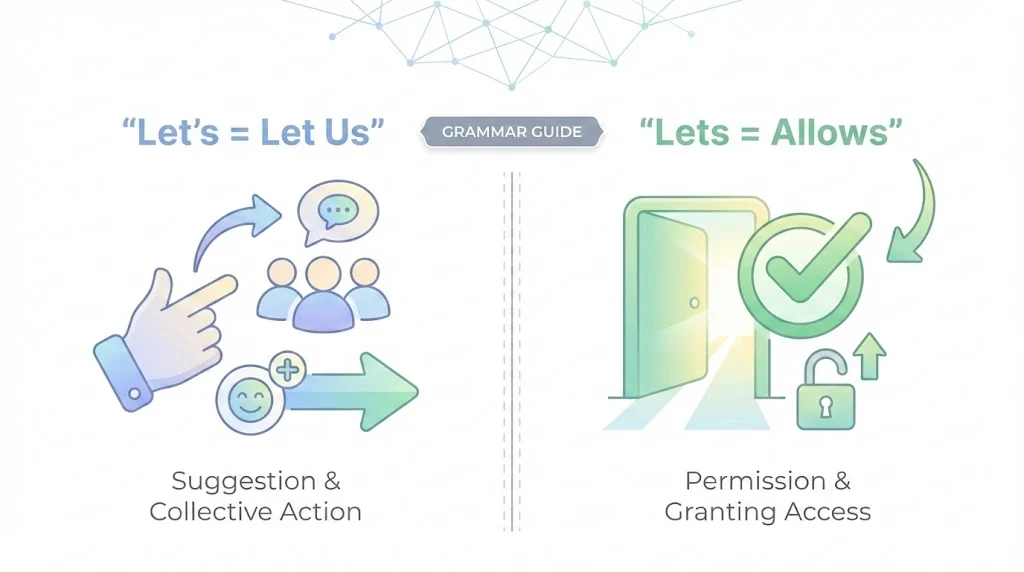
Let’s is short for let us and is used for suggestions or invitations. Lets is a verb meaning allows or permits. Always use the apostrophe for suggestions and omit it when meaning allows.
Many people get confused when writing lets or let’s because both words look similar and sound the same. This small difference, the apostrophe, changes the meaning completely. Using the wrong word can make a sentence confusing, unprofessional, or grammatically incorrect.
People often search for “lets or let’s” to understand when to use each word. The confusion is common in texting, emails, school essays, and even professional writing. A simple mistake with lets or let’s can make the difference between correct English and a basic grammar error.
This guide will explain everything you need to know about lets and let’s. You will learn the meaning of each word, grammar rules, real-life examples, common mistakes, exercises with answers, and tips to remember the correct usage every time. By the end, you will be confident writing sentences with lets or let’s without hesitation.
Lets or Let’s Quick Answer
Let’s is a contraction of let us and is used to make suggestions or invitations.
Lets is the third person singular form of the verb let, meaning allows or permits.
Examples
- Let’s go for a walk.
- He lets his children play outside.
- Let’s finish our homework before dinner.
- The teacher lets students ask questions freely.
Quick Tip
If you can replace the word with let us, use let’s. If it refers to allowing or permitting, use lets.
Grammar Rules Explained
Let’s Meaning and Rule
Let’s always contains an apostrophe. It is short for let us.
It is used to invite, suggest, or encourage action.
Examples
- Let’s start the meeting now.
- Let’s try a new approach.
- Let’s go to the park after school.
Lets Meaning and Rule
Lets is a verb. It is the third person singular of let.
It means to allow, permit, or give permission.
Examples
- She lets her dog sleep on the couch.
- He lets his friends borrow his car.
- The company lets employees work remotely.
Common Confusion
People often confuse these because they sound the same. Missing the apostrophe changes the meaning completely:
- Let’s eat dinner. (Suggestion)
- Lets eat dinner. (Incorrect)
Why People Make Mistakes With Lets or Let’s
Several reasons contribute to the confusion.
Same Pronunciation
Both words sound identical in speech, so writers often guess when typing.
Missing Apostrophe
Apostrophes are small but important. Many forget or ignore them.
Fast Typing
Typing quickly in messages or emails can lead to skipping punctuation.
Informal Writing Habits
Social media, texting, and casual writing often ignore grammar rules, which reinforces the mistake.
Weak Grammar Awareness
Many learners and even native speakers are unaware of contractions and homophones, causing frequent errors.
Lets or Let’s in Real-Life Usage
Seeing real-world examples helps remember the difference.
Daily Conversation
- Let’s go home.
- She lets him decide what to wear.
- Let’s cook something new tonight.
- My mom lets me watch movies on weekends.
Emails
- Let’s schedule a meeting tomorrow.
- The manager lets employees submit reports late.
- Let’s confirm our attendance today.
Social Media
- Let’s make today productive.
- The app lets users customize settings easily.
- Let’s try a fun challenge together.
Formal Writing
- Let’s review the company policy carefully.
- The regulation lets citizens access public records.
- Let’s examine the proposal step by step.
British and American English Usage
There is no difference between British and American English. Both use:
- Let’s for let us
- Lets for allows
Examples
- UK: Let’s meet tomorrow.
- US: Let’s meet tomorrow.
- UK: She lets her students choose subjects.
- US: She lets her students choose subjects.
Which One Should You Use
The rule is simple: replace it with let us in your head.
- If it works, use let’s.
- If not, use lets.
Quick Check
- Let us go shopping → Let’s go shopping
- He allows me → He lets me
Always remember: the apostrophe matters.
Common Mistakes and Corrections
Wrong: Lets go to the party.
Correct: Let’s go to the party.
Wrong: She let’s him borrow her book.
Correct: She lets him borrow her book.
Wrong: Lets start the project early.
Correct: Let’s start the project early.
Wrong: My father let’s me play video games.
Correct: My father lets me play video games.
Wrong: Lets be careful with the instructions.
Correct: Let’s be careful with the instructions.
Lets or Let’s in More Sentences
Simple Sentences
- Let’s begin the lesson.
- He lets her choose the color.
Medium Sentences
- Let’s finish the homework before dinner.
- The school lets students submit projects late.
Formal Sentences
- Let’s analyze the data carefully.
- The law lets citizens appeal decisions.
Related Homophones and Common Mistakes
Understanding other confusing words helps prevent errors.
- its or it’s
- your or you’re
- their or there
- then or than
- affect or effect
All these words are homophones or contractions like lets or let’s. Mastering them improves writing and confidence.
Practice Exercises
Fill in the Blanks
- ______ try a new recipe tonight.
Answer: Let’s - The teacher ______ students choose their projects.
Answer: lets - ______ be careful with the instructions.
Answer: Let’s - She ______ her friends borrow her bike.
Answer: lets - ______ watch the new movie this weekend.
Answer: Let’s
Choose the Correct Word
- (Lets / Let’s) meet after lunch.
Answer: Let’s - He (lets / let’s) his son play outside.
Answer: lets - (Lets / Let’s) finish the homework now.
Answer: Let’s - The app (lets / let’s) users save preferences.
Answer: lets
FAQs
What is the difference between lets and let’s?
Let’s is short for let us and is used for suggestions or invitations. Lets is a verb meaning allows or permits.
When should I use let’s in a sentence?
Use let’s whenever you want to suggest something, invite someone, or encourage action. For example, Let’s start the meeting.
When should I use lets in a sentence?
Use lets when referring to someone or something allowing or permitting. For example, She lets her children play outside.
Is let’s informal English?
No, let’s is acceptable in both formal and informal writing as long as it is used correctly as a contraction of let us.
Can lets or let’s start a sentence?
Yes, both can start a sentence, but let’s is more common for suggestions and invitations, while lets describes allowance or permission.
Why is this mistake so common?
Because both words sound the same, and many people forget the apostrophe or confuse the verb meaning of lets.
Does the apostrophe in let’s always matter?
Yes, without the apostrophe, let’s becomes incorrect and changes the meaning to lets, which is a verb.
Conclusion
The confusion between lets and let’s is common but easy to fix. Let’s is always a contraction of let us and needs an apostrophe. Lets is a verb meaning allows. Using the wrong word can make writing unclear or grammatically incorrect.
Remember the simple test: replace the word with let us in your sentence. If it works, use let’s. If not, use lets. With careful attention, examples, and practice, this common homophone mistake becomes easy to avoid. Clear writing builds confidence, looks professional, and improves communication in messages, emails, and school or work writing.