
British slang refers to informal words and expressions commonly used in the United Kingdom in everyday conversations. British slang adds personality, humor, and cultural meaning to communication and often differs from standard English.
Have you ever watched a British movie, TV show, or social media video and heard words that made you think, “Wait what does that mean?” You are not alone. British people use many unique expressions that can sound confusing if you are unfamiliar with them.
British slang is a huge part of everyday communication in the United Kingdom. These words and phrases make conversations sound more natural, friendly, and expressive. Some slang terms are funny, some are casual, and others may completely change meaning depending on the situation.
Today, British slang has become more popular worldwide because of social media, streaming platforms, gaming communities, and online conversations. Teenagers, young adults, travelers, and language learners frequently encounter these expressions online.
In this complete guide, you’ll learn the meaning of British slang, where it came from, popular words, regional differences, examples, and how to use these expressions naturally.
Let’s start with the basics.
What Is British Slang? (Quick Answer)
British slang refers to informal words and phrases commonly used by people in the United Kingdom instead of standard English words.
People use British slang to:
- Sound casual
- Add humor
- Express emotions
- Build social connection
- Make conversations feel natural
Example:
That’s brilliant, mate!
Meaning:
That’s really great, friend!
Definition & Meaning (Detailed Explanation)
British slang is a form of informal language used in daily conversations. Unlike formal English, slang changes over time and often reflects culture, age groups, and local communities.
People use British slang:
- With friends
- Online chats
- Social media
- Gaming communities
- Casual conversations
Why People Use British Slang
People use slang because it:
- Makes speech sound natural
- Creates social connection
- Shows personality
- Adds humor
- Reflects culture
Examples of British Slang in Daily Life
Example 1
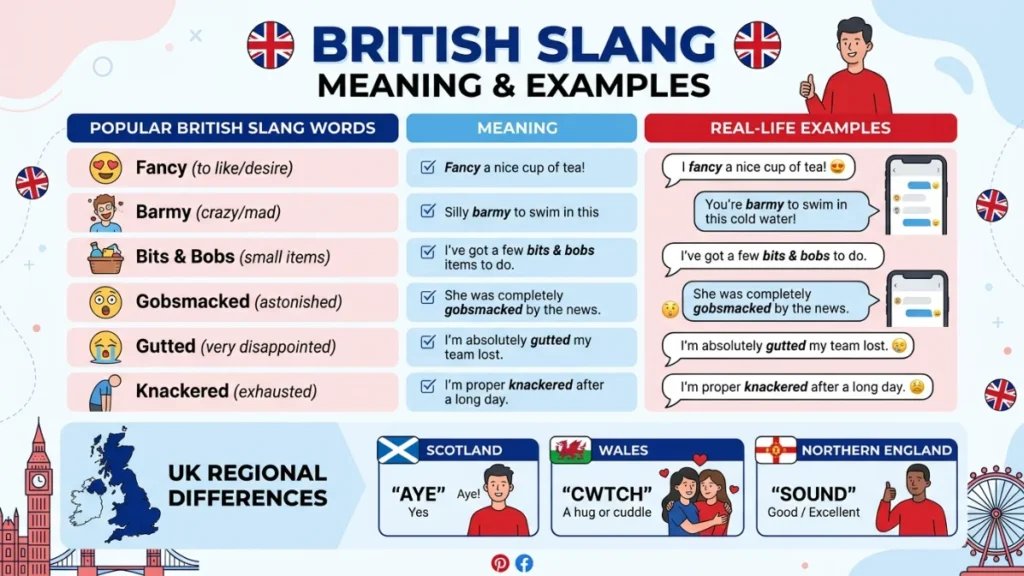
I’m knackered.
Meaning:
I’m very tired.
Example 2
Fancy grabbing some chips?
Meaning:
Do you want to get some fries?
Example 3
That’s dodgy.
Meaning:
That seems suspicious.
Example 4
Cheers, mate!
Meaning:
Thanks, friend!
Background & History of British Slang
British slang has a very long history. Many expressions started hundreds of years ago and evolved over time.
Slang developed through:
- Street culture
- Working-class communities
- Immigration
- Music
- Television
- Youth culture
The growth of the internet also changed how British slang spreads around the world.
Today, platforms like:
- TikTok
- YouTube
- Gaming communities
help slang travel quickly across countries.
Usage in Different Contexts
📱 Texting
Examples:
That’s mental 😂
I’m shattered today
Tone:
- Casual
- Friendly
📸 Social Media
Examples:
Proper good day today
Absolute legend
Tone:
- Funny
- Relaxed
🎮 Gaming
Examples:
That was rubbish
You’re smashing it
Tone:
- Playful
👯 Friends Chat
Examples:
Fancy coming over?
Stop taking the mick
Tone:
- Friendly
Context Table
| Context | Example | Meaning |
|---|---|---|
| Texting | Knackered | Very tired |
| Social Media | Proper | Very |
| Gaming | Rubbish | Bad |
| Friends | Mate | Friend |
Most Common British Slang Words
| British Slang | Meaning |
|---|---|
| Mate | Friend |
| Knackered | Extremely tired |
| Dodgy | Suspicious |
| Brilliant | Excellent |
| Proper | Very |
| Rubbish | Bad or nonsense |
| Cheers | Thank you |
| Fancy | Want |
| Gutted | Very disappointed |
| Chuffed | Very pleased |
British Slang in Professional Communication
British slang is common in casual settings, but not all expressions belong in professional communication.
❌ Avoid
- Very informal slang
- Strong regional expressions
- Unclear abbreviations
Example:
This report is rubbish
✅ Better Alternative
This report needs improvement
Hidden or Offensive Meanings
Some slang words may sound harmless but can become offensive depending on tone and context.
Safe Example
That’s mental
Used casually among friends.
Risky Example
Some older slang terms can unintentionally offend people.
Always consider:
- Situation
- Audience
- Tone
British Slang in Online Communities & Dating Apps
British slang is extremely common online.
Examples:
Dating Apps
You’re lovely
Meaning:
You’re attractive or kind
Social Media
Absolute legend
Meaning:
Someone impressive
Gaming
You’re smashing it
Meaning:
You’re doing really well
Comparison With American Slang
| British Slang | American Equivalent |
|---|---|
| Mate | Buddy |
| Chips | Fries |
| Flat | Apartment |
| Holiday | Vacation |
| Biscuit | Cookie |
| Trainers | Sneakers |
| Lift | Elevator |
| Rubbish | Trash |
10 Popular British Slang Terms
1. Mate
Friend
Cheers, mate
2. Knackered
Very tired
I’m knackered today
3. Dodgy
Suspicious
That looks dodgy
4. Chuffed
Very happy
I’m chuffed with the results
5. Gutted
Very disappointed
I’m gutted we lost
6. Fancy
Want something
Fancy a coffee?
7. Rubbish
Bad or nonsense
That’s rubbish
8. Brilliant
Excellent
Brilliant job
9. Proper
Very
That’s proper funny
10. Taking the Mick
Teasing someone
Are you taking the mick?
How to Respond to British Slang
😊 Casual
- Cheers!
- Nice one!
- Sounds good!
😂 Funny
- You’re having a laugh 😂
💼 Professional
- Understood
- Thank you
Example Conversation
A: I’m knackered after work
B: Same here, I need sleep
Regional & Cultural Differences
British slang changes across regions.
London
Examples:
- Bruv
- Peng
Manchester
Examples:
- Mad fer it
Scotland
Examples:
- Wee
Meaning:
Small
Liverpool
Examples:
- Boss
Meaning:
Great
Different cities can use the same words with slightly different meanings.
FAQs
What is British slang?
British slang refers to informal words used in the UK during everyday communication.
Why is British slang different?
It developed through history, culture, and regional communities.
Is British slang used online?
Yes. Social media and gaming made it more popular worldwide.
Is British slang formal?
No. Most slang is informal.
Can British slang be offensive?
Some terms can be, depending on tone and context.
Is British slang used in movies?
Yes. British movies and TV shows use slang regularly.
Conclusion
Now you understand what British slang means and how it works in everyday conversations. British slang makes communication more colorful, expressive, and natural. From casual texting to social media and real-life interactions, these expressions are a major part of modern language.
Learning common British slang terms can help you understand conversations better and communicate with more confidence. As language continues changing online, new slang will continue appearing.
Keep exploring new expressions and enjoy learning how people communicate around the world.