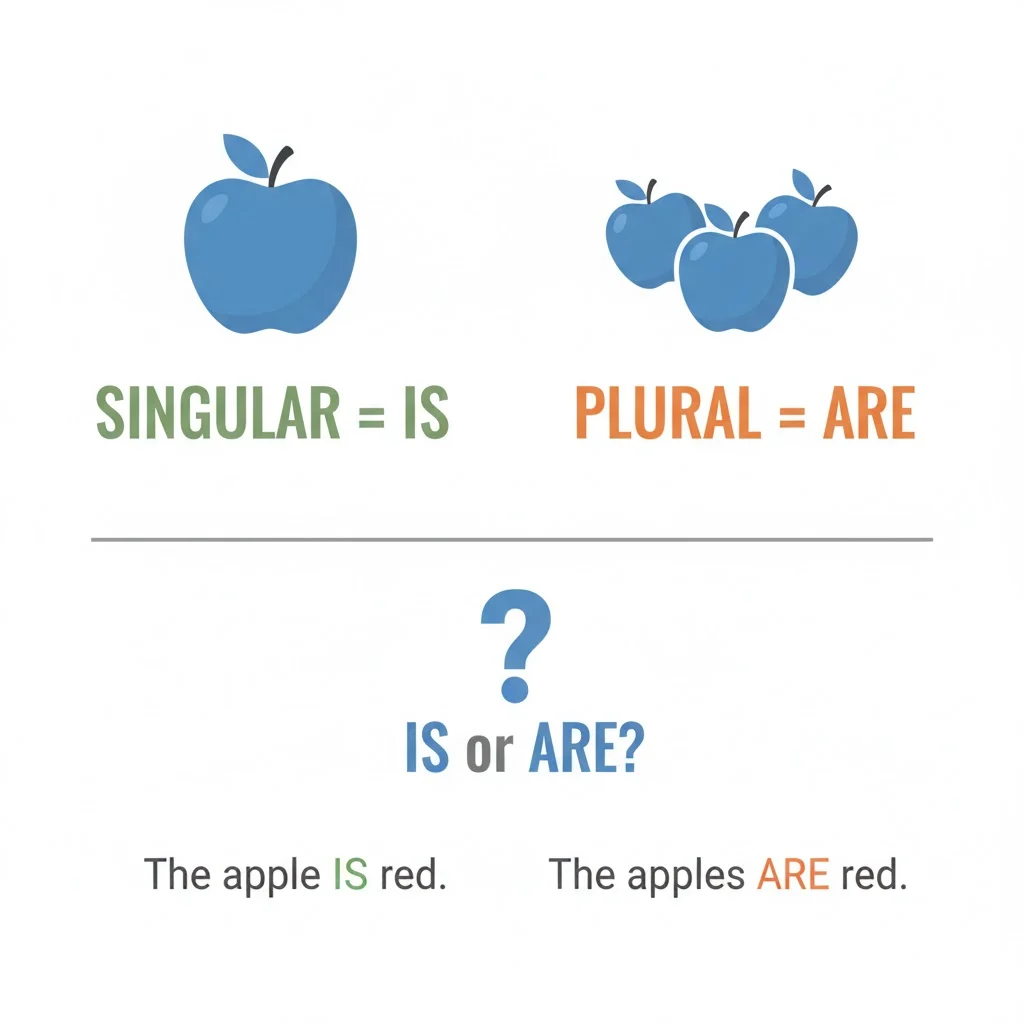
Is is used with singular subjects, while are is used with plural subjects. Use is for one person or thing, and are for more than one. Choosing the correct verb depends on the subject of the sentence, not on nearby words.
Many people feel confused when choosing between is or are. This confusion happens in daily writing, emails, school assignments, and even professional documents. Since both words are forms of the verb to be, writers often hesitate and guess, which leads to grammar mistakes.
People search for “is or are” because subject verb agreement is not always simple. Some sentences look plural but are actually singular. Others contain phrases that distract from the real subject. This makes it hard to decide whether is or are is correct.
This article explains the difference in a simple and clear way. You will learn grammar rules, understand why mistakes happen, see real-life examples, practice with exercises and answers, and gain confidence in using is or are correctly every time.
Quick Answer
Is is used with singular subjects.
Are is used with plural subjects.
Simple Examples
- The book is on the table.
- The books are on the table.
- She is happy.
- They are happy.
Easy Tip
Find the subject first.
If the subject is one, use is.
If the subject is more than one, use are.
Grammar Rules Explained
Is Meaning and Rule
Is is the singular form of the verb to be.
It is used with:
- He
- She
- It
- Singular nouns
Examples
- He is my friend.
- The car is new.
- This problem is easy.
Are Meaning and Rule
Are is the plural form of the verb to be.
It is used with:
- You
- We
- They
- Plural nouns
Examples
- They are my friends.
- The cars are new.
- These questions are easy.
Important Note About You
The word you always uses are, even when referring to one person.
- You are correct.
Why People Make Mistakes With Is or Are
Confusing Sentence Structure
Long sentences hide the real subject, making verb choice difficult.
Nearby Plural Words
Words close to the verb distract writers from the actual subject.
Lack of Grammar Awareness
Many writers rely on sound instead of rules.
Informal Writing Habits
Texting and casual writing reduce attention to grammar.
Collective Nouns Confusion
Words like team, family, or group cause uncertainty.
Is or Are in Real-Life Usage
Daily Conversation
- The weather is nice today.
- My friends are coming later.
- This answer is correct.
- Those answers are correct.
Emails
- The document is attached.
- The documents are attached.
- The meeting is scheduled for Monday.
Social Media
- Life is beautiful.
- Vacations are important.
Formal Writing
- The result is significant.
- The results are significant.
- This policy is effective.
British and American English Usage
There is no difference between British and American English.
Both follow the same subject verb agreement rules.
- The team is winning.
- The players are winning.
The meaning depends on whether the focus is singular or plural.
Which One Should You Use
Always identify the subject of the sentence.
Ask yourself:
Is the subject one thing or more than one?
- One subject → is
- More than one → are
Quick Check
Ignore extra words and look at the main noun.
- A list of items is on the desk.
- A group of students is present.
- The students are present.
Common Mistakes and Corrections
Wrong: The answers is correct.
Correct: The answers are correct.
Wrong: My friends is here.
Correct: My friends are here.
Wrong: A group of players are ready.
Correct: A group of players is ready.
Wrong: There is many reasons.
Correct: There are many reasons.
Is or Are in More Sentences
Simple Sentences
- This is my phone.
- These are my keys.
Medium Sentences
- The house is very old.
- The houses are very old.
Formal Sentences
- The conclusion is clear.
- The conclusions are supported by data.
Related Grammar Topics
Learning related rules improves accuracy.
- subject verb agreement
- was or were
- has or have
- do or does
- there is or there are
These patterns follow the same logic as is or are.
Practice Exercises
Fill in the Blanks
- The cat ___ sleeping.
Answer: is - The cats ___ sleeping.
Answer: are - This rule ___ easy to understand.
Answer: is - Those rules ___ important.
Answer: are - My shoes ___ new.
Answer: are
Choose the Correct Word
- The answer (is / are) correct.
Answer: is - The answers (is / are) correct.
Answer: are - There (is / are) a problem.
Answer: is - There (is / are) many problems.
Answer: are
FAQs
What is the difference between is and are?
Is is used with singular subjects, while are is used with plural subjects.
Can you ever use is with you?
No, you always takes are.
Why do people confuse is or are?
Because sentence structure and nearby words hide the real subject.
Is a group singular or plural?
Group is usually singular and takes is.
Is there a difference in British and American usage?
No, the rules are the same in both.
Can there be grammar exceptions?
Only in special sentence structures, but the basic rule always applies.
Conclusion
The difference between is and are depends entirely on the subject of the sentence. Is is used with singular subjects, and are is used with plural subjects. Many mistakes happen because writers focus on nearby words instead of identifying the true subject.
By slowing down and finding the subject first, you can choose the correct verb every time. With practice, examples, and awareness, using is or are becomes natural and easy. Clear grammar improves understanding and makes writing more confident and professional.