
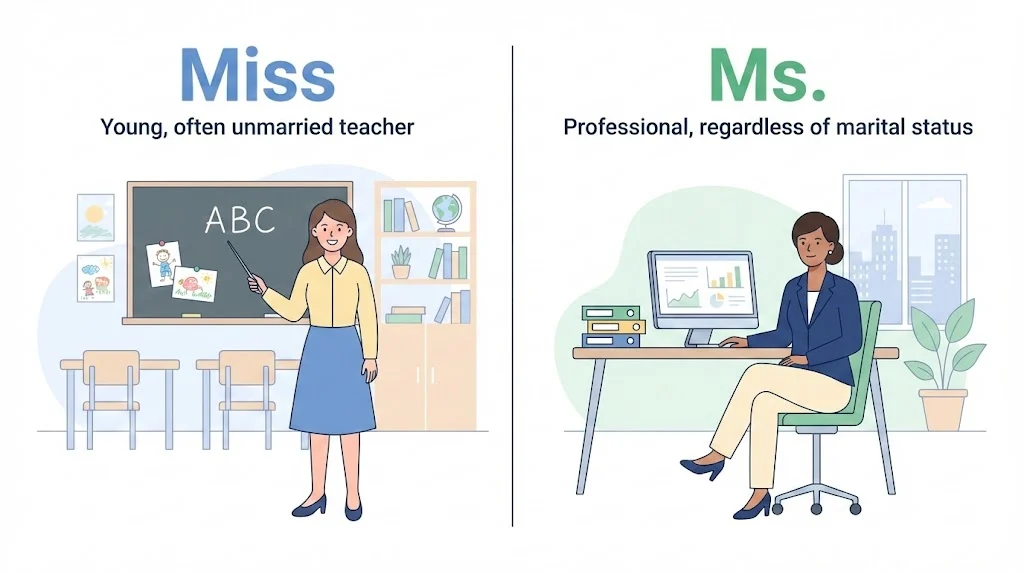
Ms and Miss are titles used before a woman’s name. Miss is traditionally used for an unmarried woman or girl, while Ms is a neutral title that does not show marital status. Use Ms when marital status is unknown or irrelevant, and use Miss when referring to a young or unmarried woman in traditional contexts.
Many people feel unsure when choosing between Ms or Miss because both titles are used before a woman’s name and seem similar. The confusion often happens in emails, school writing, official forms, and workplace communication. Choosing the wrong title can feel awkward or outdated, especially when modern usage keeps evolving.
People search for “Ms or Miss” because they want to understand when each title is correct and respectful. The difference is connected to tradition, social changes, and professional communication. While Miss was widely used in the past, Ms has become common in modern English because it focuses on equality and privacy.
This guide explains the difference between Ms and Miss clearly and simply. You will learn grammar rules, real life usage, common mistakes, examples, exercises, and practical tips so you can choose the right title confidently every time.
Ms or Miss Quick Answer
Miss is traditionally used for an unmarried woman or a young girl.
Ms is a neutral title that does not show marital status.
Simple Examples
- Miss Sarah is my teacher.
- Ms Ahmed will lead the meeting.
Quick Tip
Use Ms when you are unsure about marital status or when it does not matter. Use Miss when referring to a young or unmarried woman in traditional situations.
Grammar Rules Explained
Understanding grammar and social context helps remove confusion.
Miss Meaning and Rule
Miss is a title placed before a woman’s name. Traditionally, it refers to an unmarried woman or girl.
Examples
- Miss Emma is our new teacher.
- I spoke with Miss Johnson yesterday.
Miss is often used in schools, formal introductions, or traditional settings.
Ms Meaning and Rule
Ms is a neutral title that does not indicate whether a woman is married or unmarried.
Examples
- Ms Khan will present the report.
- Please contact Ms Ali for details.
Ms became popular to offer a respectful option similar to Mr, which does not show marital status.
Key Grammar Difference
- Miss shows traditional unmarried status.
- Ms does not reveal marital status.
The History and Evolution of Ms and Miss
To understand modern usage, it helps to look briefly at history.
Traditional Usage
In the past, English titles reflected marital status clearly:
- Miss for unmarried women
- Mrs for married women
This system focused heavily on a woman’s relationship status.
Rise of Ms
During the twentieth century, many people felt that titles should not reveal personal information. Men used Mr regardless of marriage, so Ms was introduced as a neutral alternative.
By the late twentieth century, Ms became common in workplaces, government forms, and professional communication.
Modern Usage
Today, Ms is often considered the safest and most respectful choice unless someone prefers Miss.
Why People Confuse Ms or Miss
Similar Appearance
Both titles are short and look similar, which causes quick writing mistakes.
Changing Social Norms
Older generations used Miss more often, while modern communication prefers Ms. This shift creates uncertainty.
Lack of Clear Teaching
Many learners are taught grammar but not social context, leading to confusion.
Professional vs Personal Settings
People are often unsure whether workplace communication requires Ms or Miss.
Ms or Miss in Real Life Usage
In Schools
Miss is commonly used for female teachers, especially in British English.
- Miss Taylor will check your homework.
In Workplaces
Ms is preferred because it is neutral and professional.
- Please send the email to Ms Roberts.
In Emails
When uncertain, Ms is safest.
- Dear Ms Lewis,
In Forms and Applications
Most modern forms include:
- Ms
- Miss
- Mrs
Many people choose Ms for privacy and neutrality.
In Social Situations
Miss may still be used for younger women or in traditional contexts.
British and American English Usage
Both British and American English use Ms and Miss, but some tendencies differ.
British English
Miss is still common for teachers and younger women. Ms is increasingly common in professional contexts.
American English
Ms is widely preferred in professional communication and formal writing.
Universal Rule
When uncertain, Ms is usually the safest choice in both regions.
Which One Should You Use
Ask yourself these simple questions.
Is the person young and traditionally addressed as Miss?
Use Miss.
Is marital status unknown or unimportant?
Use Ms.
Is the context professional or formal?
Use Ms.
Quick Guidance
- Professional emails: Ms
- Business letters: Ms
- School teachers: Miss or Ms depending on preference
- Unknown preference: Ms
Common Mistakes and Corrections
Wrong: Dear Miss Sarah Ahmed (when marital status unknown in business context).
Correct: Dear Ms Sarah Ahmed.
Wrong: Using Miss for every adult woman automatically.
Correct: Use Ms unless you know she prefers Miss.
Wrong: Assuming Miss sounds more polite.
Correct: Ms is often considered more neutral and respectful today.
Ms or Miss in Everyday Examples
Simple Sentences
- Miss Anna teaches math.
- Ms Brown works in finance.
Medium Sentences
- Please ask Ms Walker about the schedule.
- Miss Emily will guide the students today.
Formal Sentences
- Ms Lee will chair the conference session.
- The award was presented to Miss Carter.
Professional Communication Tips
Choosing the correct title matters in professional writing.
Email Etiquette
If you do not know the person’s preference, start with Ms.
Example:
Dear Ms Thompson,
Workplace Communication
Using Ms shows professionalism and avoids assumptions.
Customer Service
Many businesses default to Ms for respectful neutrality.
Social and Cultural Considerations
Language evolves with society. Titles can reflect respect and inclusivity.
Privacy Matters
Ms avoids sharing personal marital information.
Personal Preference
Some women prefer Miss for personal or cultural reasons. Always respect chosen titles.
Modern Professional Norms
Most modern workplaces recommend Ms as a default.
Related Titles and Comparison
Understanding other titles helps clarify usage.
Mrs
Used for married women traditionally.
Mr
Used for men regardless of marital status.
Mx
A gender neutral title used in some modern contexts.
Comparison Table
| Title | Indicates Marital Status | Common Usage |
|---|---|---|
| Miss | Traditionally unmarried | Schools, traditional contexts |
| Ms | Neutral | Professional and general use |
| Mrs | Traditionally married | Personal preference |
Why Ms Became Popular
The growing use of Ms reflects social change.
- Focus on equality
- Respect for privacy
- Professional neutrality
- Consistency with Mr
Many organizations now recommend Ms as default unless told otherwise.
Practice Exercises
Fill in the Blanks
- ______ Smith will lead today’s meeting.
Answer: Ms - Our teacher, ______ Emily, is very kind.
Answer: Miss - Please contact ______ Khan for details.
Answer: Ms - ______ Rachel teaches science at school.
Answer: Miss - The report was submitted by ______ Lewis.
Answer: Ms
Choose the Correct Word
- (Ms / Miss) Johnson works in the legal team.
Answer: Ms - The students greeted (Ms / Miss) Taylor.
Answer: Miss - Dear (Ms / Miss) Adams, thank you for your email.
Answer: Ms - (Ms / Miss) Claire is our class teacher.
Answer: Miss
Common Situations and Recommended Choice
Job Applications
Use Ms unless the person’s preference is known.
Networking Events
Use Ms for professionalism.
School Communication
Follow what the teacher introduces herself as.
Formal Invitations
Ms is usually safest unless specified otherwise.
Ms or Miss in Modern Digital Communication
Email Signatures
Many professionals include Ms before their names.
Online Forms
Most platforms list Ms as a standard option.
Social Media
Titles are less common, but Ms remains preferred in professional profiles.
Tips to Remember the Difference
- Miss usually refers to younger or unmarried women in traditional settings.
- Ms is neutral and modern.
- When unsure, choose Ms.
- Respect personal preference if known.
FAQs
What is the difference between Ms and Miss?
Miss traditionally refers to an unmarried woman, while Ms is neutral and does not indicate marital status.
When should I use Ms instead of Miss?
Use Ms in professional settings or when you do not know a woman’s marital status.
Is Ms more respectful than Miss?
Ms is often seen as more neutral and professional because it avoids assumptions.
Can Miss be used for adults?
Yes, some adults prefer Miss, especially in traditional or teaching contexts.
Is Ms used in both British and American English?
Yes, both regions use Ms, especially in modern professional communication.
Should I use Ms if I am unsure?
Yes, Ms is generally the safest and most respectful choice.
Do women choose their own preferred title?
Yes, personal preference matters, and it is best to follow how someone introduces herself.
Conclusion
The difference between Ms and Miss is simple once you understand the purpose of each title. Miss is traditionally used for unmarried women or younger girls, while Ms is a neutral title that does not reveal marital status. Modern communication, especially in professional environments, often prefers Ms because it is respectful and inclusive.
Choosing the right title shows attention to detail and respect for others. When you are unsure which title to use, Ms is usually the safest option. However, personal preference always matters, so it is best to follow how someone identifies herself whenever possible.
By learning the history, grammar rules, real-world examples, and common mistakes, you can confidently choose between Ms or Miss in emails, letters, forms, and daily communication. Clear and respectful language helps build stronger and more professional interactions.