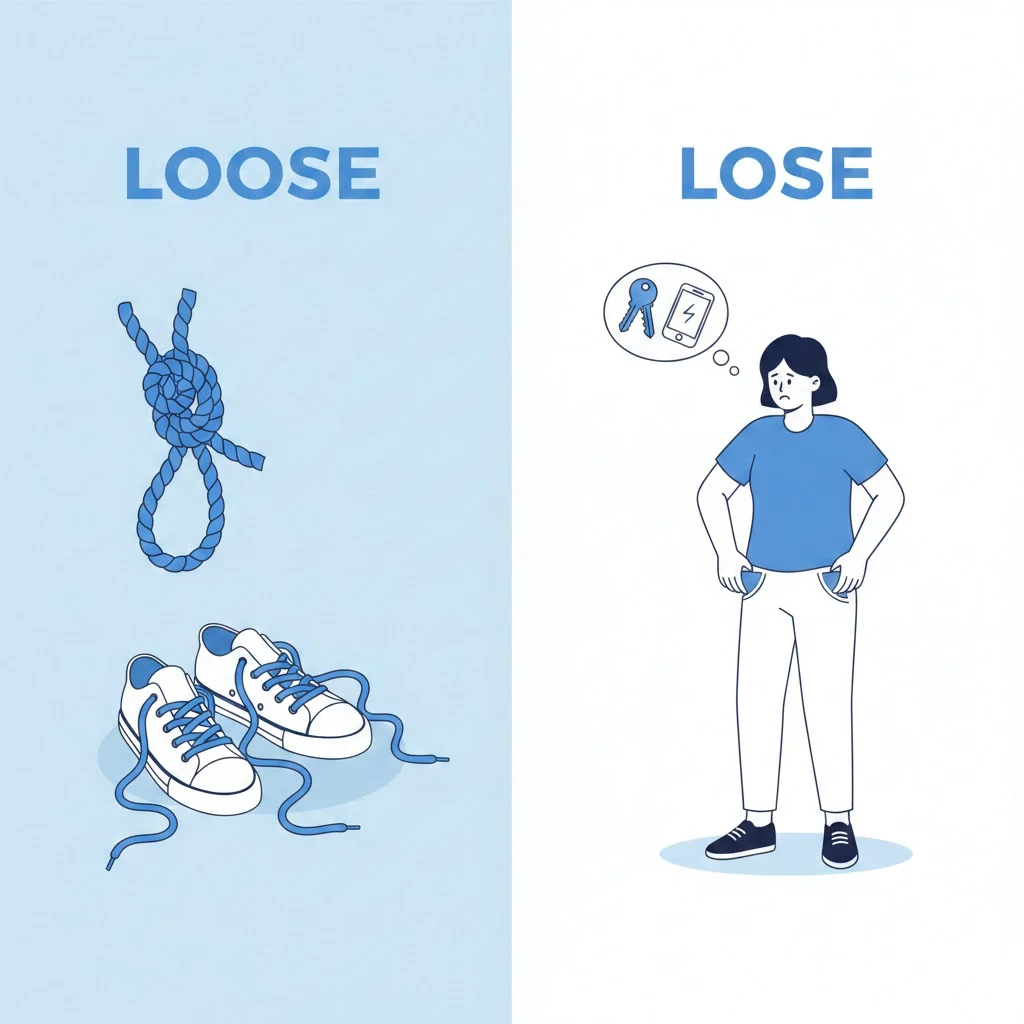
Loose means not tight or free. Lose means to fail to keep something or be unable to find it. Use loose for things that are not tight and lose for loss, failure, or missing something.
Many people feel confused when writing loose or lose because both words look similar and sound almost the same. A single extra letter changes the meaning completely. This confusion appears very often in school writing, emails, social media, and even professional content.
People search for “loose or lose” because using the wrong word can change the meaning of a sentence and make writing look careless. Saying you will “loose weight” instead of “lose weight” is a very common mistake that can cause embarrassment.
This article explains the difference between loose and lose in a clear and simple way. You will learn grammar rules, why people make this mistake, real life examples, common errors, practice exercises with answers, and easy tips to remember the correct usage every time.
Quick Answer
Loose describes something that is not tight or is free.
Lose means to misplace something or fail to win or keep it.
Simple Examples
- My shirt is loose.
- I don’t want to lose my keys.
- The rope is loose.
- They might lose the game.
Easy Tip
If you can tighten it, use loose.
If you can misplace it or fail at it, use lose.
Grammar Rules Explained
Loose Meaning and Rule
Loose is usually an adjective.
It describes something that is not tight, not fixed, or free.
It can also be a verb, meaning to release.
Examples
- These shoes are too loose.
- The dog broke loose.
- He wore a loose jacket.
Lose Meaning and Rule
Lose is always a verb.
It means to fail to keep something, misplace something, or not win.
Examples
- I don’t want to lose my phone.
- Our team may lose the match.
- She will lose weight with exercise.
Key Difference
- Loose describes a condition.
- Lose describes an action or result.
Why People Confuse Loose or Lose
Similar Spelling
The words differ by only one letter, which makes them easy to mix up.
Similar Sound
Loose and lose sound very close in pronunciation, especially in fast speech.
Typing Habits
Many people type quickly and do not notice the extra letter.
Weak Vocabulary Awareness
Some writers know the meaning but forget the spelling while writing.
Online Writing Culture
Social media and chats often ignore spelling rules, spreading the mistake.
Loose or Lose in Real Life Usage
Daily Conversation
- My pants feel loose today.
- I don’t want to lose this opportunity.
- The button is loose.
- He may lose his job.
Emails
- The screw is loose and needs fixing.
- Please do not lose this document.
- Wear loose clothing for comfort.
Social Media
- Trying to lose weight this month.
- My shoelaces are loose again.
- Don’t lose hope.
Formal Writing
- A loose connection caused the issue.
- Companies may lose revenue without planning.
British and American English Usage
There is no difference between British and American English.
Both use:
- Loose for not tight
- Lose for loss or failure
Examples
- UK: The handle is loose.
- US: The handle is loose.
- UK: They did not want to lose the case.
- US: They did not want to lose the case.
Which One Should You Use
Ask yourself one simple question.
Am I describing something not tight?
Use loose.
Am I talking about losing, failing, or missing something?
Use lose.
Quick Memory Trick
Loose has extra O, meaning extra space.
Lose has one O, meaning something is gone.
Common Mistakes and Corrections
Wrong: I want to loose weight.
Correct: I want to lose weight.
Wrong: The door handle is lose.
Correct: The door handle is loose.
Wrong: Don’t loose your temper.
Correct: Don’t lose your temper.
Wrong: My shoes are lose.
Correct: My shoes are loose.
Loose or Lose in More Sentences
Simple Sentences
- The knot is loose.
- I might lose my wallet.
Medium Sentences
- The chair became loose after years of use.
- He did not want to lose the competition.
Formal Sentences
- A loose cable caused the malfunction.
- Investors may lose confidence during crises.
Related Confusing Words
Learning similar word pairs helps avoid mistakes.
- loose or lose
- lets or let’s
- its or it’s
- your or you’re
- affect or effect
These words often confuse writers due to spelling or sound.
Practice Exercises
Fill in the Blanks
- My shirt feels too ______.
Answer: loose - I don’t want to ______ my keys.
Answer: lose - The bolt is ______.
Answer: loose - They may ______ the match.
Answer: lose - Wear ______ clothes in summer.
Answer: loose
Choose the Correct Word
- I hope I don’t (loose / lose) my job.
Answer: lose - The wire is (loose / lose).
Answer: loose - She wants to (loose / lose) weight.
Answer: lose - His grip was (loose / lose).
Answer: loose
FAQs
What is the difference between loose and lose?
Loose means not tight, while lose means to misplace something or fail to win or keep it.
Is loose ever a verb?
Yes, loose can be a verb meaning to release something.
Can lose be used as a noun?
No, lose is always a verb.
Why is loose or lose such a common mistake?
Because the words look similar and sound almost the same.
How can I remember the difference easily?
Loose has an extra O, which means extra space. Lose has one O, meaning something is gone.
Is this mistake common in professional writing?
Yes, especially in fast typing and informal communication.
Conclusion
The confusion between loose and lose is very common, but it is easy to fix once you understand the difference. Loose describes something that is not tight or free, while lose means to misplace something or fail to keep or win it.
A simple memory trick can help. Loose has extra space, and lose means something is missing. By practicing with examples and exercises, you can avoid this mistake in daily writing, emails, and professional documents.
Correct word usage improves clarity, confidence, and writing quality. Once you master loose or lose, this common error will no longer trouble you.