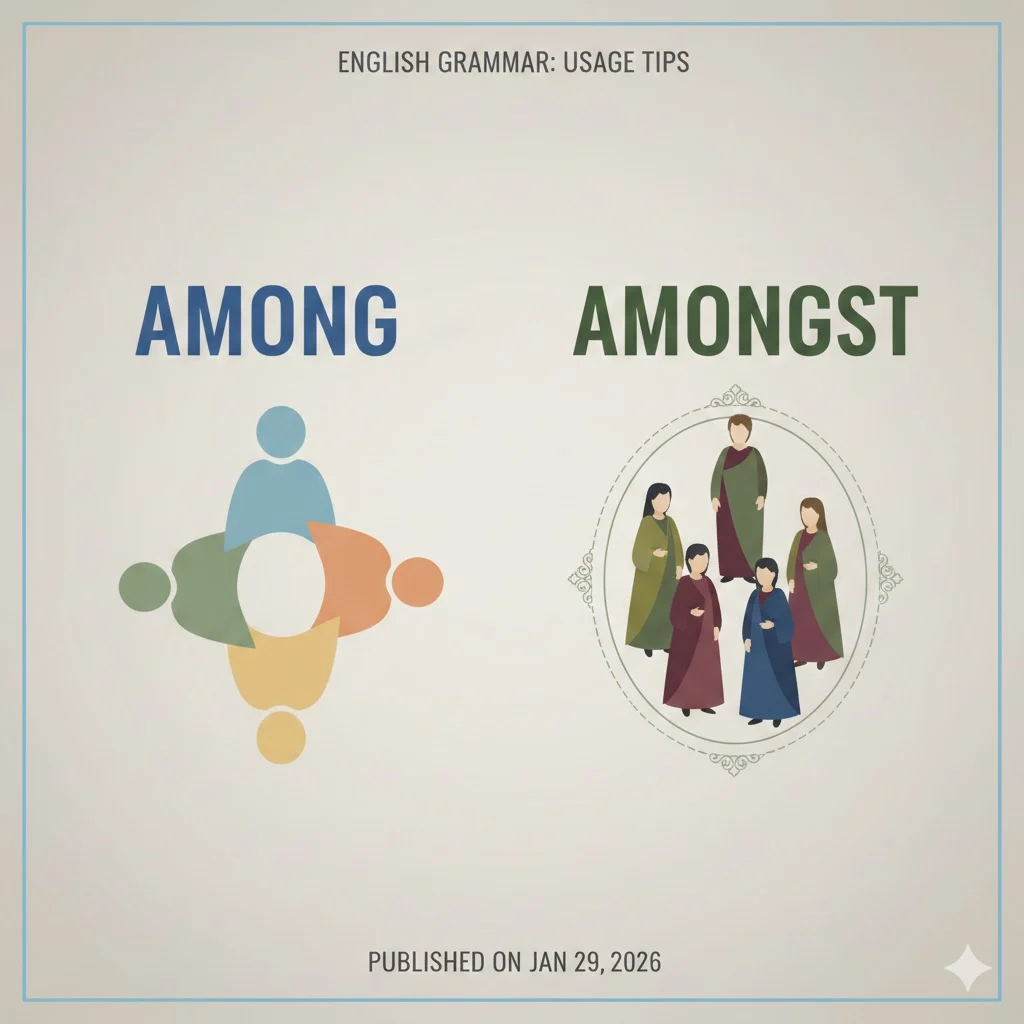

Among and amongst have the same meaning. Among is more common in modern English, especially American English. Amongst is more traditional and is used more often in British English or formal writing. In most situations, among is the better and safer choice.
Many people are confused about among or amongst because both words look similar and mean the same thing. The confusion usually comes from not knowing which one is correct or which one sounds more natural. Writers often wonder whether one is more formal or whether one is outdated.
People search for “among or amongst” to understand the difference and avoid mistakes in essays, emails, and professional writing. Choosing the wrong word does not usually make a sentence wrong, but it can make writing sound unnatural or old fashioned.
This article explains the difference between among and amongst in clear and simple language. You will learn grammar rules, usage differences, why people get confused, real world examples, common mistakes, practice exercises with answers, and clear guidance on which word you should use.
Quick Answer
Among and amongst mean the same thing.
Among is modern and widely used.
Amongst is traditional and less common.
Simple Examples
- She was sitting among friends.
- He felt comfortable amongst his colleagues.
Both sentences are correct, but among sounds more natural today.
Grammar Rules Explained Clearly
Meaning of Among
Among is a preposition.
It means being part of a group or surrounded by more than two things or people.
Examples
- She was happy among her family.
- The secret was shared among friends.
- Divide the money among the players.
Meaning of Amongst
Amongst has the same meaning as among.
It is simply a longer, older form of the word.
Examples
- He walked amongst the crowd.
- She felt safe amongst trusted people.
There is no difference in meaning, only in style and usage.
Why People Confuse Among or Amongst
Same Meaning
Both words mean the same thing, which makes it hard to know which one to use.
Regional Differences
British English uses amongst more often than American English.
Formal Writing Confusion
Some people think amongst is more correct or more educated, which is not true.
Exposure to Old Texts
Older books and formal writing often use amongst, influencing learners.
Overthinking Grammar
Writers sometimes think English always needs a complex choice when it does not.
Among or Amongst in Real Life Usage
Daily Conversation
- She felt relaxed among friends.
- He stood among the crowd.
Emails
- The tasks were divided among team members.
- Please share this information among the group.
News and Media
- The funds were distributed among families.
- Trust grew among the community.
Formal Writing
- Cooperation among nations is important.
- Unity amongst diverse cultures was discussed.
In modern writing, among appears far more often.
British and American English Usage
American English
American English strongly prefers among.
Amongst is rare and often sounds outdated.
Example
- She lives among her neighbors.
British English
British English uses both forms.
Amongst appears more in formal or traditional writing.
Example
- He walked amongst the trees.
Which One Should You Use
For most writers, the best choice is among.
Use among if:
- You want clear modern English
- You are writing for a global audience
- You want natural sounding sentences
Use amongst only if:
- You are writing in a traditional British style
- You want a formal or literary tone
In everyday writing, among is always safe.
Common Mistakes and Corrections
Wrong: He was sitting amongst of friends.
Correct: He was sitting among friends.
Wrong: Divide it amongst them equally.
Correct: Divide it among them equally.
Wrong: She felt lonely amongest strangers.
Correct: She felt lonely among strangers.
Among or Amongst in More Sentences
Simple Sentences
- She stood among classmates.
- He felt calm amongst nature.
Medium Sentences
- Trust grew among the team members.
- The leader walked amongst the people.
Formal Sentences
- Cooperation among nations promotes peace.
- Harmony amongst cultures strengthens society.
Related Confusing Prepositions
Learning similar word pairs improves accuracy.
- between or among
- beside or besides
- during or while
- since or for
These words also confuse writers because of subtle usage differences.
Practice Exercises
Fill in the Blanks
- She sat ______ her friends.
Answer: among - The prize was shared ______ the winners.
Answer: among - He felt comfortable ______ trusted colleagues.
Answer: amongst - The secret spread ______ the group.
Answer: among
Choose the Correct Word
- He walked (among / amongst) the crowd.
Answer: among - The money was divided (among / amongst) the players.
Answer: among - She felt safe (among / amongst) family members.
Answer: among - The story became popular (among / amongst) readers.
Answer: among
FAQs
What is the difference between among and amongst?
There is no difference in meaning. Among is modern and common, while amongst is traditional.
Is amongst wrong English?
No, amongst is correct but less commonly used.
Which is better for modern writing?
Among is better for modern and professional writing.
Is amongst British English?
Yes, it is used more often in British English.
Can I always use among instead of amongst?
Yes, among works in all situations.
Does amongst sound formal?
Yes, it often sounds formal or old fashioned.
Which word should students use?
Students should use among for clarity and simplicity.
Conclusion
The difference between among and amongst is not about meaning but about style and usage. Both words are correct, but among is the modern and widely preferred option. It sounds natural, clear, and professional in all forms of writing.
Amongst is still acceptable, especially in British English or formal writing, but it is less common today. For most writers, choosing among will always be the right decision.
If you want simple, correct, and confident English, use among. Understanding this small distinction helps improve writing flow and avoids unnecessary confusion.