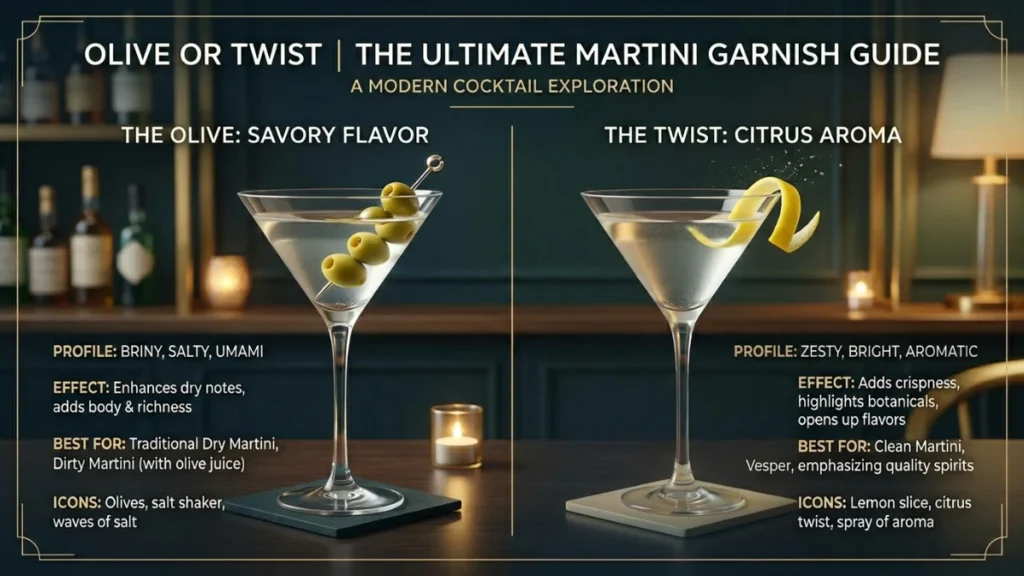

Olive or twist refers to a common cocktail question about garnish preference. An olive is placed in the drink, while a twist uses citrus peel for flavor and aroma.
The first time I ordered a martini at a formal dinner, the server asked, “Olive or twist?” I froze because I did not understand the difference. I knew both were cocktail garnishes, but I had no idea how they changed the drink. Later, I learned that an olive adds a salty and savory taste, while a twist adds fresh citrus aroma and flavor.
After trying both styles, I realized the choice can completely change the cocktail experience. If you have ever felt confused by this phrase, this guide will explain everything clearly, including meanings, origins, usage, examples, and which option might suit your taste better.
Olive or Twist Quick Answer
“Olive or twist” is a question commonly asked when serving martinis and cocktails.
An olive adds a salty and savory flavor.
A twist adds citrus aroma and freshness using lemon or orange peel.
Quick Examples
Martini with olives
Martini with a lemon twist
What Does Olive or Twist Mean
The phrase olive or twist is mostly used in bars, restaurants, and cocktail culture.
It asks which garnish you want in your drink.
Olive
An olive is placed directly into the cocktail.
It adds:
Salty flavor
Savory taste
Classic martini style
Twist
A twist is a strip of citrus peel twisted over the drink.
It adds:
Fresh citrus aroma
Light bitterness
Bright flavor
Olive vs Twist Difference
| Option | Description | Flavor | Common Use |
|---|---|---|---|
| Olive | Whole olive garnish | Salty and savory | Classic martinis |
| Twist | Citrus peel garnish | Fresh and citrusy | Dry martinis |
Key Point
Olives make cocktails richer and saltier.
Twists make cocktails lighter and fresher.
The Origin of Olive or Twist
The phrase comes from traditional martini culture.
Classic martinis became popular in the late nineteenth and early twentieth centuries. Bartenders often finished the drink with a garnish.
Two garnishes became especially famous:
Green olives
Lemon twists
Because these were the most common options, bartenders started asking customers:
“Olive or twist?”
Over time, the phrase became part of cocktail culture worldwide.
The History of Martini Garnishes
Early Martini Culture
Early martinis were simple mixtures of gin and vermouth.
Garnishes were added later to improve aroma and presentation.
Rise of the Olive
Olives became popular because they balanced the sharp taste of gin with salty richness.
Rise of the Twist
Lemon twists became popular among people who preferred cleaner and fresher flavors.
Today, both garnishes remain iconic in cocktail culture.
Why People Get Confused About Olive or Twist
Many people hear the phrase for the first time at restaurants or bars.
Confusion happens because:
Not everyone drinks cocktails regularly
The phrase sounds unusual
People may not know cocktail garnish terms
The word twist has many meanings in English
Some people even think twist refers to stirring style instead of citrus peel.
Olive Meaning in Cocktails
In cocktails, an olive is more than decoration.
It changes the drink’s flavor profile.
Olive Characteristics
Salty
Savory
Rich
Smooth
Common Olive Types
Green olives
Stuffed olives
Blue cheese olives
Garlic olives
Example
He ordered a dirty martini with extra olives.
Twist Meaning in Cocktails
A twist is a strip of citrus peel, usually lemon.
The peel is twisted over the drink to release oils.
Twist Characteristics
Fresh
Bright
Citrusy
Aromatic
Common Twist Types
Lemon twist
Orange twist
Lime twist
Example
She preferred her martini with a lemon twist.
Olive or Twist in Martini Culture
Martinis are strongly connected with this phrase.
Classic Martini with Olive
Traditional and savory.
Popular among people who enjoy bold flavors.
Dry Martini with Twist
Cleaner and lighter.
Popular among people who prefer citrus aroma.
Dirty Martini
Usually served with olives and olive brine.
Olive vs Twist Flavor Comparison
| Feature | Olive | Twist |
|---|---|---|
| Taste | Salty | Citrusy |
| Aroma | Savory | Fresh |
| Texture | Soft | Light |
| Drink Style | Rich | Clean |
| Common Pairing | Dirty martini | Dry martini |
Which Option Should You Choose
Your choice depends on taste preference.
Choose Olive If You Like
Savory flavors
Saltiness
Classic martinis
Rich taste
Choose Twist If You Like
Fresh citrus aroma
Light cocktails
Cleaner finish
Subtle bitterness
Olive or Twist in Everyday Examples
At a Bar
Bartender: Olive or twist?
Customer: I will take a twist.
In Movies
Many classic films include martini scenes featuring olives or twists.
In Social Media
People often share cocktail photos with captions mentioning olives or twists.
In Restaurants
Servers ask this question when preparing martinis.
Olive or Twist in Popular Culture
Cocktails have a strong place in film and entertainment culture.
The phrase became widely recognized because of:
Classic Hollywood films
Luxury dining culture
Celebrity cocktail scenes
Modern cocktail trends
Martinis are often shown as elegant or sophisticated drinks.
British vs American Cocktail Preferences
| Region | Common Preference |
|---|---|
| United States | Olive martinis more common |
| United Kingdom | Twist garnishes more common |
| Europe | Mixed preferences |
| Global cocktail bars | Both widely used |
These preferences can vary depending on bar culture and drink trends.
Why Bartenders Ask Olive or Twist
Bartenders ask this question because garnish changes the entire cocktail experience.
The garnish affects:
Flavor
Smell
Presentation
Texture
Even a small lemon twist can change how a drink tastes.
Olive or Twist in Formal Writing
The phrase also appears in lifestyle magazines, cocktail blogs, and restaurant menus.
Example
The bartender served the martini with a fresh lemon twist.
Example
The cocktail menu offered olives stuffed with blue cheese.
Common Mistakes with Olive or Twist
Mistake 1 Thinking Twist Means Stirring
In cocktails, twist refers to citrus peel, not mixing style.
Mistake 2 Assuming Olive Is Only Decoration
Olives also affect flavor.
Mistake 3 Using the Wrong Garnish
Some cocktails traditionally pair better with specific garnishes.
Olive or Twist in Cocktail Types
Gin Martini
Works well with olives or twists.
Vodka Martini
Often served with twists for cleaner flavor.
Dirty Martini
Usually served with olives.
Citrus Cocktails
Twists are more common.
Olive or Twist and Cocktail Aroma
Smell is important in cocktails.
Olive Aroma
Savory and salty.
Twist Aroma
Bright citrus oils.
When citrus peel is twisted, oils spray onto the drink surface and improve aroma.
Olive or Twist in Fine Dining
Luxury restaurants often present garnish choices elegantly.
Servers may ask:
Would you prefer olive or twist with your martini?
This adds personalization to the dining experience.
Real World Usage in Restaurants and Bars
Casual Bars
Simple garnish choices.
Luxury Cocktail Bars
Special olives and premium citrus peels.
Hotel Lounges
Classic martini service with garnish selection.
Related Cocktail Terms
Understanding related terms improves cocktail vocabulary.
Neat
Served without ice.
Dirty Martini
Martini with olive brine.
Dry Martini
Martini with less vermouth.
Garnish
Decorative edible addition to a drink.
Olive or Twist Usage Trends
Modern cocktail culture continues to popularize this phrase.
Social media and luxury dining trends have increased interest in:
Craft cocktails
Martini culture
Cocktail garnishes
Today, many younger drinkers are learning classic cocktail terms for the first time.
Why Olive or Twist Matters in Cocktail Experience
Many people think garnishes are only decorative.
In reality, they influence:
Flavor balance
Drink aroma
Overall experience
A cocktail with olives tastes very different from one with a lemon twist.
Olive or Twist in Home Bartending
Home bartenders also use these garnishes.
Tips for Olives
Use chilled olives.
Avoid overly salty brine.
Choose quality olives.
Tips for Twists
Use fresh citrus peel.
Twist directly over the drink.
Avoid bitter white pith.
Olive or Twist and Food Pairing
Olive Pairing
Works well with salty snacks and cheese.
Twist Pairing
Pairs better with seafood and lighter dishes.
Exercise 1 Choose the Correct Option
Fill in the blank with olive or twist.
A dry martini is often served with a lemon ______.
Answer: twist
A dirty martini usually includes an ______.
Answer: olive
The bartender asked whether I wanted an olive or a ______.
Answer: twist
Exercise 2 Correct the Sentence
Rewrite the sentence correctly.
The bartender added a twist olive to the martini.
Answer: The bartender added an olive to the martini.
She ordered a martini with a lemon olive.
Answer: She ordered a martini with a lemon twist.
FAQs
What does olive or twist mean?
It is a cocktail question asking which garnish you want in your martini: an olive or a citrus twist.
What is a twist in a cocktail?
A twist is a strip of citrus peel twisted over the drink to release aromatic oils.
Why do martinis use olives?
Olives add salty and savory flavor that balances the strong taste of the drink.
Which is better olive or twist?
It depends on personal preference. Olives create richer flavor, while twists create fresher flavor.
What cocktails use twists?
Dry martinis and citrus based cocktails often use twists.
Can cocktails have both olive and twist?
Some bartenders use both, but traditionally most martinis use one garnish style.
What is the most common martini garnish?
Olives and lemon twists are the two most common martini garnishes worldwide.
Conclusion
The phrase olive or twist is a classic part of cocktail culture and martini tradition. Although it sounds simple, the choice between an olive and a twist can completely change the flavor, aroma, and overall experience of a drink.
An olive creates a salty and savory profile that works especially well in traditional or dirty martinis. A twist, on the other hand, adds fresh citrus aroma and a lighter finish that many people prefer in dry martinis.
Understanding the meaning behind this phrase helps make cocktail ordering easier and more enjoyable. Whether you are dining at a luxury restaurant, visiting a cocktail bar, or making drinks at home, knowing the difference allows you to choose the garnish that best matches your taste.
Both garnishes have a long history and remain important symbols of classic cocktail culture. Once you try each option, you will quickly understand how much a small garnish can transform a drink.