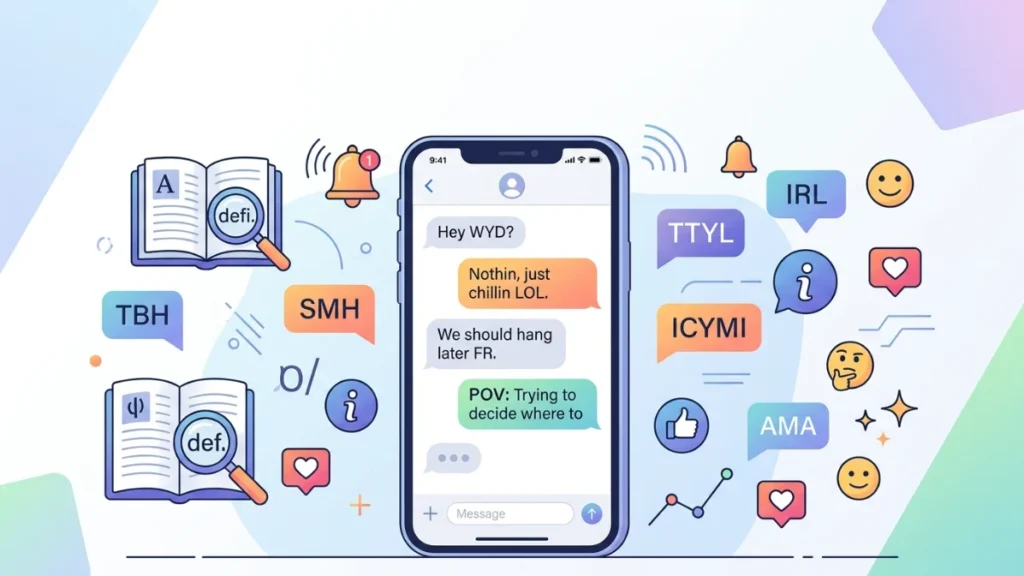

Quick Answer: A slang dictionary is a collection of informal words, abbreviations, and phrases used in everyday speech and online communication. It helps explain modern internet slang like WYD, WYF, LOL, and others. These dictionaries are commonly used to understand social media language on platforms like Instagram, TikTok, Snapchat, WhatsApp, and messaging apps.
If you’ve ever seen a message like “FR, that’s cap 😂” or “WYA rn?” and felt lost, you’re not alone. Online communication has created a completely new language filled with abbreviations, shortcuts, and slang expressions that change constantly.
A slang dictionary exists to decode this fast-moving digital language. Whether you’re scrolling TikTok comments, chatting on Instagram, or texting friends, understanding slang helps you stay connected and avoid confusion. This guide breaks down everything you need to know in a simple, practical way.
What Is a Slang Dictionary?
A slang dictionary is a reference guide that explains informal language used in everyday conversations, especially online.
Unlike a traditional dictionary, it focuses on:
- Internet slang words
- Text abbreviations
- Social media expressions
- Gaming terms
- Pop culture phrases
Simple Explanation
A slang dictionary translates “internet language” into normal English.
For example:
- LOL = Laugh Out Loud
- WYD = What You Doing
- FR = For Real
- Cap = Lie
So if someone says:
“That story is cap 😂”
A slang dictionary helps you understand it means:
“That story is not true.”
In short, it acts like a bridge between formal English and modern digital communication.
Why Do People Use a Slang Dictionary?
People use a slang dictionary because internet language is always changing.
Here’s why it is helpful:
1. To understand social media conversations
Platforms like TikTok and Instagram are full of slang terms.
2. To avoid confusion
Many abbreviations have multiple meanings depending on context.
3. To communicate better
Understanding slang helps you respond naturally.
4. To keep up with trends
New slang words appear every month online.
5. To understand youth language
Teenagers and young adults often create new expressions.
Slang Dictionary Meaning at a Glance
| Slang Term | Meaning | Where Used | Example |
|---|---|---|---|
| LOL | Laugh Out Loud | Text, social media | “That’s funny LOL” |
| FR | For Real | Chat, comments | “FR that’s true” |
| WYD | What You Doing | Messaging apps | “WYD rn?” |
| WYA | Where You At | Chat, DMs | “WYA bro?” |
| Cap | Lie / Fake | TikTok, slang chat | “No cap” |
| Bet | Agreement | Casual chat | “Bet, let’s go” |
| Sus | Suspicious | Gaming, TikTok | “That’s sus” |
| POV | Point of View | TikTok videos | “POV: you forgot homework” |
Types of Slang in a Slang Dictionary
A modern slang dictionary includes different categories of language.
1. Internet Slang
Used in social media and messaging.
Examples:
- LOL
- BRB
- IDK
2. Gaming Slang
Used in online games.
Examples:
- GG (Good Game)
- AFK (Away From Keyboard)
- Noob
3. Social Media Slang
Used on TikTok, Instagram, Snapchat.
Examples:
- POV
- Delulu
- Rizz
4. Everyday Slang
Used in casual spoken English.
Examples:
- Chill
- Dude
- Lit
How a Slang Dictionary Works
A slang dictionary works by:
- Listing slang terms
- Explaining meanings in simple language
- Providing usage examples
- Showing context (when to use it)
Unlike formal dictionaries, slang dictionaries are updated frequently because internet language evolves quickly.
Slang Dictionary Examples in Real Life
Here are some common examples explained simply:
- “That party was lit” → The party was fun and exciting
- “He’s so sus” → He seems suspicious
- “No cap, I’m serious” → I’m telling the truth
- “Bet, I’ll do it” → Okay, I agree
- “I’m dead 😂” → That’s extremely funny
A slang dictionary helps decode all of these expressions instantly.
Slang Dictionary on Social Media Platforms
Different platforms use slang in different ways.
On Instagram, slang is used in:
- Comments
- Captions
- DMs
Example:
“That outfit is fire 🔥 no cap”
Meaning: The outfit looks amazing.
TikTok
TikTok is one of the biggest sources of new slang.
Example:
“POV: you open the slang dictionary for the first time”
- POV
- Rizz
- Mid
- Delulu
Snapchat
Snapchat slang is often short and casual.
Example:
“WYA rn?”
Meaning: Where are you right now?
WhatsApp slang is more private and conversational.
Example:
“BRB, dinner time”
Meaning: Be right back.
Facebook / Messenger
Older but still uses common slang.
Example:
“LOL that’s funny”
Why Slang Changes So Fast
Slang changes quickly because:
- Social media trends evolve daily
- Influencers create new phrases
- Memes spread instantly
- Gaming culture influences language
- Younger users create new expressions
A slang dictionary must constantly update to stay relevant.
Slang Dictionary for Beginners
If you are new to internet slang, start with these:
- LOL = Laughing
- FR = For Real
- WYD = What You Doing
- WYA = Where You At
- BRB = Be Right Back
- IDK = I Don’t Know
Once you understand these, advanced slang becomes easier.
Common Mistakes People Make With Slang
1. Using slang in formal writing
Bad:
“Dear sir, WYD?”
Better:
“What are you doing?”
2. Misunderstanding meaning
Some slang changes based on context.
Example:
- “Sus” = suspicious or funny depending on tone
3. Overusing slang
Too much slang can make messages unclear.
4. Using outdated slang
Some words become old quickly.
Slang Dictionary vs Formal Dictionary
| Feature | Slang Dictionary | Formal Dictionary |
|---|---|---|
| Language type | Informal | Formal |
| Usage | Social media, texting | Academic, professional |
| Updates | Frequent | Slow |
| Examples | LOL, WYD | Define, Explain |
| Purpose | Decode modern slang | Standard language meaning |
Real Chat Examples Using Slang Dictionary Terms
Instagram DM
A: That pic is fire 🔥
B: FR, you look great
Snapchat
A: WYA?
B: At home rn
TikTok Comment
Comment: POV: you check slang dictionary for fun
A: BRB, call you later
B: Bet
Gaming Chat
Player: GG bro
Player 2: GG
Group Chat
Friend: That joke was sus 😂
You: No cap
Casual Chat
A: That movie was mid
B: FR, expected more
Safety Tip: Understanding Context Matters
Even though slang is fun, always remember:
- Not every slang word is appropriate everywhere
- Some slang may be misunderstood
- Context decides meaning
Also, avoid sharing personal information when chatting with strangers online.
When Should You Use a Slang Dictionary?
Use a slang dictionary when:
- You don’t understand a message
- You see new TikTok slang
- You are confused by abbreviations
- You want to learn modern English
- You are chatting with younger audiences
FAQs About Slang Dictionary
1. What is a slang dictionary?
A slang dictionary explains informal internet words and expressions.
2. Why do people use slang dictionaries?
To understand online slang and social media language.
3. Is slang dictionary official?
No, it is informal and based on modern usage.
4. What is the purpose of slang?
To make communication faster and more casual.
5. Is slang used in formal writing?
No, slang is usually for casual communication.
6. What are common slang words?
LOL, WYD, FR, BRB, and cap.
7. Is slang the same everywhere?
No, slang changes by culture and platform.
8. Can slang have multiple meanings?
Yes, context changes meaning.
9. Is slang dictionary useful for students?
Yes, it helps understand modern communication.
10. Where is slang most used?
On TikTok, Instagram, Snapchat, and messaging apps.
Conclusion
A slang dictionary is a helpful guide that explains modern informal language used across social media, texting apps, and online conversations. It helps decode words like LOL, WYD, FR, and many others that are constantly evolving in digital communication.
Today, slang is everywhere—from Instagram comments to TikTok videos and Snapchat chats. Understanding it makes communication easier and more natural. However, context is always important because slang meanings can change depending on how and where they are used.
Whether you are a student, social media user, or just curious about internet language, a slang dictionary helps you stay updated and confident in online conversations.