
Have you ever received a text that simply said “IMA” and wondered what the sender meant?
You are not alone. Text messaging has created an entire language of abbreviations, shortcuts, and slang terms that make conversations faster and more casual. Among these commonly used abbreviations is IMA, a popular texting expression that appears in messages, social media posts, online chats, and even gaming conversations.
If you are new to internet slang, seeing IMA for the first time can be confusing. Unlike some abbreviations that have only one meaning, IMA can have different interpretations depending on the context. However, in most texting conversations, it has a very specific and widely understood meaning.
Understanding the IMA meaning in text can help you communicate more naturally, avoid misunderstandings, and keep up with modern online conversations.
In this complete guide, you will learn:
- What IMA means in texting
- How people use IMA in chats and social media
- Real life examples
- Alternative meanings of IMA
- When to use it and when to avoid it
- Similar slang terms and abbreviations
Let’s dive in and discover exactly what IMA means.
Quick Answer
IMA Meaning: I’m Gonna or I Am Going To
People use IMA as a shortened way of saying they are about to do something.
Example:
Friend 1: What are you doing tonight?
Friend 2: IMA watch a movie and relax.
In this example, IMA means “I am going to.”
IMA Meaning in Text and Chat Explained
In texting and online conversations, IMA stands for “I’m Gonna” or “I Am Going To.”
It is a casual abbreviation people use when talking about future actions or plans.
Instead of typing:
“I am going to call you later.”
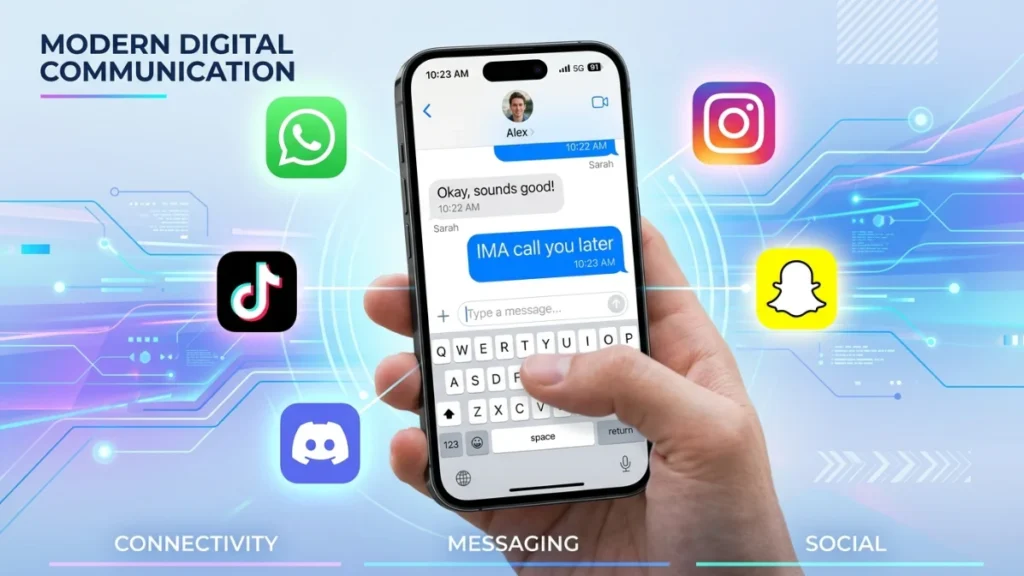
Someone may simply type:
“IMA call you later.”
This saves time and feels more conversational.
What IMA Usually Communicates
- I am about to do something
- I have a plan
- I will do something soon
- I am preparing for an action
- I intend to do something
IMA is especially common among younger users because it mirrors how many people speak in everyday conversation.
For example:
- IMA grab lunch.
- IMA head home.
- IMA finish this project.
- IMA go to sleep.
The phrase creates a relaxed and informal tone.
Real Chat Examples
The best way to understand IMA is through real world examples.
Texting Example
Friend 1: Want to play later?
Friend 2: Yeah, IMA finish homework first.
Social Media Example
Post: IMA take a break from social media for a few days.
Gaming Example
Player 1: Ready for another match?
Player 2: Hold on, IMA upgrade my gear.
Family Chat Example
Mom: Can you pick up groceries?
You: Sure, IMA leave in 10 minutes.
Workplace Chat Example
Coworker: Did you send the file?
You: Not yet, IMA send it after lunch.
These examples show that IMA is usually connected to future actions.
Variations and Synonyms of IMA
People often use similar expressions that mean nearly the same thing.
Common variations include:
- Imma
- Ima
- I’m gonna
- Gonna
- I will
- I’ll
- About to
Examples
IMA call you later.
Imma call you later.
I’m gonna call you later.
All three communicate essentially the same message.
Popular Search Variations
Many users search for:
- ima meaning in text
- what does ima mean
- ima slang meaning
- ima meaning in chat
- ima meaning on Snapchat
- ima meaning on TikTok
These searches all point to the same primary definition.
Background and History of IMA
The abbreviation IMA comes from spoken English rather than technology itself.
How It Started
In casual speech, many English speakers naturally shorten:
“I am going to”
into:
“I’m gonna”
Over time, internet users began typing conversations the same way they spoke.
Eventually, people shortened it further into:
IMA
This made texting even faster.
Why IMA Became Popular
Several factors helped its growth:
- Rise of texting culture
- Character limits on older platforms
- Faster communication habits
- Social media conversations
- Informal online language
As mobile messaging became more common, abbreviations like IMA became part of everyday digital communication.
Today, millions of people use it without thinking twice.
How IMA Is Used in Texting and Social Media
IMA appears across many online platforms.
People use IMA in captions and stories.
Example:
IMA start posting more travel photos.
Snapchat
Often used in quick replies.
Example:
IMA be there soon.
TikTok
Common in comments and video captions.
Example:
IMA try this trend tonight.
X
Users often use IMA in short posts.
Example:
IMA log off and touch some grass.
Discord
Popular among gamers.
Example:
IMA join voice chat in a minute.
Frequently appears in casual conversations.
Example:
IMA call after dinner.
Because IMA is informal, it fits naturally into social media environments.
IMA vs IMMA vs GONNA
Many people wonder if these terms mean the same thing.
| Term | Meaning | Usage |
|---|---|---|
| IMA | I am going to | Informal texting |
| IMMA | I’m going to | Very casual slang |
| GONNA | Going to | Spoken and written slang |
| I’LL | I will | More standard English |
Example Comparison
IMA call you later.
IMMA call you later.
I’m gonna call you later.
I’ll call you later.
All four express a future action, but the level of formality differs.
Why People Use IMA
The popularity of IMA comes from convenience.
1. Faster Typing
People save time by shortening phrases.
2. Casual Tone
IMA feels friendly and relaxed.
3. Mobile Communication
Short messages are easier to type on phones.
4. Social Media Culture
Informal language dominates online platforms.
5. Natural Conversation
People often type how they speak.
IMA reflects spoken language more closely than formal writing.
Professional Suitability
IMA is generally not suitable for formal communication.
Appropriate Situations
- Friends
- Family
- Casual chats
- Gaming communities
- Social media
Situations to Avoid
- Business emails
- Academic papers
- Job applications
- Professional reports
Professional Alternative Examples
Instead of:
IMA send the report tomorrow.
Use:
I will send the report tomorrow.
Instead of:
IMA review the document later.
Use:
I will review the document later.
Formal communication benefits from complete sentences.
Other or Hidden Meanings of IMA
Although “I Am Going To” is the most common meaning in texting, IMA can have other meanings.
Indian Medical Association
A major professional medical organization in India.
Institute of Management Accountants
An international accounting association.
International Motor Association
Used in some industry contexts.
Important Reminder
When you see IMA in a text message, it almost always means “I Am Going To.”
The alternative meanings are usually found in professional or organizational settings.
Comparison Table
| Acronym | Meaning | Context |
|---|---|---|
| IMA | I Am Going To | Texting |
| BRB | Be Right Back | Chat |
| AFK | Away From Keyboard | Gaming |
| TTYL | Talk To You Later | Messaging |
| IDC | I Don’t Care | Slang |
| TBH | To Be Honest | Social Media |
| IMO | In My Opinion | Discussions |
| SMH | Shaking My Head | Reactions |
Best Practices
Using IMA correctly makes conversations smoother.
When to Use IMA
- Casual texting
- Social media posts
- Chat applications
- Conversations with friends
- Informal discussions
When to Avoid IMA
- Professional emails
- Academic writing
- Formal documents
- Client communication
- Official announcements
Helpful Tips
- Use it only in casual settings
- Know your audience
- Avoid excessive slang in professional situations
- Use standard English when clarity matters
How to Respond to IMA
Responding depends on the conversation.
Casual Response
Sounds good.
Friendly Response
Nice, have fun.
Encouraging Response
Go for it.
Funny Response
IMA wait and see if you actually do it.
Professional Style Response
Let me know once completed.
Understanding the context helps you choose the best reply.
Regional and Cultural Differences
IMA is widely understood in English speaking internet culture.
United States
Extremely common in texting.
United Kingdom
Used among younger internet users.
Canada
Frequently appears in casual messaging.
Australia
Common in social media conversations.
International Users
Many non native English speakers learn IMA through online communities, gaming, and social media.
Its usage continues to spread globally because internet culture crosses borders.
Why Understanding IMA Matters
Modern communication relies heavily on abbreviations.
Knowing what IMA means helps you:
- Understand conversations faster
- Avoid confusion
- Communicate naturally online
- Keep up with internet slang
- Improve digital literacy
As texting language evolves, understanding common abbreviations becomes increasingly important.
FAQs
1. What does IMA mean in texting?
IMA means I Am Going To or I’m Gonna.
2. What does IMA mean on Snapchat?
It usually means the sender is about to do something.
3. Is IMA proper English?
No. It is informal internet slang.
4. What is the difference between IMA and IMMA?
Both generally mean the same thing. IMMA is simply a different spelling variation.
5. Can I use IMA in professional emails?
No. Use “I will” or “I am going to” instead.
6. Is IMA popular on social media?
Yes. It is commonly used on TikTok, Instagram, Snapchat, Discord, and WhatsApp.
7. Does IMA always mean I Am Going To?
In texting, almost always yes. Context can occasionally suggest another meaning.
Conclusion
IMA is a simple but widely used texting abbreviation that means “I Am Going To” or “I’m Gonna.”
People use it to talk about future actions, plans, and intentions in a quick and casual way.
Whether you see it on Snapchat, TikTok, Instagram, Discord, WhatsApp, or regular text messages, understanding the IMA meaning in text helps you communicate more naturally and confidently.
As online conversations continue to evolve, abbreviations like IMA remain an important part of modern digital communication.