
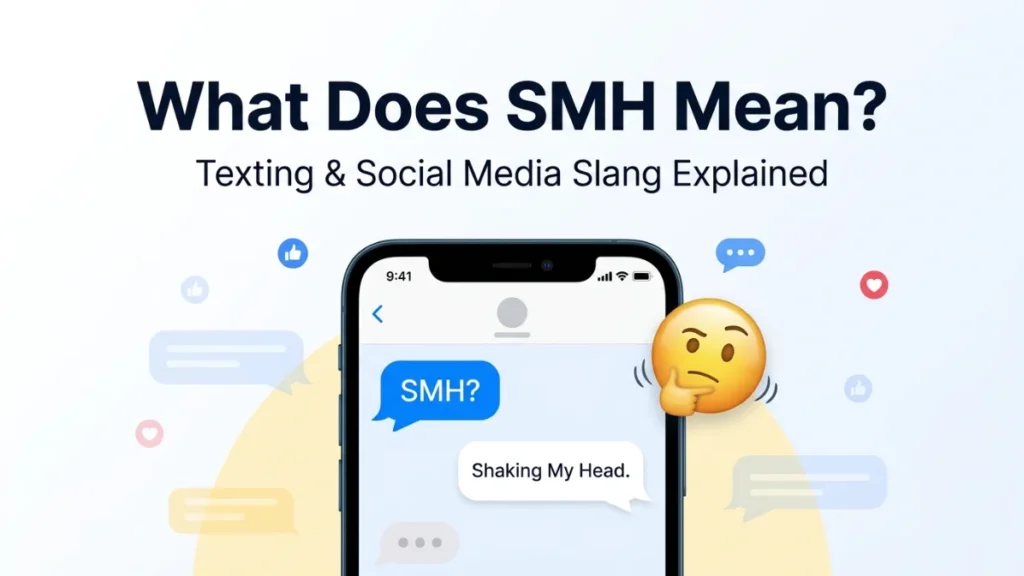

Seen “SMH” in a text, TikTok comment, or meme and wondered what it really means? You are not alone. SMH is one of the most common internet slang acronyms, but its tone can change depending on the conversation.
In simple terms, SMH means “shaking my head,” and people use it to show disbelief, disappointment, frustration, or mild embarrassment.
This guide explains the meaning of SMH in plain language, with real examples, social media usage, safer alternatives, and context-based explanations so parents, students, and everyday users can understand when it is casual, rude, or better avoided online in modern chats today.
What Does SMH Mean?
SMH means “shaking my head.” It is a common internet slang acronym used in text messages, comments, chats, memes, and social media posts. People use SMH when they feel disappointed, annoyed, confused, embarrassed, or in disbelief.
In simple words, SMH is the text version of shaking your head at something.
For example:
“He forgot his own birthday party. SMH.”
This means the person cannot believe what happened. They are not literally saying they are shaking their head every time. They are using the phrase to show reaction, emotion, or judgment.
SMH can be written in different ways:
- SMH
- smh
- S.M.H.
- smh bro
- smh my head
- just smh
The lowercase version smh is more casual and common in social media comments, while uppercase SMH can feel stronger or more direct.
SMH Meaning in Text
In text messages, SMH means “shaking my head.” It is used when someone reacts to something silly, disappointing, annoying, hard to believe, or embarrassing.
Here are some examples:
Example 1:
“Can’t believe you missed the deadline again. SMH.”
Example 2:
“She said she studied all night but forgot there was a test. smh.”
Example 3:
“He paid for express shipping and entered the wrong address. SMH.”
In these examples, SMH shows disappointment or disbelief. It adds emotion to a short message without needing a long explanation.
What Does SMH Stand For?
SMH stands for:
S — Shaking
M — My
H — Head
The full meaning is “shaking my head.”
It is an acronym, which means each letter represents the first letter of a word. Like LOL means “laughing out loud” and BRB means “be right back,” SMH is a short way to express a reaction.
What Does SMH Mean on Social Media?
On social media, SMH is used to react to something frustrating, foolish, disappointing, or unbelievable. You may see it on TikTok, Instagram, Snapchat, X/Twitter, Facebook, Reddit, YouTube comments, Discord, and group chats.
For example:
“People are still falling for that fake giveaway? SMH.”
This means the person is disappointed or surprised that people still believe the scam.
Another example:
“The video clearly explains it, and people are still asking the same question. smh.”
Here, SMH shows mild frustration.
Social media moves fast, so people often use short acronyms to express emotions quickly. SMH became popular because it is simple, easy to type, and easy to understand once you know the meaning.
What Does SMH Mean on TikTok?
On TikTok, SMH usually means someone is reacting with disbelief, embarrassment, or frustration. TikTok users often put it in comments under videos, memes, reaction clips, controversial opinions, or funny mistakes.
Example:
“Bro really thought that was a good idea. smh.”
This means the commenter thinks the person did something foolish or embarrassing.
Another example:
“The comments are missing the whole point, SMH.”
Here, SMH means the user is disappointed that other people did not understand the video.
SMH is not limited to TikTok, but it is common there because TikTok comment sections are full of short reactions and slang terms.
What Does SMH Mean on Snapchat?
On Snapchat, SMH means “shaking my head” and is usually used in private chats, story replies, or captions. It can show disappointment, disbelief, or playful annoyance.
Example:
Friend: “I left my phone in the fridge.”
You: “SMH how did you even do that?”
In this case, SMH is playful. It does not always mean serious anger. The tone depends on the relationship and the situation.
Is SMH Rude?
SMH is not always rude, but it can sound rude depending on how it is used.
For example:
Polite or playful:
“You forgot again? smh.”
This may sound light and friendly if sent to a close friend.
Rude or judgmental:
“You don’t even know that? SMH.”
This can sound insulting because it makes the other person feel foolish.
So, SMH itself is not a bad word, but it can feel dismissive if used in a harsh way.
Is SMH a Bad Word?
No, SMH is not a bad word. It does not contain profanity or vulgar language. However, it can still carry a negative tone because it often shows disappointment, judgment, or frustration.
It is safer than offensive acronyms, but you should still be careful when using it in formal or professional conversations.
Avoid using SMH in:
- Work emails
- School assignments
- Customer service replies
- Professional messages
- Serious discussions
- Formal writing
It is best for casual conversations, social media comments, memes, and friendly chats.
Why Do People Use SMH?
People use SMH because it quickly expresses a reaction. Instead of typing a full sentence like:
“I am disappointed and cannot believe this happened.”
They can simply write:
“SMH.”
It saves time and adds tone to a message.
People usually use SMH when they feel:
- Disappointed
- Annoyed
- Confused
- Embarrassed
- Shocked
- Frustrated
- Amused in a sarcastic way
- Surprised by someone’s mistake
SMH works well in online communication because text does not always show facial expressions or body language. The acronym helps replace the physical action of shaking your head.
How to Use SMH in a Sentence
Here are some simple examples of SMH in sentences:
Example 1:
“He copied the homework and still got the answers wrong. SMH.”
Example 2:
“She forgot her password right after changing it. smh.”
Example 3:
“They raised the price again? SMH.”
Example 4:
“You watched the whole movie and missed the main point. smh.”
Example 5:
“He said he was on the way, but he just woke up. SMH.”
In all these examples, SMH shows disbelief, frustration, or disappointment.
SMH Examples in Chat
Here are more realistic chat examples:
- Friend 1: I just sent the message to the wrong group.
Friend 2: SMH that’s embarrassing. - Friend 1: I bought tickets for the wrong date.
Friend 2: smh check before you pay next time. - Friend 1: He spoiled the ending on purpose.
Friend 2: SMH that’s so annoying. - Friend 1: I studied the wrong chapter.
Friend 2: smh I told you which one was coming.
These examples show that SMH can be serious, playful, sarcastic, or mildly judgmental.
SMH as a Reaction
SMH is often used as a reaction instead of a full sentence. Someone may reply only with:
“smh”
This short reply can mean:
- “I can’t believe this.”
- “That was foolish.”
- “That is disappointing.”
- “That makes no sense.”
- “I am embarrassed for you.”
- “That was a bad decision.”
The exact meaning depends on the conversation.
For example:
Person 1: I forgot my keys inside the car again.
Person 2: smh.
Here, the second person means they are disappointed or amused by the mistake.
SMH vs LOL
SMH and LOL are both common internet acronyms, but they show different reactions.
LOL means “laughing out loud.”
It shows something is funny.
SMH means “shaking my head.”
It shows disappointment, disbelief, or frustration.
Example with LOL:
“That joke was so bad, LOL.”
Example with SMH:
“You told that same bad joke again. SMH.”
LOL is usually positive or humorous. SMH is usually negative, sarcastic, or disappointed.
SMH vs SMDH
SMDH is a stronger version of SMH. It usually means “shaking my damn head.”
SMH is milder.
SMDH feels more frustrated or annoyed.
Example:
“He forgot the meeting again. SMH.”
This sounds disappointed.
“He forgot the meeting again after three reminders. SMDH.”
This sounds more irritated.
Because SMDH includes a stronger word, it is less suitable for formal situations.
Vs Facepalm
SMH and facepalm are similar because both show frustration or disbelief.
SMH means you are shaking your head.
Facepalm means you are covering your face with your hand because something is embarrassing or foolish.
Example:
“He pushed a door that clearly said pull. SMH.”
Example:
“He pushed a door that clearly said pull. Facepalm.”
Both can work, but facepalm often feels more visual and comedic.
SMH vs “I Can’t”
Sometimes people use “I can’t” in the same way as SMH.
Example:
“He really said the Earth is flat. I can’t.”
This means the person is so shocked or frustrated that they do not know what else to say.
SMH is shorter and more direct:
“He really said the Earth is flat. SMH.”
Both phrases express disbelief, but SMH feels more like judgment or disappointment.
Does SMH Mean “So Much Hate”?
Some people may think SMH means “so much hate,” but the common internet meaning is “shaking my head.”
In most text messages and social media comments, SMH does not mean “so much hate.” It means someone is disappointed, annoyed, or in disbelief.
If you see SMH online, the safest meaning to assume is:
SMH = shaking my head
Does SMH Mean “Scratching My Head”?
Sometimes SMH can be understood as “scratching my head,” but this is less common. When used this way, it shows confusion instead of disappointment.
Example:
“I read the instructions three times and still don’t get it. SMH.”
Here, someone might mean they are confused. However, most people understand SMH as “shaking my head.”
So, the main meaning is still:
SMH = shaking my head
Is SMH Still Used Today?
Yes, SMH is still used today in texting and social media. It has been around for years, but people continue to use it because it is short and easy to understand.
It may not feel as new as some Gen Z or TikTok slang, but it is still common in:
- Text messages
- TikTok comments
- Instagram captions
- Snapchat chats
- YouTube comments
- Reddit posts
- Discord conversations
- Gaming chats
- Meme pages
SMH is one of the more stable internet acronyms because its meaning is simple and widely known.
Can Adults Use SMH?
Yes, adults can use SMH, especially in casual texting or social media. It is not only teen slang. Many adults understand and use SMH because it has been common online for a long time.
However, adults should still avoid it in formal communication. For example, it would not look professional in a business email:
Bad example:
“The report was late again. SMH.”
Better professional version:
“The report was late again, which caused a delay in the review process.”
SMH works better in casual spaces than in serious or workplace writing.
SMH Meaning for Parents
For parents, SMH is usually not a major warning sign. It is not vulgar or dangerous by itself. It simply means “shaking my head.”
However, parents should pay attention to the tone. If a child uses SMH to mock, shame, or insult someone, it can still be unkind.
For example:
“You’re so foolish, SMH.”
That is not respectful, even though SMH itself is not a swear word.
A better way to guide children is to explain:
“SMH is not a bad word, but it can sound rude if you use it to make someone feel foolish.”
SMH Meaning for Teachers
Teachers may see SMH in student messages, online classroom discussions, or social media-style writing. The acronym itself is not offensive, but it is too casual for academic writing.
For schoolwork, students should replace SMH with clearer wording.
Instead of:
“The character trusted the villain again, SMH.”
Write:
“The character’s decision is surprising because the villain had already betrayed him.”
This keeps the meaning but makes the sentence more suitable for academic writing.
Should You Use SMH in Professional Messages?
No, SMH is usually not a good choice for professional messages. It can sound sarcastic, emotional, or dismissive.
For example:
“The client sent the wrong file again. SMH.”
This may look unprofessional.
A better version would be:
“The client appears to have sent the wrong file again. I’ll request the correct version.”
Professional writing should be clear and respectful. SMH is better for informal chats.
Better Alternatives to SMH
If you want to sound more respectful or professional, use clearer alternatives.
Instead of saying:
“SMH.”
You can say:
- “That is disappointing.”
- “That is frustrating.”
- “I’m surprised by that.”
- “That does not make sense.”
- “That was unexpected.”
- “That could have been handled better.”
- “I don’t agree with that.”
- “That is unfortunate.”
- “That was not a good decision.”
These alternatives are better when you want to avoid sounding rude or sarcastic.
Common Situations Where People Use SMH
People commonly use SMH in situations like:
- Someone makes the same mistake again
- A person says something obviously wrong
- Someone acts irresponsibly
- A plan fails because of poor preparation
- A comment sounds foolish
- A person ignores clear instructions
- Something unfair or annoying happens
- A friend does something embarrassing
- A public figure says something controversial
- A viral post makes no sense
Example:
“They had one job and still messed it up. SMH.”
This is a classic SMH situation because it shows disbelief and disappointment.
Is SMH Sarcastic?
SMH can be sarcastic, but it is not always sarcastic.
Sarcastic example:
“Great job forgetting your own appointment. SMH.”
Serious example:
“People are spreading false information again. SMH.”
“You ate my fries again? smh.”
The tone depends on the words around it and the relationship between the people talking.
How to Respond When Someone Says SMH
If someone says SMH to you, first look at the context. It may be playful, serious, or rude.
If it is playful, you can respond lightly:
“I know, I messed up.”
If it feels rude, you can respond calmly:
“No need to be judgmental.”
If you made a mistake, you can simply say:
“You’re right, that was my fault.”
If someone uses SMH to insult you, you do not have to continue the conversation.
SMH in Memes
SMH is common in memes because it works well with funny, embarrassing, or foolish situations. A meme may show someone making a bad decision, and the caption may simply say:
“SMH.”
In meme culture, SMH often means:
- “This is ridiculous.”
- “I can’t believe this happened.”
- “That was a foolish choice.”
- “This person should have known better.”
Because memes rely on quick reactions, short acronyms like SMH are easy to use.
FAQs
What does SMH mean?
SMH means “shaking my head.” It is used to show disappointment, disbelief, frustration, or embarrassment.
What does SMH mean in text?
In text, SMH means someone is reacting as if they are shaking their head at something foolish, annoying, or hard to believe.
What does SMH stand for?
SMH stands for “shaking my head.”
What does SMH mean on TikTok?
On TikTok, SMH is used in comments to show disbelief, frustration, or disappointment about a video, opinion, or situation.
What does SMH mean on Snapchat?
On Snapchat, SMH means “shaking my head” and is often used in chats or story replies when someone reacts to something silly or annoying.
Is SMH rude?
SMH is not always rude, but it can sound rude if it is used to judge, mock, or insult someone.
Is SMH a bad word?
No, SMH is not a bad word. It does not contain profanity, but it can still carry a negative tone.
What is the difference between SMH and SMDH?
SMH means “shaking my head.” SMDH is a stronger version and usually means “shaking my damn head.”
Does SMH mean “so much hate”?
No, the common meaning of SMH is “shaking my head,” not “so much hate.”
Can I use SMH in professional messages?
It is better not to use SMH in professional messages because it can sound too casual, sarcastic, or dismissive.
Final Answer
SMH means “shaking my head.” It is a popular internet slang acronym used in text messages, social media comments, memes, and online chats. People use it to show disbelief, disappointment, frustration, annoyance, or embarrassment.
SMH is not a bad word, but it can sound rude or judgmental depending on the context. It is best used in casual conversations, not in professional or formal writing.
In simple words:
SMH = I am disappointed, annoyed, or can’t believe this.