
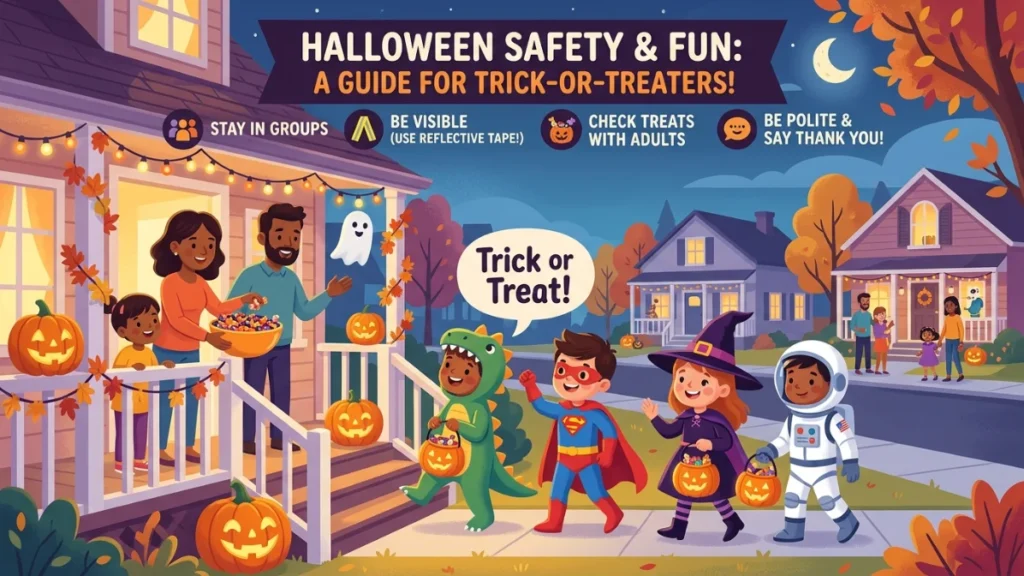

Trick or treat is a Halloween tradition where children dress in costumes and ask for candy by saying “trick or treat.” The phrase means give a treat or face a playful trick.
I remember hearing the phrase trick or treat for years before I actually understood what it meant. Like many people, I thought it simply meant children asking for candy. Later, while learning more about English phrases and traditions, I discovered there was much more behind these three simple words. The phrase has roots in old traditions, cultural changes, and centuries of celebrations.
Many people search for trick or treat because they want to understand its meaning, history, and why children say it every Halloween. Others wonder whether it refers to tricks, candy, costumes, or something else entirely.
This guide explains everything clearly, including the meaning, origin, traditions, examples, common misunderstandings, and how the phrase became one of the most recognized Halloween expressions.
Trick or Treat Quick Answer
Trick or treat is a Halloween phrase children say when asking for candy.
The phrase means:
Give me a treat or I may play a harmless trick.
Today, it is mostly used as a fun tradition rather than a real threat.
Examples
Children shouted trick or treat while visiting houses.
The neighborhood prepared candy for trick or treat visitors.
What Does Trick or Treat Mean
The phrase contains three simple words.
Trick
A trick means a prank, joke, or playful action.
Examples:
Magic trick
Funny prank
Playful joke
Treat
A treat means something enjoyable or rewarding.
Examples:
Candy
Chocolate
Small gifts
Combined Meaning
When children say trick or treat, they are asking:
Will you give us candy or should we play a harmless prank?
Today, almost everyone chooses treats.
Trick or Treat Meaning Explained
Modern usage has changed slightly.
Originally, the phrase suggested two possible choices:
Provide a reward
Receive a prank
Today, the phrase mostly means:
“We are celebrating Halloween and would like candy.”
The trick part has become mostly symbolic.
The Origin of Trick or Treat
The history of trick or treat goes back centuries.
Many historians connect the tradition to older European celebrations.
Ancient Celtic Traditions
Ancient communities celebrated seasonal festivals where people believed spirits moved between worlds.
People wore disguises and costumes during celebrations.
Medieval Souling
Poor people visited homes asking for food in exchange for prayers.
This practice became known as souling.
Mumming Traditions
Groups wore costumes and performed songs or plays while visiting houses.
These traditions slowly evolved.
North American Development
Modern trick or treat developed mainly during the twentieth century.
Communities encouraged organized celebrations to reduce vandalism and create safer traditions.
Why People Say Trick or Treat on Halloween
There are several reasons.
Tradition
Children learn the phrase from previous generations.
Community Celebration
The phrase creates interaction between neighbors.
Fun and Excitement
Costumes, decorations, and candy make the tradition enjoyable.
Cultural Identity
The phrase became strongly connected with Halloween celebrations.
Why Trick or Treat Became Popular
Several factors increased popularity.
Neighborhood Culture
Communities created organized celebrations.
Movies and Television
Media introduced the tradition worldwide.
Candy Industry Growth
Companies promoted Halloween celebrations.
Family Activities
Parents adopted the tradition as a safe activity.
Trick or Treat History Timeline
| Period | Development |
|---|---|
| Ancient Times | Seasonal festivals and costumes |
| Middle Ages | Souling traditions |
| Early 1900s | Community celebrations |
| Mid 1900s | Modern trick or treat spreads |
| Today | Global Halloween tradition |
Trick or Treat Around the World
Different countries celebrate differently.
United States
Large neighborhood celebrations.
Canada
Very similar traditions.
United Kingdom
Smaller celebrations but increasing popularity.
Australia
Growing adoption in cities.
Other Countries
Many places combine local customs with Halloween traditions.
Why Children Wear Costumes
Costumes are an important part of trick or treat.
Reasons include:
Fun
Creativity
Tradition
Role play
Originally, costumes were sometimes believed to protect people from spirits.
Today, they are mostly entertainment.
Trick or Treat in Everyday Examples
Conversation
Are you taking the kids trick or treating tonight?
Social Media
Our neighborhood had amazing trick or treat decorations.
News
Thousands participated in local trick or treat events.
School Writing
Students learned about the history of trick or treat.
Common Mistakes About Trick or Treat
Mistake 1 Thinking It Means Real Threats
The phrase is symbolic.
Children are not actually threatening people.
Mistake 2 Believing It Is Ancient Exactly As Used Today
Modern trick or treat developed much later.
Mistake 3 Thinking Every Country Celebrates The Same Way
Traditions vary significantly.
Trick or Treat Safety Tips
Safety is important.
Wear visible costumes.
Stay with groups.
Inspect candy.
Visit familiar neighborhoods.
Use flashlights at night.
Why Adults Also Enjoy Trick or Treat
Adults participate because:
- They enjoy decorating.
- They create memories.
- They interact with communities.
- They celebrate traditions.
Halloween is often enjoyable for all ages.
Trick or Treat Related Words
Halloween
Costume
Candy
Pumpkin
Ghost
Haunted house
These words commonly appear together.
Fun Facts About Trick or Treat
The phrase became widespread during the twentieth century.
Millions of children participate yearly.
Candy sales increase dramatically during Halloween seasons.
Costumes have changed from scary designs to many creative styles.
Exercise 1 Choose The Correct Meaning
Trick or treat mainly means:
A punishment
A candy request
A school activity
Answer: A candy request
Children usually say trick or treat while:
Swimming
Visiting houses
Driving cars
Answer: Visiting houses
Exercise 2 Correct The Sentence
Children say treat or trick on Halloween.
Answer:
Children say trick or treat on Halloween.
Trick or treat means children demand money.
Answer:
Trick or treat means children ask for candy.
FAQs
What does trick or treat mean?
It means children ask for candy during Halloween celebrations.
Why do children say trick or treat?
The phrase became part of Halloween traditions and community celebrations.
Is trick or treat only celebrated in America?
No. Many countries now participate although traditions vary.
When did trick or treat start?
Modern trick or treat became popular during the twentieth century.
Do children actually perform tricks?
Usually no. The trick part is symbolic.
Why do people wear costumes while trick or treating?
Costumes are connected to older traditions and modern entertainment.
Can adults participate in trick or treat?
Yes. Many adults celebrate through costumes, decorations, and community events.
Conclusion
The phrase trick or treat may sound simple, but it carries centuries of history and tradition. What began through older customs eventually became one of the most recognized parts of Halloween culture. Today, children use the phrase while visiting homes, wearing costumes, and collecting candy, while communities use it to create fun experiences and social connections.
Understanding the meaning behind trick or treat makes the tradition more interesting. The phrase no longer represents real tricks or threats. Instead, it symbolizes celebration, community, and shared experiences.
Whether you participate every year or simply want to understand the phrase better, knowing its history, meaning, and usage helps explain why these three words remain popular around the world.