
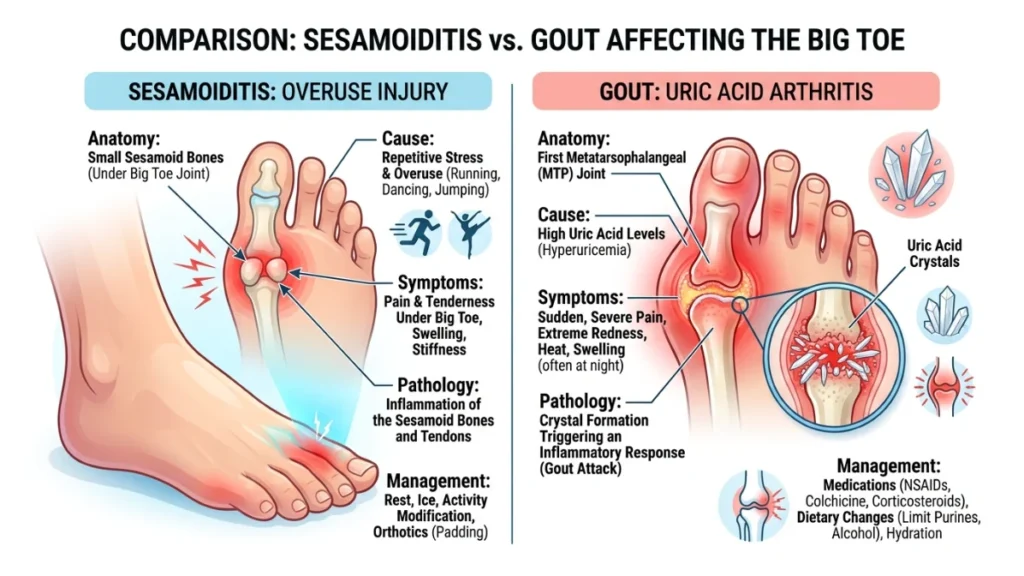

Sesamoiditis and gout both cause foot pain, especially near the big toe. Sesamoiditis comes from inflammation caused by pressure or overuse, while gout is caused by uric acid crystal buildup.
I once experienced sudden pain near my big toe after long walks and standing for hours. At first, I thought it was gout because the pain felt intense and the area became swollen. After researching symptoms and speaking with a medical professional, I learned the pain was actually related to stress on the sesamoid bones.
That experience showed me how easy it is to confuse sesamoiditis and gout because both conditions affect the foot and can make walking painful. Understanding the difference is important because the causes, diagnosis, and treatments are completely different.
This guide explains the symptoms, causes, diagnosis methods, treatments, and key differences between sesamoiditis and gout in simple language.
Quick Answer
Sesamoiditis is inflammation of the small sesamoid bones beneath the big toe caused by pressure or overuse.
Gout is a type of arthritis caused by uric acid crystal buildup in joints.
Key Difference
Sesamoiditis usually develops slowly from repeated stress.
Gout often appears suddenly with severe pain and swelling.
What Is Sesamoiditis
Sesamoiditis is inflammation of the sesamoid bones and nearby tendons under the big toe joint.
These tiny bones help absorb pressure during walking and running.
When too much stress is placed on them, inflammation develops.
Common Symptoms of Sesamoiditis
Pain under the big toe
Pain while walking or running
Tenderness beneath the foot
Swelling near the joint
Difficulty bending the big toe
Example
Athletes, runners, and dancers commonly develop sesamoiditis because of repeated pressure on the front of the foot.
What Is Gout
Gout is a form of inflammatory arthritis caused by excess uric acid in the body.
When uric acid crystals collect in joints, they trigger sudden inflammation and intense pain.
The big toe joint is one of the most common locations affected by gout.
Common Symptoms of Gout
Sudden severe pain
Swelling and redness
Warmth around the joint
Pain during the night
Difficulty moving the toe
Example
A person may go to sleep feeling normal and wake up with severe pain in the big toe caused by a gout attack.
Sesamoiditis vs Gout Difference
| Condition | Main Cause | Pain Type | Swelling | Common Trigger |
|---|---|---|---|---|
| Sesamoiditis | Overuse or pressure | Gradual | Mild | Running or walking |
| Gout | Uric acid crystals | Sudden and severe | Significant | Diet or uric acid buildup |
Key Point
Sesamoiditis is mainly a stress injury.
Gout is a metabolic inflammatory condition.
Where the Pain Occurs
Sesamoiditis Pain Location
Pain usually appears beneath the big toe joint on the bottom of the foot.
The pain often increases during activity.
Gout Pain Location
Gout pain often affects the big toe joint itself.
The joint may become swollen, red, and extremely sensitive.
Causes of Sesamoiditis
Several factors can lead to sesamoiditis.
Repetitive Pressure
Activities like running, jumping, and dancing place repeated stress on the sesamoid bones.
Improper Footwear
High heels and shoes with poor support increase pressure on the front of the foot.
Foot Structure
People with high arches may place more stress on the sesamoid bones.
Sports Activities
Athletes involved in basketball, ballet, or sprinting face higher risk.
Causes of Gout
Gout develops when uric acid levels become too high.
High Uric Acid Levels
The body either produces too much uric acid or fails to remove enough.
Diet
Certain foods increase uric acid levels.
Examples include:
Red meat
Seafood
Sugary drinks
Alcohol
Medical Conditions
Kidney disease and obesity increase gout risk.
Genetics
Family history may contribute to gout development.
Symptoms of Sesamoiditis
Symptoms usually appear gradually.
Pain During Activity
Walking or running increases discomfort.
Localized Tenderness
Pressing under the big toe often causes pain.
Reduced Toe Movement
The toe may feel stiff.
Mild Swelling
Swelling is usually limited.
Symptoms of Gout
Gout symptoms are often sudden and severe.
Intense Joint Pain
Pain may become unbearable within hours.
Redness and Heat
The joint may look red and feel warm.
Swelling
Swelling is often noticeable.
Night Attacks
Many gout attacks begin at night.
Why People Confuse Sesamoiditis and Gout
Both conditions affect the foot near the big toe.
This creates confusion because:
Both cause pain
Both affect walking
Both involve inflammation
Both may produce swelling
However, the causes and symptom patterns are very different.
How Doctors Diagnose Sesamoiditis
Doctors use several methods to confirm diagnosis.
Physical Examination
The doctor checks tenderness beneath the toe.
Imaging Tests
X rays or MRI scans help identify inflammation or fractures.
Activity History
Doctors often ask about sports or repetitive movement.
How Doctors Diagnose Gout
Blood Tests
Doctors measure uric acid levels.
Joint Fluid Test
Fluid from the joint may be tested for uric acid crystals.
Imaging
Ultrasound or scans may detect crystal deposits.
Sesamoiditis Treatment
Treatment focuses on reducing pressure and inflammation.
Rest
Reducing activity allows healing.
Ice Therapy
Ice helps decrease inflammation.
Supportive Footwear
Soft shoes reduce pressure on the toe.
Orthotics
Special shoe inserts improve foot support.
Physical Therapy
Exercises help restore movement.
Gout Treatment
Treatment focuses on reducing inflammation and uric acid levels.
Anti Inflammatory Medication
Doctors often prescribe medication to reduce pain.
Uric Acid Control
Long term treatment lowers uric acid levels.
Diet Changes
Avoiding certain foods helps reduce attacks.
Hydration
Drinking water supports uric acid removal.
Lifestyle Changes for Sesamoiditis
Wear Proper Shoes
Choose shoes with cushioning and support.
Avoid High Impact Activity
Reduce running or jumping during recovery.
Stretching Exercises
Gentle stretches improve flexibility.
Healthy Weight
Reducing body weight decreases foot pressure.
Lifestyle Changes for Gout
Limit High Purine Foods
Reduce foods linked with uric acid production.
Drink More Water
Hydration helps kidney function.
Reduce Alcohol Intake
Alcohol can trigger attacks.
Maintain Healthy Weight
Weight control lowers gout risk.
Can Sesamoiditis Become Serious
Yes, untreated sesamoiditis may worsen over time.
Possible complications include:
Chronic pain
Stress fractures
Difficulty walking
Long term inflammation
Early treatment helps prevent complications.
Can Gout Become Serious
Untreated gout may lead to major joint damage.
Possible complications include:
Repeated attacks
Joint destruction
Kidney stones
Chronic arthritis
Proper treatment is important.
Sesamoiditis vs Gout in Athletes
Athletes more commonly develop sesamoiditis because of repetitive foot stress.
However, gout can also affect athletes, especially if dehydration or diet contributes to high uric acid levels.
Sesamoiditis vs Gout in Older Adults
Older adults are more likely to develop gout.
Age related metabolic changes increase uric acid buildup.
Sesamoiditis can occur at any age but is more common in physically active individuals.
Exercise 1 Choose the Correct Condition
A runner develops pain beneath the big toe after repeated training sessions.
Answer: Sesamoiditis
A person wakes up at night with sudden severe swelling in the big toe joint.
Answer: Gout
Pain worsens after jumping and dancing activities.
Answer: Sesamoiditis
Exercise 2 Correct the Statement
Gout is caused by repeated pressure on the foot.
Answer: Gout is caused by uric acid crystal buildup in joints.
Sesamoiditis is a form of arthritis caused by uric acid.
Answer: Sesamoiditis is inflammation caused by pressure or overuse near the sesamoid bones.
Common Mistakes About Sesamoiditis and Gout
Mistake 1 Assuming All Big Toe Pain Is Gout
Not all toe pain comes from uric acid problems.
Mistake 2 Ignoring Activity Related Pain
Pain that worsens during exercise often points toward sesamoiditis.
Mistake 3 Delaying Medical Evaluation
Both conditions require proper diagnosis and treatment.
Sesamoiditis vs Gout in Everyday Life
Walking
Both conditions can make walking painful.
Exercise
Sesamoiditis often worsens during activity.
Sleep
Gout pain commonly interrupts sleep.
Footwear
Improper shoes can worsen sesamoiditis symptoms.
Prevention Tips for Sesamoiditis
Wear supportive shoes
Avoid excessive jumping
Rest after intense activity
Use cushioning inserts
Prevention Tips for Gout
Drink enough water
Limit alcohol
Maintain healthy weight
Follow balanced diet
FAQs
What is the main difference between sesamoiditis and gout?
Sesamoiditis is caused by overuse and pressure on the sesamoid bones, while gout is caused by uric acid crystal buildup in joints.
Can sesamoiditis feel like gout?
Yes. Both conditions can cause pain near the big toe, which often leads to confusion.
Does gout always affect the big toe?
No. Gout can affect other joints, but the big toe is one of the most common locations.
Can walking make sesamoiditis worse?
Yes. Walking, running, and jumping increase pressure on the sesamoid bones.
How do doctors test for gout?
Doctors may use blood tests, joint fluid analysis, and imaging scans.
Can sesamoiditis heal without surgery?
Yes. Most cases improve with rest, footwear changes, and physical therapy.
What foods trigger gout attacks?
Foods high in purines such as red meat, seafood, and alcohol may trigger gout attacks.
Conclusion
Understanding the difference between sesamoiditis and gout is important because both conditions affect the foot but develop for very different reasons. Sesamoiditis is usually caused by repeated stress and pressure on the sesamoid bones beneath the big toe, while gout results from uric acid crystal buildup inside joints.
Although both conditions can cause pain, swelling, and walking difficulty, their symptom patterns often differ. Sesamoiditis usually develops gradually and worsens during activity. Gout commonly appears suddenly with severe pain and redness.
Proper diagnosis is essential because treatments are completely different. Sesamoiditis often improves with rest, supportive footwear, and reduced pressure. Gout requires uric acid management, medication, and dietary changes.
Recognizing symptoms early and seeking medical advice can help prevent complications and improve recovery. Understanding these differences allows people to choose the right treatment and protect long term foot health.