

Featured Snippet
Spayed means a female animal has surgery to prevent reproduction. Neutered usually refers to male animals. Both procedures help control pet population and improve long term health.
I once adopted two rescue cats and quickly realized I did not fully understand the difference between spayed and neutered. At first, I thought both words meant exactly the same thing. During a vet visit, the doctor explained that spaying is usually for females, while neutering commonly refers to males.
Learning the difference helped me make better decisions about pet care, health, and behavior management. After researching veterinary advice and speaking with experienced pet owners, I understood why these procedures are strongly recommended.
If you are confused about spayed or neutered, this guide explains everything clearly, including meanings, health benefits, recovery, costs, myths, and correct usage.
Spayed or Neutered Quick Answer
Spayed refers to a female animal that has undergone surgery to prevent pregnancy.
Neutered usually refers to a male animal that has undergone surgery to prevent reproduction.
Both procedures help improve pet health, reduce unwanted litters, and manage behavior.
Quick Examples
The female cat was spayed last month.
The male dog was neutered at six months old.
Spayed or Neutered Meaning
Both words relate to veterinary procedures that prevent animals from reproducing.
Spayed Meaning
A female animal is spayed when a veterinarian removes reproductive organs through surgery.
This procedure prevents pregnancy and heat cycles.
Neutered Meaning
A male animal is neutered when reproductive organs are surgically removed.
This procedure prevents breeding and reduces certain hormone driven behaviors.
Spayed vs Neutered Difference
| Term | Gender | Purpose | Common Animals |
|---|---|---|---|
| Spayed | Female | Prevent pregnancy | Cats, dogs, rabbits |
| Neutered | Male | Prevent reproduction | Cats, dogs, rabbits |
Key Point
Spaying is mainly for females.
Neutering is mainly for males.
However, some people use neutered as a general term for both procedures.
What Happens During Spaying
Spaying is a surgical procedure performed by a veterinarian.
The female animal is placed under anesthesia.
The veterinarian removes reproductive organs to prevent pregnancy.
Common Steps
Health check before surgery
General anesthesia
Surgical procedure
Recovery monitoring
Pain management
Recovery Time
Most pets recover within 10 to 14 days.
What Happens During Neutering
Neutering is usually a simpler procedure than spaying.
The veterinarian removes reproductive organs from a male animal under anesthesia.
Common Steps
Physical examination
Anesthesia
Short surgery
Post surgery monitoring
Recovery Time
Male pets often recover faster than female pets.
Many recover within a few days.
Why Pet Owners Choose Spaying or Neutering
There are several important reasons.
Preventing Unwanted Litters
Millions of unwanted animals enter shelters every year.
Spaying and neutering help reduce overpopulation.
Improving Health
These procedures reduce the risk of certain diseases.
Better Behavior
Neutered or spayed pets may show calmer behavior.
Longer Lifespan
Studies suggest sterilized pets often live longer healthier lives.
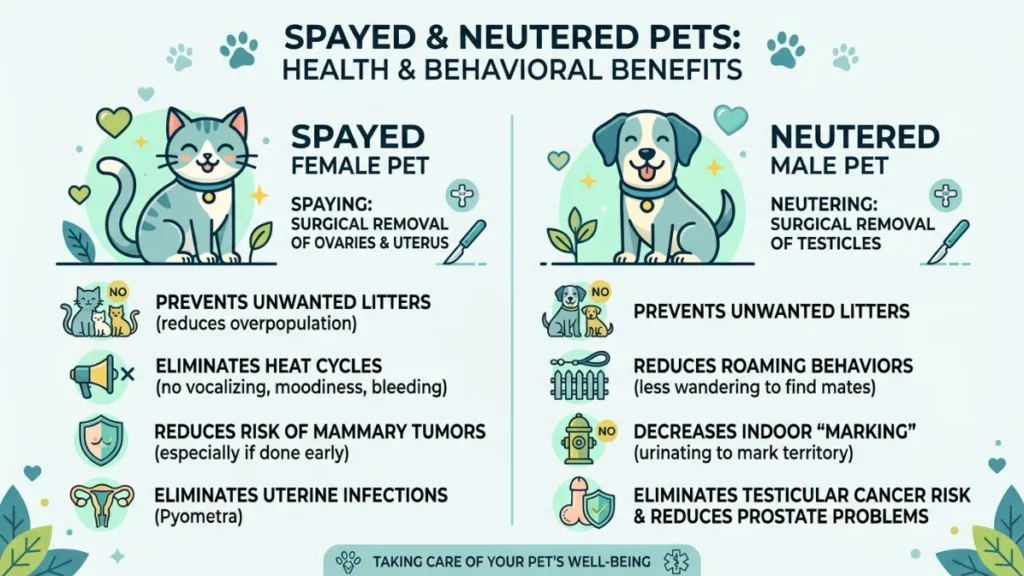
Health Benefits of Spaying
Spaying provides several health advantages for female animals.
Reduced Cancer Risk
Spaying lowers the risk of reproductive cancers.
No Heat Cycles
Female pets no longer experience heat cycles after surgery.
Lower Infection Risk
Spaying helps prevent serious infections affecting reproductive organs.
Improved Comfort
Many pets become calmer after the procedure.
Health Benefits of Neutering
Neutering also offers important health benefits.
Reduced Aggression
Some male animals become less aggressive after neutering.
Less Roaming
Neutered pets are less likely to wander away searching for mates.
Lower Cancer Risk
Neutering reduces the risk of reproductive diseases.
Fewer Marking Behaviors
Male pets may spray or mark territory less frequently.
Spayed or Neutered in Everyday Language
These words appear often in pet adoption and veterinary discussions.
Veterinary Clinics
Is your dog spayed or neutered?
Pet Adoption Centers
All rescue cats are spayed or neutered before adoption.
Social Media
We finally got our puppy neutered today.
Pet Care Blogs
Spaying your cat can improve long term health.
Common Myths About Spaying and Neutering
Many misconceptions exist about these procedures.
Myth 1 Pets Become Lazy
Spaying or neutering does not automatically make pets lazy.
Proper diet and exercise remain important.
Myth 2 Female Pets Need One Pregnancy
Veterinarians say this is false.
There is no medical need for one pregnancy before spaying.
Myth 3 Surgery Is Too Dangerous
Modern veterinary surgery is generally very safe.
Myth 4 Pets Lose Personality
Pets usually keep their personality after surgery.
Best Age for Spaying or Neutering
The ideal age depends on the animal and breed.
Cats
Many cats are sterilized around four to six months old.
Dogs
Some dogs may need to wait longer depending on size and breed.
Rabbits
Rabbits are commonly sterilized during early adulthood.
Always follow veterinary advice.
Recovery After Spaying or Neutering
Recovery is an important part of the process.
Common Recovery Tips
Keep pets calm
Limit jumping and running
Use protective collars if needed
Monitor surgical areas
Give medications properly
Warning Signs
Contact a veterinarian if you notice:
Severe swelling
Bleeding
Loss of appetite
Extreme tiredness
Signs of infection
Spayed or Neutered Behavior Changes
Some behavior changes may happen after surgery.
Possible Positive Changes
Less aggression
Less spraying or marking
Reduced roaming
Calmer behavior
Important Note
Training and environment still affect behavior.
Surgery alone will not solve every problem.
Spayed or Neutered Costs
Costs vary depending on:
Animal type
Location
Veterinary clinic
Pet size
Low Cost Clinics
Many shelters and nonprofit groups offer affordable programs.
Why Cost Matters
Preventing future health problems can reduce long term expenses.
Spayed or Neutered and Animal Shelters
Animal shelters strongly support these procedures.
Main Goals
Reducing homeless animals
Improving pet health
Supporting responsible ownership
Many shelters require sterilization before adoption.
Spayed or Neutered in Professional Writing
These terms appear in veterinary records and pet care articles.
Example Sentences
The dog was neutered at eight months old.
The female rabbit was spayed before adoption.
All animals must be spayed or neutered before entering the program.
Common Mistakes with Spayed or Neutered
Mistake 1 Thinking They Mean Exactly the Same Thing
They are related but usually describe different genders.
Mistake 2 Using Spayed for Male Animals
Spayed normally refers only to females.
Mistake 3 Believing Surgery Changes Personality Completely
Behavior may improve, but personality usually remains the same.
Spayed or Neutered Around the World
Pet sterilization practices differ by country.
North America
Spaying and neutering are very common.
Europe
Practices vary depending on local culture and veterinary advice.
Animal Welfare Groups
Many global organizations encourage responsible sterilization.
Veterinary Advice About Spaying and Neutering
Most veterinarians recommend these procedures for health and population control.
Main Recommendations
Discuss timing with your vet
Follow recovery instructions carefully
Keep vaccinations updated
Maintain healthy nutrition after surgery
Emotional Concerns of Pet Owners
Some owners feel nervous before surgery.
This is completely normal.
Many worry about anesthesia, recovery, or behavior changes.
Speaking with an experienced veterinarian can help reduce anxiety and provide accurate information.
Spayed or Neutered in Search Trends
People commonly search:
Should I spay or neuter my pet
Best age to neuter a dog
Spayed meaning
Neutered meaning
Benefits of spaying cats
These searches show that pet owners want clear and trustworthy guidance.
Exercise 1 Choose the Correct Word
Fill in the blank with spayed or neutered.
The female cat was ______ last week.
Answer: spayed
The male puppy will be ______ next month.
Answer: neutered
Our rescue rabbit was already ______ before adoption.
Answer: spayed
Exercise 2 Correct the Sentence
Rewrite the sentence correctly.
The male dog was spayed yesterday.
Answer: The male dog was neutered yesterday.
The female cat was neutered last year.
Answer: The female cat was spayed last year.
FAQs
What is the difference between spayed and neutered?
Spayed refers to female animals, while neutered usually refers to male animals. Both procedures prevent reproduction.
Is neutered only for male animals?
Usually yes. However, some people use neutered as a general term for sterilized pets.
Why should pets be spayed or neutered?
These procedures help prevent unwanted litters, improve health, and reduce certain behavioral problems.
At what age should a pet be spayed or neutered?
The best age depends on the species and breed. Veterinarians often recommend surgery during early life stages.
Do pets change after being spayed or neutered?
Some pets become calmer, but their personality usually stays the same.
Is the surgery safe?
Modern veterinary procedures are generally very safe when performed by qualified professionals.
How long does recovery take?
Most pets recover within several days to two weeks depending on the procedure.
Can spayed or neutered pets still play normally?
Yes. After recovery, most pets return to normal activity levels.
Conclusion
Understanding the difference between spayed or neutered is important for responsible pet ownership. While both procedures prevent reproduction, spaying usually refers to female animals and neutering commonly refers to males. These surgeries provide major health and behavioral benefits while also helping reduce pet overpopulation.
Many pet owners initially feel confused or nervous about the process. However, learning from veterinarians and trusted sources can make the decision easier. Modern procedures are generally safe, recovery is usually quick, and long term benefits often outweigh temporary discomfort.
Spaying and neutering help pets live healthier and more stable lives. They can reduce disease risks, unwanted behaviors, and shelter overcrowding. Whether you own a dog, cat, rabbit, or another pet, understanding these procedures allows you to make informed and responsible choices for your animal’s future.