

Ready or not is one of those phrases that sounds simple at first. You may hear it in a childhood game, a movie title, a song, a video game, a motivational quote, or a casual text message. Yet the phrase carries more weight than it seems.
At its core, ready or not means something is about to happen whether you feel prepared or not. It points to action, timing, pressure, and acceptance. Sometimes it feels playful. Sometimes it feels serious. In daily English, people use it when a moment has arrived and waiting no longer makes sense.
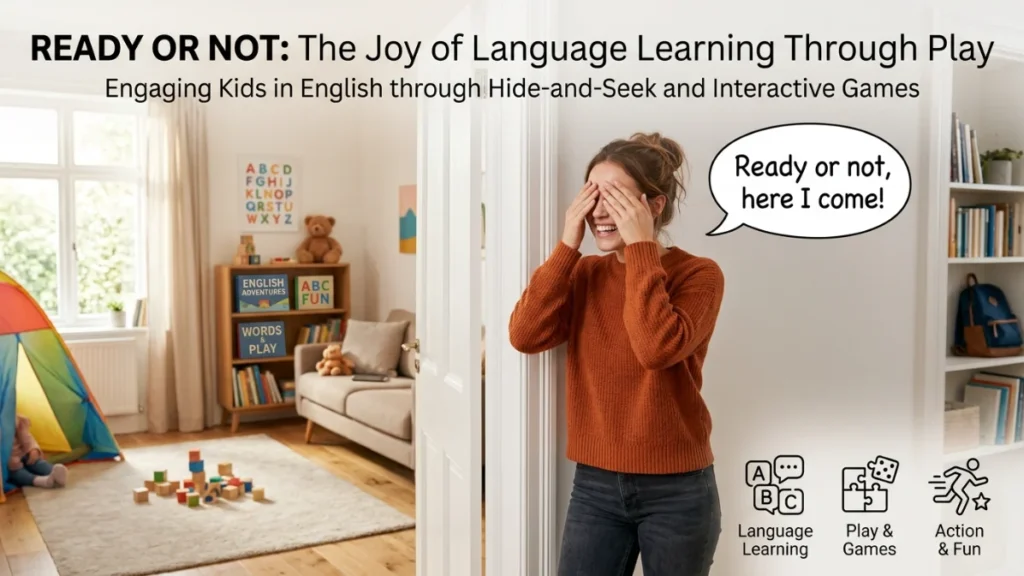
Think of a child playing hide-and-seek. They cover their eyes, count loudly, then shout:
“Ready or not, here I come!”
That sentence tells everyone the search is starting. Some players may still be hiding. Some may panic behind a sofa. Too bad. The game moves forward.
Life works that way too.
A deadline arrives. A meeting begins. A baby is born. A storm hits. A new job starts. A difficult conversation can’t wait forever. Ready or not, the next moment comes knocking.
That is why the phrase has stayed popular for so long. It feels human. It captures the funny, stressful, exciting truth that life rarely waits until you feel perfectly ready.
What Does Ready or Not Mean?
The ready or not meaning is straightforward:
Ready or not means whether someone is prepared or unprepared, something is going to happen anyway.
The phrase often suggests that action will begin now. It does not depend on whether everyone feels ready.
Here is the simplest version:
| Phrase | Meaning |
|---|---|
| Ready or not | Whether you are prepared or not |
| Ready or not, here I come | I am coming now, even if you are not ready |
| Ready or not, it’s happening | This event will happen either way |
| Ready or not, we have to start | We can’t wait any longer |
The phrase can sound playful, firm, dramatic, or motivational. Context decides the tone.
For example:
- Playful: Ready or not, here I come!
- Serious: Ready or not, the exam starts in five minutes.
- Motivational: Ready or not, take the first step.
- Realistic: Ready or not, change is coming.
That flexibility makes the phrase useful in many situations.
Ready or Not Definition in Simple English
A clear ready or not definition would be:
Ready or not is an expression used when something is about to happen whether someone is prepared for it or not.
The phrase combines two opposite ideas:
- Ready means prepared, willing, or able to act.
- Not ready means unprepared, unsure, delayed, or hesitant.
Put together, ready or not creates urgency. It tells the listener that the situation has reached the point of action.
You can use it when talking about:
- Starting a game
- Facing a challenge
- Beginning a task
- Accepting reality
- Moving forward
- Handling change
- Taking responsibility
- Dealing with pressure
In short, the phrase means the waiting period is over.
Ready or Not Meaning in English
The ready or not meaning in English depends on the situation, but it usually connects to one main idea: something will happen now.
In English conversation, people often use the phrase when they want to show that timing matters more than preparation.
For example:
“Ready or not, the presentation starts at 9.”
This means the presentation will start at 9 whether the speaker feels confident or nervous.
“Ready or not, we’re leaving.”
This means the group is leaving now. Anyone still searching for their shoes has a problem.
“Ready or not, life changes.”
This sounds more thoughtful. It means change does not always wait for permission.
Ready or Not Phrase Meaning
The ready or not phrase meaning is tied to action and inevitability. It tells us that something has crossed from planning into reality.
Here is a simple breakdown:
| Situation | What “Ready or Not” Suggests |
|---|---|
| Game | The next round is starting |
| Work | A task or deadline has arrived |
| School | A test, class, or assignment is happening |
| Life | A change or challenge must be faced |
| Text message | Something is coming soon |
| Motivational speech | Take action before fear stops you |
This phrase works because everyone understands the feeling behind it. Nobody feels fully ready all the time. Still, life keeps moving.
That makes ready or not more than a casual saying. It is a compact way to describe pressure, timing, courage, and action.
Ready or Not Here I Come Meaning
The full phrase “ready or not, here I come” is most famous from hide-and-seek.
In that game, one person closes their eyes and counts while others hide. After counting, the seeker says:
“Ready or not, here I come!”
The meaning is:
I have finished counting, and I am coming to find you now whether you are hidden or not.
This phrase signals the start of the search.
It also creates suspense. The hidden players know the seeker is coming. They may feel excited, nervous, or trapped. That tiny burst of pressure is part of the fun.
Over time, people began using ready or not, here I come outside games too.
For example:
- Ready or not, here comes Monday.
- Ready or not, here I come with the big news.
- Ready or not, here comes the next chapter.
In these examples, the phrase keeps its original meaning. Something is coming. You may prepare. You may not. Either way, it arrives.
Where Does Ready or Not Come From?
The phrase is strongly connected to childhood games, especially hide-and-seek. Many English speakers first hear it as children.
The classic line “ready or not, here I come” likely became popular because it fits the rhythm of the game. It is short. It warns players that the hiding time has ended.
The phrase also works because it creates a fair signal. In hide-and-seek, the seeker should not start silently. They count first, then announce the search.
That announcement became part of the game’s culture.
Over time, the phrase moved beyond playgrounds and backyards. Writers, musicians, filmmakers, gamers, and everyday speakers began using it because it sounds familiar and dramatic.
Today, ready or not appears in:
- Casual conversations
- English learning lessons
- Motivational quotes
- Songs and lyrics
- Movie titles
- Video game titles
- Social media captions
- Text messages
- Speeches and headlines
The phrase survived because it is easy to understand and hard to forget.
Is Ready or Not an Idiom?
Yes, ready or not can work like an idiomatic expression, although its meaning is also fairly literal.
An idiom usually means more than the exact words. In this case, the words are clear, but the phrase carries a broader message.
It does not only mean “Are you ready or not?” It often means:
The moment has arrived, and action will happen now.
That makes it close to an idiom or common English expression.
Here is the difference:
| Type | Example | Meaning |
|---|---|---|
| Literal use | Are you ready or not? | Asking if someone is prepared |
| Expression | Ready or not, we’re starting. | We’re starting now either way |
| Game phrase | Ready or not, here I come! | The seeker is coming now |
| Motivational use | Ready or not, begin. | Take action even if you feel unsure |
So, while it is not a confusing idiom like “spill the beans,” it still works as a popular English phrase with a meaning deeper than the individual words.
Ready or Not as a Common English Expression
As a common English expression, ready or not shows up when people talk about situations that cannot wait.
You may hear it in family life:
“Ready or not, dinner is on the table.”
You may hear it at work:
“Ready or not, the client call starts now.”
You may hear it in sports:
“Ready or not, the season begins this weekend.”
You may hear it in personal growth:
“Ready or not, your next opportunity is here.”
The phrase works well because it has energy. It does not sound slow or uncertain. It pushes the sentence forward.
That is why writers often use it in article titles, captions, and headlines. It grabs attention without sounding too formal.
Ready or Not Usage in Daily Life
The ready or not usage in daily life is broad. You can use it in both light and serious moments.
Here are some real-world examples:
| Context | Example Sentence |
|---|---|
| Family | Ready or not, we’re taking the photo. |
| Work | Ready or not, the report is due today. |
| School | Ready or not, the quiz starts now. |
| Travel | Ready or not, the flight boards in ten minutes. |
| Fitness | Ready or not, it’s time for the final set. |
| Life change | Ready or not, parenthood changes everything. |
| Motivation | Ready or not, take the first step. |
| Games | Ready or not, here I come! |
Notice how the phrase fits many situations without changing its core meaning.
It always points to a moment where action begins.
Ready or Not Meaning in Text
The ready or not meaning in text is usually casual. People use it to suggest that something is coming soon or happening now.
For example:
“Ready or not, I’m sending the photos.”
This means the sender is about to send the photos whether the other person is prepared or not.
“Ready or not, weekend plans are happening.”
This sounds playful. It means the plans are moving forward.
“Ready or not, here comes exam week.”
This means exam week is arriving soon, even if students feel unprepared.
In texting, the phrase often adds humor or drama. It can make a simple message feel more lively.
Compare these:
Plain: The meeting starts soon.
More expressive: Ready or not, the meeting starts in five minutes.
The second sentence carries more personality.
Is Ready or Not Slang?
Ready or not is not exactly slang. It is better described as a common English phrase or informal expression.
Slang usually belongs to a specific group, age range, or trend. For example, words like “lit,” “ghosted,” or “vibe” can work as slang.
Ready or not is different. People of all ages understand it. It appears in games, movies, songs, speeches, and everyday English.
However, it often sounds informal when used in conversation.
You can say:
“Ready or not, we’re doing this.”
That sounds natural in speech.
In formal writing, you can still use the phrase, but you should choose the context carefully.
For example:
Formal but acceptable:
“Ready or not, organizations must adapt to changing customer expectations.”
This works because the phrase adds impact.
Too casual for formal writing:
“Ready or not, here I come with the quarterly report.”
That sounds playful and may not fit a serious business document.
Can Ready or Not Be Used in Formal Writing?
Yes, but use it with care.
The phrase can work in formal writing when you want a strong opening, a memorable transition, or a human touch.
For example:
“Ready or not, businesses now face a market shaped by faster technology and higher customer expectations.”
That sentence sounds polished enough for an article or speech.
However, avoid using it in legal documents, academic papers, or technical reports unless the tone allows it.
Here is a simple guide:
| Writing Type | Should You Use “Ready or Not”? | Why |
|---|---|---|
| Blog post | Yes | It sounds engaging |
| Social media caption | Yes | It adds energy |
| Email to a friend | Yes | It feels natural |
| Business article | Sometimes | It can work as a hook |
| Academic paper | Rarely | It may sound too casual |
| Legal document | No | It lacks formal precision |
| Technical manual | No | It may distract from clarity |
The phrase is useful, but tone matters.
Ready or Not Examples in Conversation
Here are natural ready or not examples in conversation:
| Conversation | Meaning |
|---|---|
| “Ready or not, the guests are here.” | The guests arrived already |
| “Ready or not, we have to go.” | Leaving can’t wait |
| “Ready or not, your turn is next.” | You must act soon |
| “Ready or not, here comes the hard part.” | A challenge is coming |
| “Ready or not, the baby could arrive any day.” | A major life event is near |
| “Ready or not, summer is almost over.” | Time is moving quickly |
| “Ready or not, I’m opening the door.” | Action is happening now |
These examples show why the phrase feels natural. It captures little moments of pressure.
Sometimes the pressure is funny. Sometimes it is serious. Either way, the phrase works.
Ready or Not Game Meaning
The ready or not game meaning depends on context.
Most people first connect the phrase with hide-and-seek. In that game, “ready or not” tells players the seeker is about to start looking.
However, Ready or Not is also the title of a tactical shooter video game. In that context, it refers to preparation, pressure, strategy, and high-risk missions.
So the phrase has two major game-related meanings:
| Game Context | Meaning |
|---|---|
| Hide-and-seek | The seeker starts searching |
| Tactical shooter game | Players enter tense missions that require planning and teamwork |
Both uses share one idea: action begins now.
Ready or Not in Hide-and-Seek
Hide-and-seek made ready or not, here I come famous.
The phrase works perfectly in the game because it creates a clear start point. Before the seeker says it, players can still hide. After the seeker says it, the search begins.
This creates a simple rhythm:
Count. Warn. Search.
That rhythm makes the game feel fair and exciting.
Here is how it usually works:
- One player becomes the seeker.
- The seeker closes their eyes.
- The seeker counts to a chosen number.
- Other players hide.
- The seeker finishes counting.
- The seeker shouts, “Ready or not, here I come!”
- The search begins.
This childhood phrase has stuck around because it captures anticipation. You know something is about to happen. You just don’t know how it will turn out.
That is also why the phrase fits movies, games, and real-life challenges so well.
Ready or Not Game: Tactical Shooter Meaning
Ready or Not is also known as a tactical first-person shooter game developed by VOID Interactive. The game focuses on SWAT-style operations, mission planning, team coordination, and careful decision-making.
Unlike casual shooters where players can rush forward, tactical games punish careless moves. Players need to think before opening doors, manage risk, communicate with teammates, and respond quickly when situations change.
The title fits the gameplay well.
In a tactical mission, you may plan carefully, but you still face uncertainty. A room may be clear. It may not. A suspect may surrender. They may attack. A teammate may cover the wrong angle. One rushed choice can change the outcome.
That is exactly the feeling behind ready or not.
The phrase suggests pressure. It reminds players that once the mission starts, preparation meets reality.
Ready or Not Game Themes
The Ready or Not game connects strongly with several real themes:
| Theme | How It Appears in Gameplay |
|---|---|
| Preparedness | Players choose gear, weapons, and tactics before missions |
| Team coordination | Success depends on communication and positioning |
| Decision-making | Players must react under pressure |
| Uncertainty | Every room can hold a new threat |
| Responsibility | Mistakes can affect mission outcomes |
| Strategy | Players need planning instead of random action |
| Timing | Moving too early or too late can cause problems |
These themes match the phrase itself. Whether you are prepared or not, the situation moves forward.
Why the Phrase Fits Games So Well
Games often depend on timing, pressure, and action. That is why ready or not fits game culture so naturally.
In a game, players may want more time. They may want to plan. They may want to hide better, reload, heal, or rethink the strategy.
But games move.
A round begins. A timer ends. A boss appears. A mission starts. A seeker comes looking.
That moment creates tension.
Ready or not sums it up in three words.
It tells players:
- The waiting is over.
- The next phase has started.
- You must respond now.
- Preparation matters, but action matters too.
That is why the phrase still feels alive in both childhood games and modern gaming.
Ready or Not as a Life Phrase
Outside games, ready or not often describes real life.
People use it when they face moments that do not wait for perfect confidence.
For example:
- Starting a new job
- Moving to a new city
- Becoming a parent
- Taking an exam
- Launching a business
- Having a difficult conversation
- Recovering from failure
- Making a major decision
In these moments, waiting for perfect readiness can become a trap.
You can prepare, plan, and think things through. That helps. However, life rarely gives a perfect green light.
Sometimes, the honest answer is:
Ready or not, it’s time.
That does not mean acting recklessly. It means accepting that progress often starts before confidence feels complete.
The Deeper Meaning Behind Ready or Not
The deeper meaning of ready or not is about accepting reality.
It reminds you that readiness is not always a feeling. Sometimes it is a decision.
You may not feel ready for a presentation. Still, you can walk into the room.
You may not feel ready to start a fitness plan. Still, you can do the first workout.
You may not feel ready to apply for a job. Still, you can send the application.
This phrase does not promise comfort. It points toward movement.
That is why it works as a motivational phrase. It gives people permission to act while nervous.
Because honestly, most big steps feel awkward at first.
Ready or Not and Preparedness
Preparedness matters. The phrase ready or not does not mean you should ignore preparation.
It means preparation has limits.
You can study for a test, but you may still feel anxious. You can rehearse a speech, but your voice may still shake. Can plan a business idea, but the market may still surprise you.
Preparation gives you a better chance. It does not remove uncertainty.
Here is the balance:
| Preparation Helps You | Reality Still Requires |
|---|---|
| Understand the task | Courage |
| Reduce mistakes | Flexibility |
| Build confidence | Action |
| Make better choices | Adaptation |
| Plan your next move | Timing |
So, ready or not does not reject preparation. It simply admits that action eventually has to begin.
Ready or Not and Taking Action
Many people wait until they feel “fully ready.”
That sounds wise, but it can quietly become procrastination.
You may keep editing the plan. May keep researching. You may keep asking for opinions. After a while, preparation turns into a comfortable hiding place.
That is where ready or not becomes useful.
It pushes you to ask:
- Have I prepared enough to begin?
- Am I waiting because I need more information?
- Or am I waiting because I feel afraid?
That question matters.
Sometimes you truly need more preparation. Other times, you need one brave step.
Small action breaks fear better than endless thinking.
Ready or Not and Facing Challenges
The phrase also fits difficult situations because challenges rarely arrive politely.
They don’t always knock and say, “Would next Thursday work for you?”
They show up.
A bill appears. A deadline moves closer. A relationship needs honesty. A health scare changes priorities. A business problem demands attention.
In those moments, ready or not becomes a realistic phrase. It does not sugarcoat the situation.
It says:
This is happening. Now respond.
That response may be small. It may start with a phone call, a plan, a conversation, or a decision. Still, it creates momentum.
And momentum matters.
Ready or Not and Moving Forward
Moving forward does not always feel heroic.
Sometimes it looks like sending one email. It means getting out of bed. Sometimes it means admitting you don’t know everything, then learning as you go.
Ready or not reminds people that progress often begins in uncertainty.
You don’t need to feel fearless. You need to move with enough honesty and responsibility to take the next step.
That is why the phrase works in motivational writing, coaching, personal stories, and social media captions.
It is short, but it carries a punch.
Ready or not, start.
Simple. Direct. Hard to argue with.
Ready or Not in Pop Culture
Ready or not works well in pop culture because it already sounds dramatic. It creates tension before anything even happens.
That is why writers, musicians, filmmakers, and game developers keep coming back to it. The phrase tells the audience something important:
A moment of action is coming.
That action may be funny, scary, competitive, emotional, or dangerous. The phrase can fit all of those moods because it has built-in suspense.
When you hear ready or not, your brain expects movement. Someone is coming. Something is starting. A situation is about to change.
That is a powerful little trigger.
Pop culture uses the phrase in several major ways:
| Area | How “Ready or Not” Is Used |
|---|---|
| Music | Confidence, pursuit, identity, challenge |
| Movies | Suspense, survival, danger, dark humor |
| Video games | Tension, strategy, tactical decisions |
| Quotes | Motivation, courage, acceptance |
| Social media | Playful drama, life updates, humor |
| Daily speech | Pressure, timing, action |
The phrase stays popular because it feels familiar. Even if someone has never heard a specific song, watched a specific movie, or played a specific game, they still understand the basic feeling behind the words.
That gives the phrase staying power.
Ready or Not Lyrics and Song Meaning
Many people search for ready or not lyrics because the phrase appears in well-known songs. The most famous modern example is “Ready or Not” by Fugees, from their 1996 album The Score.
The song helped push the phrase deeper into popular culture. It took a familiar childhood line and gave it a confident, moody, grown-up sound.
Instead of feeling like a playground chant, the phrase becomes a statement of presence. It suggests:
- You can’t ignore us.
- We’re coming forward.
- We’re prepared to be heard.
- The moment has arrived.
- Hiding won’t help.
That is why the phrase feels so strong in music. It has rhythm, warning, and confidence.
The phrase ready or not also works in lyrics because it is easy to repeat. It sounds natural in a hook. It builds anticipation. It gives listeners something they can remember after one play.
A good phrase in music does not need to explain itself too much. It just lands.
Ready or not does that.
Why “Ready or Not” Works So Well in Music
Music often depends on emotional shortcuts. A short phrase can carry a full feeling if listeners already understand it.
Ready or not carries several feelings at once:
| Feeling | How the Phrase Creates It |
|---|---|
| Confidence | The speaker is coming forward |
| Tension | The listener may not be prepared |
| Momentum | Something is moving now |
| Challenge | Someone is being confronted |
| Mystery | We don’t know what happens next |
| Nostalgia | The phrase reminds people of childhood games |
That mix makes it memorable.
The childhood connection adds another layer too. People already know “ready or not, here I come” from hide-and-seek. When artists use it in music, the phrase feels familiar but different.
It becomes playful and serious at the same time.
That contrast gives the words extra bite.
Ready or Not Movie Meaning
Ready or Not is also the title of a 2019 horror-comedy thriller film. The movie stars Samara Weaving as a bride who gets pulled into a deadly family tradition on her wedding night.
The title fits the story because the main character has no real time to prepare. She enters a marriage, then suddenly faces a violent survival game. The phrase ready or not becomes darkly ironic.
In a normal childhood game, “ready or not, here I come” sounds playful.
In the movie’s context, it becomes terrifying.
That shift is exactly why the title works. It takes a phrase associated with kids hiding behind curtains and turns it into a survival warning.
The movie connects the phrase with:
- Hide-and-seek
- Family tradition
- Suspense
- Survival
- Dark comedy
- Wealth and power
- Sudden danger
- Forced participation
The main idea remains the same: something begins whether the person is ready or not.
Only this time, the stakes are much higher.
Why the Movie Title Works
The title Ready or Not works because it gives the audience the whole concept in three words.
It suggests a game. It hints at danger. It creates urgency.
That is good title writing.
A strong title usually does three things:
- It catches attention.
- It fits the story.
- It becomes more meaningful after you know the plot.
Ready or Not checks all three boxes.
Before watching, the title sounds playful and mysterious. After watching, it feels sharper. The phrase becomes tied to survival, shock, and forced readiness.
That is what makes it memorable.
Ready or Not Movie and Hide-and-Seek
The movie uses the hide-and-seek idea in a darker way.
In a children’s game, hiding feels exciting. The seeker counts. The hidden players stay quiet. Everyone understands the rules.
In a thriller, those same rules become tense. Hiding no longer feels cute. Silence becomes dangerous. Every room feels risky. Every sound matters.
That is why ready or not here I come meaning changes depending on the setting.
In a game, it means:
I am coming to find you.
In a thriller, it can mean:
You are being hunted.
Same words. Different world.
That is the power of context.
Ready or Not Game and Modern Gaming Culture
The Ready or Not game has become one of the best-known modern uses of the phrase. It is a tactical first-person shooter built around SWAT-style operations and high-pressure missions.
The game does not use the phrase in a playful way. Instead, it connects ready or not with tactical planning, risk, and decision-making under pressure.
Players step into missions where preparation matters, but uncertainty still rules the moment.
You can choose equipment. You can plan an entry. You can communicate with teammates. Still, once a door opens, the situation may change in a second.
That is where the phrase hits.
Ready or not, the mission starts.
Ready or Not Game Review Angle
A strong Ready or Not game review usually focuses on the game’s tactical depth rather than simple action.
The game appeals to players who like slow, careful, tense gameplay. It is not only about shooting. It is about control, communication, timing, and judgment.
A typical review may look at:
| Review Area | What Players Usually Notice |
|---|---|
| Atmosphere | Dark, tense, realistic mission environments |
| Gameplay | Slow tactical movement and careful entries |
| Teamwork | Coordination matters in co-op missions |
| Difficulty | Mistakes can lead to quick failure |
| Strategy | Gear, planning, and timing affect outcomes |
| AI behavior | Suspects and civilians create uncertainty |
| Replay value | Different approaches can change mission flow |
The phrase ready or not fits because players never feel completely safe.
Even prepared teams face surprise. That is the whole point.
Ready or Not Gameplay Guide Basics
A beginner-friendly Ready or Not gameplay guide would focus on patience.
New players often make the same mistake. They rush.
That usually ends badly.
A tactical shooter rewards careful behavior. Players need to slow down, check corners, use equipment properly, and communicate clearly.
Important gameplay habits include:
- Move slowly through unknown spaces.
- Check doorways before entering.
- Use team commands with purpose.
- Watch for civilians.
- Avoid careless shooting.
- Control angles instead of running blindly.
- Listen for audio clues.
- Choose gear based on the mission.
- Keep teammates informed.
- Treat every room as risky until cleared.
That kind of gameplay makes the title meaningful. You can prepare, but you never control everything.
Ready or Not Multiplayer Guide
In multiplayer, Ready or Not becomes even more dependent on teamwork.
One player rushing ahead can ruin the mission. One missed angle can create danger for everyone. One unclear callout can confuse the team.
Good multiplayer play depends on shared discipline.
Here are useful multiplayer habits:
| Habit | Why It Matters |
|---|---|
| Use short callouts | Clear speech prevents confusion |
| Assign roles | Everyone knows what to do |
| Move as a unit | Lone players become vulnerable |
| Cover angles | Teammates protect each other |
| Confirm before breaching | Timing keeps the team together |
| Identify targets | Civilians and suspects require judgment |
| Stay calm | Panic leads to bad decisions |
This is where team coordination becomes more important than individual speed.
Fast players may look confident, but careful players often survive longer.
Ready or Not System Requirements Context
People also search for Ready or Not system requirements because tactical shooters can demand solid PC performance.
The PC version requires a 64-bit operating system. The minimum setup includes Windows 10 or Windows 11, 8 GB of RAM, and a DirectX 11-compatible graphics card such as the NVIDIA GeForce GTX 960 2GB or AMD Radeon R7 370 2GB. The game also needs around 60 GB of available storage.
For smoother performance, players usually need stronger hardware than the minimum. Tactical games depend on visibility, timing, and reaction. Low frame rates can make gameplay frustrating.
So, before buying any demanding PC game, players should check:
- Operating system
- Processor
- RAM
- Graphics card
- Storage space
- Driver updates
- Display resolution
- Performance settings
A game like Ready or Not feels better when it runs smoothly. In tactical gameplay, lag is not just annoying. It can get your whole team into trouble.
Ready or Not Release Date and Platforms
The Ready or Not game launched in Early Access on PC in December 2021. Its full PC release came in December 2023.
The game later reached consoles, including PlayStation 5 and Xbox Series X/S, expanding its audience beyond PC players.
These release details matter because many searches around ready or not game, ready or not release date, and ready or not gameplay come from players trying to understand what version of the title they are looking at.
Search intent can vary a lot.
Someone typing ready or not may want the phrase meaning. Another person may want the tactical shooter. Someone else may want the movie or lyrics.
That is why a good article needs to clarify all major meanings without mixing them into one confusing mess.
Ready or Not Explained Across Different Meanings
The phrase ready or not has one core meaning, but different contexts create different shades.
Here is a clean comparison:
| Context | Meaning |
|---|---|
| English phrase | Something will happen whether you are prepared or not |
| Hide-and-seek | The seeker is coming to find the hidden players |
| Text message | Something is about to happen soon |
| Motivation | Take action even without perfect confidence |
| Fugees song | Confidence, arrival, presence, and challenge |
| 2019 movie | Survival, danger, suspense, and forced participation |
| Tactical shooter game | Planning, pressure, teamwork, and uncertainty |
This table is useful because it prevents keyword confusion.
The phrase is not limited to one meaning. It lives in language, entertainment, gaming, and everyday life.
Ready or Not Examples in Sentences
Learning how to use ready or not in a sentence becomes easier when you see it in real contexts.
Here are examples by tone.
| Tone | Example |
|---|---|
| Playful | Ready or not, here I come! |
| Casual | Ready or not, we’re leaving in five minutes. |
| Serious | Ready or not, the audit starts tomorrow. |
| Motivational | Ready or not, take the step you keep delaying. |
| Dramatic | Ready or not, everything changes tonight. |
| Professional | Ready or not, the market is moving faster than before. |
| Funny | Ready or not, my cooking experiment begins. |
| Reflective | Ready or not, growing up happens quietly. |
The phrase is easy to use because it usually comes at the start of a sentence.
That opening position gives it impact.
Ready or Not Examples in Conversation
Here are natural conversation examples.
Friend: Are you packed yet?
You: Not really.
Friend: Ready or not, the taxi gets here in ten minutes.
Manager: Is everyone prepared for the client meeting?
Team member: Almost.
Manager: Ready or not, we start at 2.
Parent: Did you finish your homework?
Child: I still have one page.
Parent: Ready or not, school starts in the morning.
Coach: You nervous?
Player: Very.
Coach: Good. Ready or not, you’re in the game.
Sibling: Are you ready for the family photo?
You: Wait, my hair looks weird.
Sibling: Ready or not, smile.
These examples sound natural because the phrase often appears when someone is being gently pushed into action.
Ready or Not Usage in Daily Life
The ready or not usage in daily life often connects with timing.
You use it when something cannot wait forever.
Here are common situations:
| Daily Situation | Sentence |
|---|---|
| Morning routine | Ready or not, the day has started. |
| School | Ready or not, the test is here. |
| Work | Ready or not, the deadline has arrived. |
| Parenting | Ready or not, the baby is awake. |
| Travel | Ready or not, boarding starts now. |
| Fitness | Ready or not, one more set. |
| Personal growth | Ready or not, change is asking for you. |
| Business | Ready or not, customers expect faster service. |
The phrase feels useful because it matches how real life behaves. Plans help, but timing still matters.
Ready or Not in Text Messages
In text messages, ready or not often adds humor or urgency.
People may use it when teasing a friend, announcing plans, or warning that something is coming.
Examples:
- Ready or not, I’m calling you in two minutes.
- Ready or not, I sent the group photo.
- Ready or not, Friday plans are happening.
- Ready or not, I’m bringing dessert.
- Ready or not, exam week is attacking.
In texting, the phrase feels casual and expressive. It can make a dull message sound more alive.
Instead of saying:
“I’m coming over.”
You can say:
“Ready or not, I’m coming over.”
The second version sounds more playful. It has personality.
Ready or Not in Social Media Captions
The phrase also works well for social media because it is short and catchy.
People use it in captions for:
- New beginnings
- Travel photos
- Fitness progress
- Graduation posts
- Wedding posts
- Business launches
- Before-and-after transformations
- Seasonal changes
- Funny life updates
Caption examples:
- Ready or not, new chapter loading.
- Ready or not, summer mode is on.
- Ready or not, this glow-up is happening.
- Ready or not, Monday found us.
- Ready or not, here comes the next adventure.
- Ready or not, wedding week begins.
- Ready or not, launch day is here.
The phrase works because it creates instant momentum. A caption needs that.
Nobody wants a caption that walks into the room wearing wet socks.
Ready or Not Quote Meaning
A ready or not quote usually turns the phrase into a message about courage.
For example:
“Ready or not, the future arrives one day at a time.”
That quote means life keeps moving, even when you feel unsure.
Another example:
“Ready or not, progress begins when you stop waiting for perfect timing.”
This version focuses on action.
The phrase works in quotes because it feels honest. It does not pretend that people always feel confident. Instead, it admits that courage often starts before comfort arrives.
That makes the phrase relatable.
Ready or Not Saying in Motivational Context
As a ready or not saying, the phrase often encourages people to stop waiting.
It can push someone to begin a project, make a decision, or face a challenge.
However, good motivational use should stay grounded. The phrase should not promote reckless action.
There is a difference between bravery and chaos.
Better motivational meaning:
Prepare enough, then move.
Bad motivational meaning:
Ignore everything and jump blindly.
The best use sits in the middle.
You prepare. You think. You take responsibility. Then you act before fear talks you into hiding forever.
Ready or Not and Decision Making
Decision-making often feels uncomfortable because people want certainty.
They want the perfect answer. The safe route. The guaranteed result.
That sounds nice. It rarely exists.
Ready or not fits decision-making because many choices require action before every detail is clear.
Examples include:
- Choosing a career path
- Starting a business
- Moving to a new place
- Ending a bad habit
- Apologizing
- Applying for an opportunity
- Speaking up
- Learning a new skill
Each choice carries uncertainty. Still, delaying forever becomes a decision too.
That is the sneaky part.
Not choosing is often still choosing.
Ready or Not and Confidence
Confidence does not always come first.
Many people think they need confidence before action. In reality, confidence often grows after action.
You try. You learn. You adjust. You try again.
That is how confidence builds.
Ready or not reminds you that feelings are not always reliable traffic lights. Nervousness does not always mean stop. Sometimes it means the moment matters.
A person can feel nervous and still be capable.
A student can feel anxious and still pass the test.
A speaker can feel shaky and still give a strong presentation.
A business owner can feel uncertain and still launch.
Confidence is helpful, but it is not always the ticket booth. Sometimes action lets you in.
Ready or Not and Responsibility
The phrase can also carry a mature message about responsibility.
Some responsibilities arrive before people feel prepared.
A new role at work. A family obligation. A financial decision. A leadership moment.
You may not feel fully ready, but people may still count on you.
In that sense, ready or not is not just motivational. It is practical.
It says:
This is yours to handle. Start with the next right step.
That next step may be asking for advice, making a checklist, learning a process, or taking action with care.
Responsibility does not require perfection. It requires ownership.
Ready or Not and Opportunity
Opportunity often arrives dressed like bad timing.
You may get a chance before you feel qualified. You may receive an invitation before your portfolio feels perfect. You may meet the right person before your pitch sounds polished.
That is frustrating.
It is also normal.
Ready or not can help describe that moment.
You do not need to pretend you know everything. You need to recognize the door while it is open.
Some opportunities do not wait forever.
That does not mean you should say yes to everything. It means you should learn to notice when fear is the only thing saying no.
Ready or Not and Change
Change rarely asks for permission.
Seasons change. Markets shift. Children grow. Technology moves. Relationships evolve. Priorities change.
People often resist change because they want stability. That makes sense. Stability feels safe.
However, too much resistance can turn into denial.
Ready or not helps express the reality of change:
Change is coming, so respond wisely.
You can complain about it. You can ignore it. You can adapt slowly. Or you can prepare your next move.
The phrase does not make change easy. It makes it harder to deny.
Ready or Not in Business and Work
In business, the phrase often appears when companies face change.
For example:
“Ready or not, customer expectations have changed.”
That sentence means businesses must adapt. Customers now expect faster responses, easier checkout, better support, and clearer communication.
A company may not feel ready for those expectations. Still, the market does not pause.
Workplace examples include:
- Ready or not, the campaign launches Monday.
- Ready or not, remote work changed hiring.
- Ready or not, AI tools are reshaping workflows.
- Ready or not, customers compare every brand online.
- Ready or not, your next presentation starts now.
In professional writing, the phrase can work as a strong hook. It signals urgency without sounding too dramatic.
Ready or Not in Education
Teachers, students, and parents can all use the phrase naturally.
Students feel it before exams. Teachers feel it before a new term. Parents feel it before school mornings, which deserve their own survival badge.
Examples:
- Ready or not, the final exam is tomorrow.
- Ready or not, class starts in five minutes.
- Ready or not, college applications are due.
- Ready or not, the school year begins.
- Ready or not, your project presentation is next.
The phrase fits education because learning often includes deadlines. Students may want more time, but classes and exams still move forward.
Preparation helps. Procrastination does not.
Ready or Not in Relationships
In relationships, ready or not can describe emotional moments that need honesty.
Sometimes people avoid hard conversations because they want the perfect timing. But perfect timing can become a myth.
Examples:
- Ready or not, we need to talk about this.
- Ready or not, our friendship is changing.
- Ready or not, marriage brings real responsibilities.
- Ready or not, parenting shifts the whole routine.
- Ready or not, forgiveness takes work.
The phrase should be used carefully in emotional conversations. It can sound pushy if handled badly.
Better:
“Ready or not, I think we need to talk honestly.”
Too harsh:
“Ready or not, deal with it.”
Tone matters. Always.
Ready or Not in Sports
Sports give the phrase an easy home because games run on timing.
A player may feel nervous. A team may feel unprepared. The whistle still blows.
Examples:
- Ready or not, the season starts tonight.
- Ready or not, you’re up next.
- Ready or not, the final quarter begins.
- Ready or not, playoffs are here.
- Ready or not, the coach is calling your name.
Sports also connect the phrase with confidence and pressure. Athletes train for big moments, but nerves still show up.
That is normal.
Pressure does not mean you are unready. Sometimes it means you care.
Ready or Not in Parenting
Parenting might be the most honest example of ready or not.
No one feels fully ready for every stage.
Newborn nights. First steps. School mornings. Teenage questions. College goodbyes. Each stage arrives with its own surprises.
Examples:
- Ready or not, the baby is coming.
- Ready or not, they’re starting kindergarten.
- Ready or not, your toddler learned how to climb.
- Ready or not, teenagers ask hard questions.
- Ready or not, they grow faster than expected.
Parenting proves the phrase beautifully. You prepare as much as you can, then life hands you a tiny human with big opinions.
Good luck. Also, bring snacks.
Ready or Not in Personal Growth
Personal growth often begins before people feel ready.
Nobody wakes up fully prepared to become disciplined, confident, patient, financially wise, emotionally mature, and perfectly hydrated.
Growth comes through practice.
Examples:
- Ready or not, start the habit.
- Ready or not, have the honest conversation.
- Ready or not, take responsibility.
- Ready or not, learn the skill.
- Ready or not, stop waiting for a perfect mood.
The phrase helps because it removes the fantasy of perfect readiness.
You can improve while moving.
In fact, most people do.
Ready or Not Synonyms and Similar Phrases
Sometimes you may want a phrase similar to ready or not.
Here are good alternatives:
| Similar Phrase | Meaning |
|---|---|
| Whether you’re prepared or not | Clear formal version |
| Like it or not | Whether you accept it or not |
| Here we go | Something is starting |
| No turning back | The decision has been made |
| The time has come | The moment has arrived |
| Prepared or unprepared | Direct meaning |
| It’s happening | Casual modern version |
| Brace yourself | Get ready for impact or surprise |
| The moment is here | A softer version |
| Now or never | Action must happen now |
Each phrase has a different tone.
Ready or not sounds balanced. It can be playful or serious. Like it or not sounds more confrontational. Brace yourself sounds more dramatic. Here we go sounds casual.
Choose based on the mood.
Ready or Not vs Like It or Not
People sometimes confuse ready or not with like it or not.
They are similar, but not the same.
| Phrase | Main Meaning | Example |
|---|---|---|
| Ready or not | Whether prepared or unprepared | Ready or not, the test starts now. |
| Like it or not | Whether you approve or disapprove | Like it or not, the rule has changed. |
Ready or not focuses on preparation.
Like it or not focuses on acceptance.
Here is the difference:
Ready or not, we’re leaving.
This means you may not be prepared, but we are leaving now.
Like it or not, we’re leaving.
This means you may not approve, but we are leaving now.
Small difference. Big tone shift.
Ready or Not vs Are You Ready?
Are you ready? is a question.
Ready or not is usually a statement.
Compare:
| Phrase | Function |
|---|---|
| Are you ready? | Asks about preparation |
| Ready or not | Announces action |
| Ready or not, here I come | Starts action |
| Ready or not, we begin | Moves forward |
If someone asks, “Are you ready?”, they may wait for your answer.
If someone says, “Ready or not,”, they often will not wait.
That makes the phrase stronger.
Ready or Not Grammar
Grammatically, ready or not works as a shortened phrase.
It means:
Whether you are ready or not.
The full version is longer, but the short version sounds punchier.
Examples:
- Ready or not, we’re starting.
- Whether you are ready or not, we’re starting.
Both are correct. The first sounds more natural in casual English.
In writing, people usually place a comma after the phrase when it starts a sentence:
Ready or not, the show begins.
That comma helps the reader pause.
How to Use Ready or Not Correctly
Use ready or not when the sentence includes an event, action, or change that is about to happen.
Good uses:
- Ready or not, the exam starts.
- Ready or not, here I come.
- Ready or not, the future is coming.
- Ready or not, we need to move.
Weak uses:
- Ready or not, I like pizza.
- Ready or not, the chair is blue.
- Ready or not, this pencil is sharp.
Those weak examples fail because nothing is really starting or arriving.
The phrase needs motion.
Think of it as a drumbeat before action.
Common Mistakes With Ready or Not
Here are mistakes to avoid:
| Mistake | Why It Sounds Wrong | Better Version |
|---|---|---|
| Ready or not? | It sounds incomplete unless used as a question in context | Are you ready or not? |
| Ready or not I am coming | Missing comma after opening phrase | Ready or not, I am coming. |
| Ready or not, I was happy yesterday | No action or arrival | Ready or not, the party starts now. |
| Ready or not here I come | Missing comma in formal writing | Ready or not, here I come. |
| Ready or no | Incorrect phrase | Ready or not |
The phrase is simple, but punctuation and context still matter.
Ready or Not Sentence Patterns
You can use these patterns to write natural sentences.
| Pattern | Example |
|---|---|
| Ready or not, + event | Ready or not, the meeting starts now. |
| Ready or not, + subject + verb | Ready or not, we begin today. |
| Ready or not, here comes + noun | Ready or not, here comes winter. |
| Ready or not, here I come | Ready or not, here I come! |
| Whether ready or not, + subject + verb | Whether ready or not, teams must adapt. |
The first pattern is the most common.
Ready or not, the deadline is here.
Simple. Clear. Natural.
Ready or Not in Formal and Informal Sentences
Here is how the tone changes.
| Informal Use | Formal Use |
|---|---|
| Ready or not, we’re going. | Ready or not, the organization must respond to market changes. |
| Ready or not, here comes Monday. | Ready or not, companies face new compliance demands. |
| Ready or not, I’m calling you. | Ready or not, leadership teams must prepare for digital transformation. |
| Ready or not, the baby is awake. | Ready or not, educators must address changing student needs. |
The phrase can fit both styles, but formal writing needs stronger context.
In casual writing, it can be playful.
In formal writing, it should sound purposeful.
Ready or Not Examples for English Learners
English learners can use ready or not in simple daily sentences.
Try these:
- Ready or not, class is starting.
- Ready or not, I have to speak.
- Ready or not, the bus is here.
- Ready or not, we need to go.
- Ready or not, the game begins.
- Ready or not, I will try.
- Ready or not, the exam is today.
These examples are short and useful.
A good rule:
Use ready or not when someone cannot delay the action anymore.
Ready or Not Meaning for Kids
For kids, ready or not usually means the hiding time is over.
In hide-and-seek, it tells everyone:
The seeker is coming now.
A child-friendly definition would be:
Ready or not means the game is starting even if you are not fully ready.
Example:
“Ready or not, here I come!”
This phrase teaches kids a simple idea about rules and timing. Everyone gets time to hide, but once the counting ends, the game moves forward.
That makes the phrase easy for children to understand.
Ready or Not Meaning for Adults
For adults, ready or not often feels more symbolic.
It can describe work pressure, life changes, responsibility, and new stages.
Adult examples:
- Ready or not, the mortgage is due.
- Ready or not, leadership requires hard choices.
- Ready or not, the market has changed.
- Ready or not, grief changes people.
- Ready or not, opportunity is knocking.
The phrase grows with the speaker.
As a child, it means someone is coming to find you.
As an adult, it often means life found you first.
Ready or Not in Motivational Writing
Motivational writing uses ready or not because it helps people move past fear.
However, the phrase works best when it feels honest.
Bad motivational writing says:
“You can do anything instantly if you just believe.”
That sounds nice, but life is messier than that.
Better motivational writing says:
“You may not feel ready, but you can take the next responsible step.”
That is more useful.
Ready or not does not mean ignore fear. It means don’t let fear run the whole meeting.
Ready or Not in Headlines
Writers use ready or not in headlines because it creates urgency.
Examples:
- Ready or Not, Remote Work Has Changed Hiring
- Ready or Not, Exam Season Is Here
- Ready or Not, Your Customers Expect Faster Support
- Ready or Not, Summer Travel Is Back
- Ready or Not, AI Tools Are Changing Content Work
This headline format works because it suggests change has already begun.
It tells the reader:
You need to pay attention now.
That is why the phrase performs well in blogs, opinion pieces, and business articles.
Ready or Not in Speeches
Speakers can use ready or not to open a strong point.
Example:
“Ready or not, the future of work is already here.”
That line works because it sounds direct. It also gives the speech momentum.
Public speakers may use the phrase when discussing:
- Change
- Leadership
- Education
- Technology
- Growth
- Courage
- Responsibility
- Opportunity
The phrase helps because it is familiar. People understand it quickly, so the speaker can move into the deeper idea.
Ready or Not and “Here I Come”
The phrase “here I come” adds movement.
Ready or not alone suggests something will happen.
Ready or not, here I come gives that action a speaker.
Someone is coming forward.
That someone may be:
- A child in a game
- A performer stepping on stage
- A person making a bold move
- A challenge arriving
- A new season beginning
- A character entering a scene
The phrase feels alive because it has direction.
It does not sit still.
It moves toward you.
Ready or Not Here I Come in Daily English
People can use ready or not, here I come outside games for fun.
Examples:
- Ready or not, here I come with snacks.
- Ready or not, here I come, Monday.
- Ready or not, here I come, new job.
- Ready or not, here I come with the birthday surprise.
- Ready or not, here I come, gym membership.
This phrase sounds playful. It is best for casual situations.
You probably would not write:
“Ready or not, here I come with the tax documents.”
Unless your accountant has a wild sense of humor.
Ready or Not and Humor
The phrase works well with humor because it can make ordinary moments feel dramatic.
Examples:
- Ready or not, here comes my third cup of coffee.
- Ready or not, laundry mountain has returned.
- Ready or not, my dog heard the cheese wrapper.
- Ready or not, I’m pretending to understand this recipe.
- Ready or not, the group chat has opinions.
Humor often comes from making a small thing sound huge.
Ready or not does that perfectly.
It turns daily chaos into a mini event.
Ready or Not and Serious Writing
The phrase can also work in serious writing when used with restraint.
Examples:
- Ready or not, families must prepare for rising costs.
- Ready or not, workers need new skills in a changing economy.
- Ready or not, climate risks affect long-term planning.
- Ready or not, students face increasing pressure.
- Ready or not, businesses must earn trust online.
In serious writing, the phrase should introduce a real issue. It should not sound like decoration.
When used well, it gives the paragraph energy.
When overused, it starts to sound like a slogan stuck on repeat.
Ready or Not and Search Intent
The keyword ready or not has mixed search intent.
That means people search it for different reasons.
Some want grammar help. Some want the game. Some want movie details. Some want lyrics. Some want quotes.
A strong article needs to cover these intents clearly without confusing the reader.
Here is the search intent map:
| Search Query | Likely Intent |
|---|---|
| ready or not meaning | Learn phrase meaning |
| ready or not definition | Find simple explanation |
| ready or not game | Learn about the tactical shooter |
| ready or not movie | Learn about the film |
| ready or not lyrics | Find song-related meaning |
| ready or not here I come meaning | Understand hide-and-seek phrase |
| ready or not examples | See sentence examples |
| ready or not usage | Learn how to use it correctly |
| ready or not quote | Find motivational wording |
| ready or not slang meaning | Check if it is slang |
This matters because the phrase is not one-dimensional.
It sits at the crossroads of language, games, music, movies, and real life.
Ready or Not as a Popular English Phrase
The reason ready or not remains popular is simple: everyone understands imperfect readiness.
People often feel behind. They feel uncertain. They want more time. They want clearer instructions. They want life to pause for a minute.
But the clock keeps walking.
That makes the phrase relatable.
It says what people already know:
You may not feel ready, but the moment can still arrive.
That truth fits childhood games, adult responsibilities, entertainment, and personal growth.
It is a small phrase with a wide reach.
Ready or Not Key Takeaways So Far
Here is a simple recap before moving into deeper examples and FAQs:
| Key Point | Explanation |
|---|---|
| Main meaning | Something will happen whether you are prepared or not |
| Most famous phrase | Ready or not, here I come |
| Original association | Hide-and-seek and childhood games |
| Tone | Playful, serious, dramatic, or motivational |
| Slang status | Not slang, but often informal |
| Game meaning | Tactical shooter focused on planning and pressure |
| Movie meaning | Survival, suspense, and dark humor |
| Music meaning | Confidence, arrival, and challenge |
| Best use | Situations involving timing, action, or unavoidable change |
The phrase works because it is both simple and flexible.
Three words. Many meanings.
Ready or Not Quotes and Sayings
Ready or not quotes often use the phrase to inspire action, courage, and readiness. Here are examples with context:
| Quote | Meaning / Context |
|---|---|
| “Ready or not, the future waits for no one.” | Motivational; life moves forward regardless of preparedness |
| “Ready or not, take the first step you’ve been avoiding.” | Encourages personal growth and action |
| “Ready or not, challenges will come. Face them.” | Life lesson about courage and acceptance |
| “Ready or not, change is inevitable; adapt wisely.” | Practical advice for dealing with transitions |
| “Ready or not, here I come with confidence and determination.” | Confidence and proactive mindset |
These quotes work well in:
- Motivational posts
- Social media captions
- Educational content
- Leadership discussions
Pro tip: Use the phrase at the beginning for punchy impact. Readers immediately sense urgency or motion.
Ready or Not Examples in Daily Life
Here are practical ways adults can use the phrase in real situations:
Workplace / Career:
- Ready or not, the meeting begins now.
- Ready or not, the client call is starting.
- Ready or not, deadlines have arrived.
Family / Parenting:
- Ready or not, the kids are awake.
- Ready or not, dinner is served.
- Ready or not, school year is starting.
Education / Exams:
- Ready or not, the final exam is today.
- Ready or not, assignments are due.
- Ready or not, class begins in five minutes.
Social / Casual Life:
- Ready or not, here comes the weekend.
- Ready or not, your surprise gift is here.
- Ready or not, the party starts in ten minutes.
Motivation / Personal Growth:
- Ready or not, face your fears today.
- Ready or not, opportunity is knocking.
- Ready or not, take that first step.
Tables like these help readers see ready or not usage in a variety of contexts, from playful to serious.
Ready or Not in Business and Strategy
The phrase is also a strong metaphor in professional or strategic contexts:
- Business Launch: Ready or not, the new product hits the market.
- Team Projects: Ready or not, the presentation is live.
- Crisis Management: Ready or not, the unexpected challenge arrives.
- Market Changes: Ready or not, trends are shifting.
Here, ready or not reflects:
- Decision-making under pressure
- Urgency and timing
- Adaptation and preparedness
It emphasizes that planning is useful, but action is unavoidable.
Ready or Not Idiom Usage Table
| Idiomatic Use | Example Sentence | Explanation |
|---|---|---|
| Literal | Ready or not, I’m going in. | Seeker in hide-and-seek or approaching action |
| Figurative | Ready or not, the exam starts now. | Life situations with unavoidable timing |
| Motivational | Ready or not, take the first step toward change. | Encouraging action despite uncertainty |
| Informal / Playful | Ready or not, your dessert is here! | Lighthearted use in conversation |
This table shows that ready or not functions across multiple registers: literal, figurative, motivational, and playful.
FAQ
What does ready or not mean?
It means something is about to happen whether you feel prepared or not. The phrase is common in games, movies, music, and daily English.
Where does ready or not come from?
The phrase originated from childhood games, especially hide-and-seek, where the seeker announces they are coming. Over time, it entered everyday conversation, music, movies, and gaming.
Is ready or not an idiom?
Yes, it works as an idiomatic phrase because it conveys a concept beyond the literal words: action will happen regardless of readiness.
How do you use ready or not in a sentence?
Place it at the start of the sentence for clarity and impact. Examples:
- Ready or not, the meeting begins now.
- Ready or not, here I come.
- Ready or not, the exam starts today.
What is the meaning of ready or not here I come?
In games, it signals the seeker is starting to look for players. In broader contexts, it signals the arrival of action or change.
Is ready or not a slang phrase?
No. It is an informal expression, widely understood and not limited to any age group.
Can ready or not be used in formal writing?
Yes, with caution. It works as a hook in articles, speeches, or reports to signal urgency or change. Example: Ready or not, the market has shifted.
Why do people say ready or not?
To express inevitability, timing, or the start of action, often in playful or dramatic situations.
What does ready or not mean in text messages?
It usually adds humor, urgency, or playful suspense. Example: Ready or not, I’m sending the photos!
Can ready or not be used in daily life?
Absolutely. From work deadlines to social events, parenting, and personal growth, it signals a moment that requires attention or action.
Conclusion
Ready or not is a phrase that has grown from childhood games into a versatile part of English. It works in:
- Games and playful contexts
- Music, lyrics, and pop culture
- Movies and suspense storytelling
- Daily life, work, and motivation
- Personal growth and decision-making
Its power lies in three things:
- Clarity: Everyone understands what it means.
- Flexibility: It works in serious, playful, or motivational contexts.
- Momentum: It signals that action is happening, whether the listener feels ready or not.
The phrase teaches a subtle but important life lesson: you rarely feel 100% ready for what comes next, but action, courage, and responsibility move you forward anyway.
Whether you’re facing deadlines, opportunities, challenges, or games, remember:
Ready or not, life moves forward—and so must you.